Author Archives: Peter Darbyshire
This is how the world ends – not with a bang but with vomit
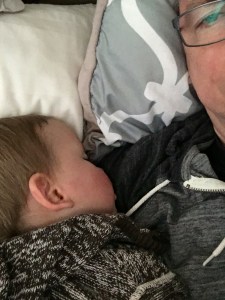
Today was a rough day spent cuddling a very sick little boy. As the doctor said, “Oh yeah, you smell like vomit.” It was all made better, however, thanks to Robert J. Wiersema’s wonderful discussion of my Cross series of books on the CBC’s All Points West show. My favourite line: “If you like your literature with a nitro feeling, you’ll love these.” What a great welcome to the world for my new book, The Apocalypse Ark. Now to do something about this vomit smell….
(Reposted from my Facebook feed because it’s hard to get anything done when you’re cuddling a little boy in one arm.)
Dear PLR: Thanks for helping me to create
I recently received a payment cheque from the Canada Council’s Public Lending Right program, which compensates Canadian authors for the free public access to their books in libraries across the country. I always love receiving this cheque, for a few reasons. One, I always forget it’s coming, so it’s an awesome surprise! Two, it comes after Christmas, when I need it the most. Three, it keeps me writing.
The third reason is perhaps the most important one. The stated goal of the PLR program is to pay authors for works they’ve already written and that other people get to read for free, courtesy of our great library system. But it’s more than just compensation: it’s also an investment. Those cheques that get sent out at the beginning of every year help writers across the country keep writing. The books we’re getting paid for? Those books are already done and published. The PLR money we get for them helps buy us time to write our next books. Every spring, I get a cheque in the mail that makes me think, “To the writing cave!”
So thanks, PLR and Canada Council! And thanks to all you readers who keep buying books and checking them out of libraries! Without you, I’d just be a crazy person locked in a room arguing with imaginary people.
The Apocalypse Ark has launched!

The Apocalypse Ark, the third book in the Cross series, has set sail! Well, it just published in Canada, anyway. It’s coming soon to other parts of the world. If we don’t all drown in a rain of fire and blood first, that is. We have it coming, after all. Don’t ask why — you know what you did.
Here’s what some of the early reviews have had to say:
- “A vastly entertaining, fantastical, breakneck hodgepodge quest novel” – Publishers Weekly
- “A spiritual relative to Richard Kadrey’s Sandman Slim and Lavie Tidhar’s Bookman series” – Publishers Weekly
- “One of the strongest, and strangest, literary creations this country has ever seen” – Vancouver Sun
- “If you like your literature with a nitro fueling, you’ll love these” – CBC’s All Points West
- “One of the most entertaining series in recent years” – Examiner.com
- “Roman (a pseudonym for Vancouver Province journalist Peter Darbyshire) writes with the unfettered delight of a gluttonous reader trapped in a library in his own mind, drawing promiscuously from myth, folk tale, religious texts and apocrypha, literature, music and philosophy — seemingly anything that catches his attention” – The Vancouver Sun
If you’re new to the Cross series, here’s the basic premise: Our poor narrator, Cross, woke thousands of years ago to find himself in the body of Christ after Christ shuffled off this mortal coil. He has all the powers of Christ but none of his sensibilities — Cross is a drunk, thief, mercenary and all-around rogue. He’s about as fallen as you can get, the type of person who usually winds up dead in a back alley somewhere. Cross does end up dead a lot, but every time he dies his body resurrects him. There’s a catch, though: he needs the heavenly grace of angels to fuel his powers, and the only way to get that is to kill them. Needless to say, he’s not very popular among the angels left behind on Earth.
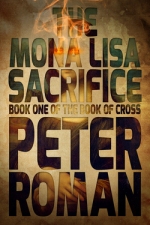
The first book, The Mona Lisa Sacrifice, follows Cross’s attempts to track down his old nemesis Judas, a trickster god dedicated to destroying humanity — and who is responsible for the deaths of Cross’s one true love throughout the ages, Penelope, and their unborn daughter, Amelia. It spans the centuries and the globe and leads Cross into the middle of a war between the angels. It was an Amazon.ca No. 1 fantasy bestseller and did all right in other parts of the world, too.
The second book, The Dead Hamlets, sees Cross caught in the middle of a murder mystery, as a mysterious ghost with ties to Shakespeare is killing off members of the faerie court, who live in secrecy among the humans. The next victim may just be Amelia, Cross’s dead daughter that the faerie queen stole from the grave and birthed to torment Cross (they have a history). Cross must discover the ghost’s secret to stop the murders, but what he finds may mean even his end.
In the third book, The Apocalypse Ark, Cross faces his most dangerous enemy yet: Noah. For ages Noah has sailed the seas, seeking out all of God’s mistakes and imprisoning them on his ark. Noah is not humanity’s saviour but is instead God’s jailer. But he has grown increasingly mad over the centuries, and now he is determined to end the world by raising the mysterious Sunken City. Only one person can stop him: Cross.
I’ll be posting more about The Apocalypse Ark and its origins in the days to come. In the meantime, I’ll just leave these links here in case you’re interested….
Buy The Apocalypse Ark (paperback)
Buy The Apocalypse Ark (ebook)
(Yes, I know the photo shows a giant squid attacking the Nautilus from 20,000 Leagues Under the Sea, not an ark. Trust me — there’s a connection between 20,000 Leagues and The Apocalypse Ark.)
Are you ready for the Apocalypse?
Some of you may be wondering when my new Cross novel, The Apocalypse Ark, will be released. Just keep an eye on the weather. As soon as it rains for seven days straight and the streets start flooding, then open your window and shout “Release the Ark!” in your best “Release the kraken!” voice.
Or you could just wait a few weeks.
The Apocalypse Ark was originally due to be published in January but it got pushed back a bit during the editing process. No one at the publishing house liked those chapters I wrote from the fish’s point of view, so I had to go back and rewrite everything. Sheesh. No, in all seriousness, it was just life with two young sons and a day job (boooooo!) meant it took me a little longer to get through the revisions than I initially thought. Also, I kept endlessly revising, until my editor threatened to harpoon me and mount my skull over the transom as a warning to other writers.
I’m done now. I think.
The Apocalypse Ark will likely be released in Canada in late February. The U.S. release will likely be late March or early April. Because April is the cruellest month. I’m not sure about other countries — check your local book emporium. Those book monks know everything!
But you don’t have to wait to pre-order it — you can give me your money now! In exchange for nothing but some vague promise that I’ve written a book. Sounds legit to me. Please send your life savings to:
Barnes and Noble pre-order link
Remember, what would Noah do?
All this and six months of rain, too

So the other day, I wrote a short piece for The Province about a fixer-upper home in Vancouver being listed for $2.4 million. Actually, that’s probably being generous. I don’t think anyone is going to bother fixing one nail on this house, unless you call using a bulldozer a form of home renovation. So let’s just assume it’s a $2.4 million teardown.
I was both pleased and saddened that within hours the story had become the most-read thing I’ve ever written. By a long shot. It will likely remain the most-read thing I’ve written in my life — the numbers on it are pretty crazy. I’m a bestseller at schadenfreude house porn!
Perhaps the real nutty thing about all this is $2.4 million isn’t really that much to pay for a house — or the land it sits on — in Vancouver. The day after I wrote this, The Province published another story about a $6 million house someone bought and planned on tearing down to make way for a new home.
What is going on in Vancouver, you may ask? I certainly ask myself that every day. Well, the story “Follow the money” by my colleagues Sam Cooper and Dan Fumano point to some of the explanations. It’s an almost unbelievable tale of corrupt real estate agents, shady investors, secret money transfers — and people being gunned down.
Most of us living in Vancouver are used to being priced out of our own homes. (I actually live in the suburb of Langley, because I couldn’t afford a port-a-potty in Vancouver.) We make bitter jokes, sigh curses about being a world-class city and get on with trying to pay the rent/mortgage. But it wasn’t always this way. And it doesn’t have to be this way.
I strongly advise checking out these stories to see what an absurd shell city Vancouver has become. And to learn what happens when the unchecked forces of globalization decide to visit your city.
Words
Many years ago, I walked through a snowstorm one night in London, Ontario, to knock on a stranger’s door. The young man on the other side opened the door and looked me up and down. I think my shoes were covered in ice. I think my whole body was encrusted in ice, in fact. I was wearing a jean jacket and hoodie because I couldn’t afford a proper winter jacket.
“I’m here for the writing group,” I said, or words something to that effect.
I was a first year university student, splitting my time between taking English classes at the University of Western Ontario and working the night shift in an IGA grocery store. I’d gone back to school after a few years of working dead-end jobs (the night shift was actually the highlight, believe it or not) because I knew I had to do something to help realize my lifelong dream of being a writer. I worked all night filling shelves with Cheez Whiz, although somehow never enough Cheez Whiz — we always sold out. Always. When I was done my night shift, I hopped on the bus and went to Western, where I took English Lit classes because they didn’t have a creative writing degree. Sometimes I fell asleep in those classes. I really wanted to follow that dream, remember.
During one of my visits to the hallowed halls of the university, I noticed a poster on a wall advertising the meeting of a creative writing group. I can’t recall now if it had a number or an address or what on it, but somehow I found myself in that snowstorm, knocking on that door.
My life was a storm of other sorts back then: divorce, depression, loneliness, poverty — you name it, I had it. The only thing I had going for me was that dream of writing and of maybe publishing stories and books one day.
The man who opened the door and let me into the warmth and sanctuary of his home was Paul Vermeersch, a fellow Western student and an aspiring poet. He warmed me up with hot chocolate and cheered me with conversation, and eventually a few other people arrived and we had some sort of meeting.
I can’t recall too many details of that first meeting, as I was half-frozen and hoping Paul wasn’t a killer who advertised for his victims in universities. But I recall many of the moments from our long friendship that began that night. The numerous other meetings we had as we grew that little writing group and formed wonderful, deep and lasting relationships with other aspiring writers, such as Jonathan Bennett. The basement arts office we hung out in, the walls of which we covered in our favourite literary quotes — “Poor Grendel has had an accident.” The basement apartment we shared when we lived together in Toronto. The IV Lounge Reading Series we ran together for a time in Toronto, although Paul was really the driving force of that. The other writers’ book launches we went to, and then our own book launches, as we both realized our dreams of becoming writers. (I should have dreamed of something more lucrative, damn it!) When Paul let me into his home that night, he saved me from more than one storm.
I’ve kept in touch with Paul even though I live on the West Coast now, and he still remains one of my dearest friends. So I was delighted when he became an editor at Wolsak & Wynn and asked me if I wanted to publish with them. How could I say no to that? It’s the sort of thing that would have been unimaginable to me when I knocked on that door during that snowstorm all those years ago. And it was exactly the sort of thing I’d been dreaming about all my life.
So I’m happy to announce that I’ll be publishing a collection of short stories with Wolsak & Wynn in the fall of 2017. It’s called Has the World Ended Yet? and that’s all I’m going to say about it for now.
Here’s to dark and stormy nights.

It’s Moby Dick weekend!
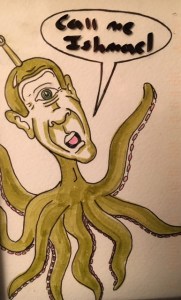
Moby Dick by Herman Melville is one of those books I’ve had a love-hate relationship with since I read it the first time, back in an American Lit university course. To be honest, I was baffled by the book after that initial encounter. If you’ve read it, I’m sure you’ll understand. If you haven’t read it, let’s just say it’s a work of eccentric genius.
Moby Dick has some of the most memorable scenes in literature for me, and I can see its influence everywhere — Cormac McCarthy’s Blood Meridian leaps to mind first. Moby Dick is a thing of sublime beauty that tells a simple yet incredibly compelling story. It’s also a completely batshit crazy book that breaks all the rules of writing and publishing and veers into textual madness at times. It marked a trend for Melville’s later books, which faced an uneven reception to their literary experimentation — see the headline “Herman Melville Crazy,” for example.
I’ve read Moby Dick a number of times since that first encounter, and I’m not sure I understand it any better now. That’s kind of the point of the book, though — or one of its points, anyway. Ahab is consumed by his quest to master the whale, which remains throughout an incomprehensible force to him and the others. You have as much luck truly understanding the book as Ahab does of besting the white whale.
I do appreciate the beauty of the book, though, and its incredible imagery and masterful scene construction were much in my mind when writing my latest Cross book, The Apocalypse Ark (ah, here’s where we getting to things). I wanted to capture Moby Dick’s sense of something vast and mysterious lurking just under the surface of our world — I guess it will be up to readers to decide if I succeeded or not.
I was also inspired by Melville’s bravery and risk-taking in publishing what you could call an unusual text. Often, writers are influenced more by market trends and sales numbers — “Hey, maybe I should put a steampunk vampire romance in this book….” Sometimes you have to remind yourself of the chances other writers have taken, of the commitment they’ve had to their vision, before you can truly commit to your own crazy vision. And I do think the vision I had for The Apocalypse Ark was crazy — it’s batshit crazy in the same spirit as Moby Dick, although I would never make claims about being equal to that book in any other capacity. “Peter Roman: Crazy as Melville!”
Anyway, this is all a long-winded post about the fact that it’s Moby Dick weekend — where people gather to read and watch others read aloud the entirety of Moby Dick, in a marathon event that’s as mad as Ahab. Check out the livestream, read along in your own copy, or just retweet your favourite lines.
That should be enough to hold you until The Apocalypse Ark comes out and you can see what I’ve done with Moby Dick and Herman Melville in my own peculiar telling of the tale.
Image is from Paul Vermeersch’s postcard art collection, but I supplied the caption.
I could have been a contender, I mean, professor!
I just received some more photos from my time at the Surrey International Writers Conference. Thanks to photographer Sandra Vander Schaaf for the great shots! I didn’t even see her taking these pics, so they’re nice candid moments from the conference. Check her out if you need some photos of your own — looks like she takes a pretty good author shot.

I think this was from my dialogue class — that’s a little Ian Weir on the white board there.
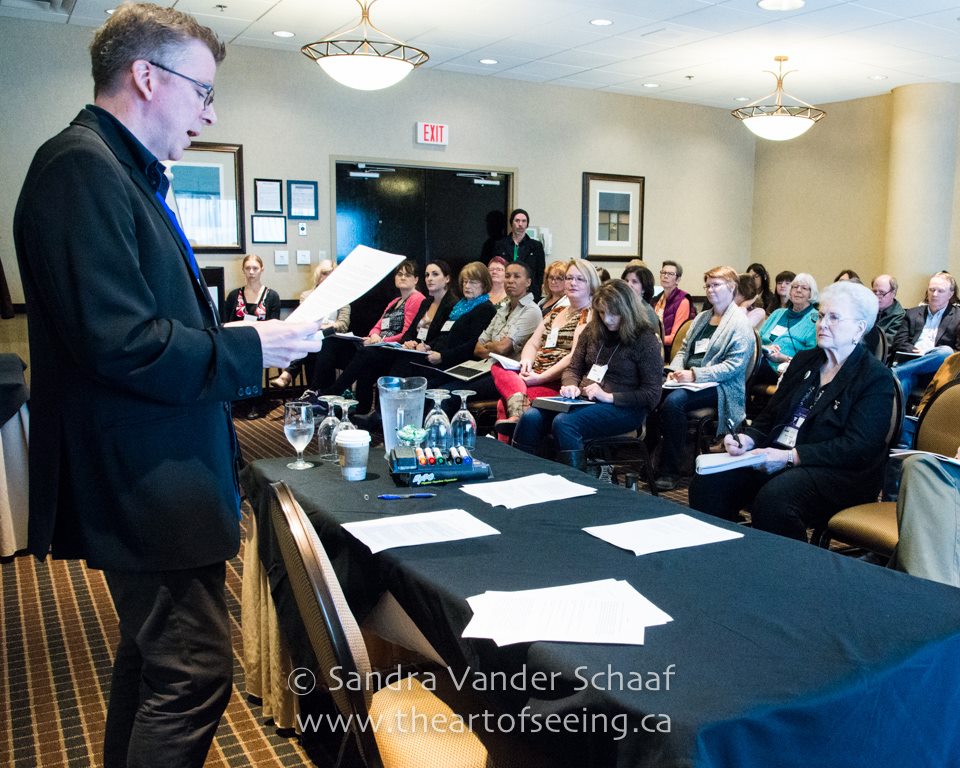
“Bueller? Bueller?”

Doing the Blue Pencil stuff was a lot of fun. I think my advice here was “You can never have too many orcs!”

“Have you thought about more orcs?”

“I like what you’ve done with the orcs here. Now let’s talk about dragons.”
Will the real Mona Lisa please stand up?
Is there a secret Mona Lisa hidden away under the painting we all know? New scans show a different woman lurking underneath it. Of course, readers of The Mona Lisa Sacrifice may have a different theory….