Author Archives: Peter Darbyshire
PLR program an investment in Canadian culture

I’m so incredibly grateful to have received my latest payment from the Canada Council’s Public Lending Right program, which compensates Canadian authors for libraries providing free public access to their books. There are many reasons I love the PLR:
- I love libraries!
- The PLR payment helps keep me writing!
- I believe strongly in supporting Canadian writers!
The last point is probably the most important one in these challenging times. The PLR program is about more than just compensating writers. It’s an investment in the future of Canadian culture in many, many different forms. Each one of those payments helps a writer to buy time to create new works and add to the rich cultural history of this country. At a time when the very future of Canada seems at stake, you can’t put a price on this sort of support.
So thanks, PLR and Canada Council! And thanks to all of you who have bought my books and others from Canadian writers!
A Howling good time
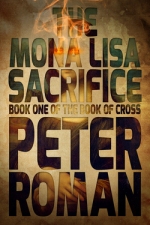
I recently appeared on the radio show Howl on CIUT 89.5 FM to discuss the first book of my Cross series, The Mona Lisa Sacrifice. Topics covered:
- The pros and cons of writing immortal characters
- How much of the roguish antihero Cross is really me
- The experience of getting to update the book series for the newer editions
- And of course Dungeons & Dragons!
Bonus feature: I read from the first chapter of The Mona Lisa Sacrifice.
Interview starts around the 33:30 mark. I hope you’ll check it out.
Support your favourite magazines
I was saddened to see the news that On Spec, the Canadian magazine of the fantastic, will no longer be publishing print editions because of the increasing costs of print production and distribution. On Spec holds a special place in my heart, as it was the first magazine to publish my work. And it has incredible importance to the genre scene, both for Canadians and internationally.
On Spec isn’t alone in their struggles. Most magazine publishers have been ringing the alarm bells for some time now, especially after Amazon drastically reduced the ability to subscribe to their publications through its online service (a significant source of revenue for many magazines). There have been a number of magazines that have shut down over the last little while, and there will no doubt be more to come.
There are ways to support your favourite magazines, though. Many use Kickstarters to raise funds for the year, such as Uncanny, while others are increasingly using Patreon — see, for example, Beneath Ceaseless Skies, Apex, Grimdark, Bourbon Penn, Pulp Literature, etc. And there’s a good selection of magazines available on Weightless Books, either by the issue or by annual subscription. Often you can buy issues directly from the magazine publishers as well so they don’t have to pay a cut to another service — see Weird Horror magazine, for example.
So if you want to see your favourite magazines survive and keep providing you with reading material please support them today with a subscription or purchase of an issue! You may make the difference to the magazine continuing on or not.
As always, thanks for reading!
Azrael and the Dead Man’s Hand on Locus’s Recommended Reading List

I am beyond thrilled to see my latest tale of Azrael the angel gunslinger, The Angel Azrael and the Dead Man’s Hand, on Locus’s 2024 Recommended Reading List. It’s a wonderful honour, and I’m very grateful Azrael continues to find readers. Many thanks to Beneath Ceaseless Skies for publishing Azrael and the Dead Man’s Hand!
This marks the seventh Azrael tale in Beneath Ceaseless Skies. Here they are in order of publication:
- The Angel Azrael Rode Into the Town of Burnt Church on a Dead Horse – The angel Azrael rides into the town of Burnt Church for a drink and ends up helping the very strange inhabitants fight off a gang of demons that’s been tormenting them.
- The Angel Azrael Delivers Small Mercies – The angel Azrael encounters an angel who is determined to turn the world into her own personal Hell and only Azrael can stop her.
- The audio version of “The Angel Azrael Delivers Small Mercies” with a new introduction I recorded for the story
- The Angel Azrael Delivers Justice to the People of the Dust – The angel Azrael rides into a mining town that is under siege from curious bone creatures stealing the town’s children. When Azrael intervenes, he discovers that nothing is what it seems in this strange place.
- The Angel Azrael Encounters the Revelation Pilgrims and Other Curiosities – The angel Azrael is hired by a group of pilgrims to guide them through a dangerous stretch of land, where they encounter a city of the dead and an outlaw band of half angels intent on ensuring they don’t make it to their destination.
- The Angel Azrael and the War Ghosts – The angel Azrael tries to stop a group of ghostly soldiers from preying upon travellers and rides straight into his own troubled past.
- The Angel Azrael Battles a Dead God Among the Heretics – The angel Azrael encounters a village full of crazed golems intent upon resurrecting a dead god to unleash upon the world — a god that Azrael has already killed once.
- The Angel Azrael and the Dead Man’s Hand – The Angel Azrael wanders into a strange town and becomes trapped in a supernatural and deadly card game.
Excerpt from The Angel Azrael and the Dead Man’s Hand:
The angel Azrael rode the dead horse across the broken land under the light of a half moon until he came across a graveyard that seemed to have no end. Wooden crosses stretched away to the horizon, more than he could count. Many of the crosses were bent close to the earth by time and the elements. Some were decorated with worn hats or gun belts with guns still in their holsters while others were adorned with bits of tattered lace or other fabric. None of the crosses bore names, at least none that Azrael could see.
It had been a week since he’d last come across a trading post, and even then the proprietor had been the only living soul there. Azrael had traded her a feather from his ruined wings for some of her homemade whiskey, served in a battered cup decorated with bloodstains. The whiskey had left his thoughts in a haze for days, but Azrael was relatively certain the woman hadn’t mentioned this field of the buried dead. Maybe she’d never ventured this way. Or maybe there was some other reason she hadn’t said anything. Either way, it wasn’t the first time Azrael had stumbled across a forgotten graveyard in the middle of nowhere. The world was made of such places.
Azrael scanned the night sky for the buzzards that trailed him everywhere, and because he had the eyes of an angel, he was able to pick them out of the darkness. They were hanging back, as if they didn’t like the looks of all those crosses stretching to the end of the world. Azrael reined in the dead horse, contemplating whether he should pick some different direction to wander. But then he caught a flicker of light in the distance, and a few seconds after that the faint sounds of glasses clinking together. It was a sound he’d heard countless times before, and it meant there was a saloon ahead. And where there was a saloon, there was real whiskey. He rode on, ignoring the warning of the buzzards, because his saddlebags were as empty of spirits as everything else.
A cluster of structures grew out of the night as he neared some sort of small town in the middle of the graveyard. Although to call it a town was to embellish its nature considerably. There were three buildings side by side and leaning against each other like they would fall down if not for the others. A saloon, a hotel, and a church, in that order. Only the saloon had lights flickering in the windows, courtesy of the candles inside. There were none of the usual sounds of laughter or quarrelling coming from such a place. Instead, the whole town was as quiet as the surrounding graveyard.
The crosses stopped a few dozen feet away from the walls of the buildings, but the space around the town wasn’t empty. It was full of wagons that looked as weathered as the crosses. They were piled with wooden crates and barrels, bundles of shovels and hoes, rolls of canvas and rope, and so on. All the cargo had a thick layer of dust upon it, suggesting the wagons had been out here some time. As if abandoned or forgotten. A couple of the wagons were covered and held sleeping mats spread out inside, indicating they were home to entire families. Another wagon had painted words on the side of it. Sky’s Elixirs for Good Health and the Preservation of Your Soul. There was no sign of horses or any other beast of burden. Nor were there any roads leading to this town or away. Whatever travellers had come here must have done so in a distant enough past that the elements had covered up their tracks.
It was a peculiar sight, nearly as odd as the vast graveyard itself. But Azrael didn’t dwell on it. He’d seen plenty of peculiar things in his travels, and he wasn’t planning on lingering in this place.
Read an excerpt of The Apocalypse Ark on The Civilian Reader

The Civilian Reader has posted an excerpt of The Apocalypse Ark, the third book in my Cross series of supernatural thrillers. The Civilian Reader previously posted excerpts of the first two books in the series, The Mona Lisa Sacrifice and The Dead Hamlets. If you haven’t yet read the books, here’s a chance to preview them. If you have read them, thanks for reading!
Weird Fantasy – The January 2025 Bibliofiles edition

I leaned toward fantasy reads this month — the weirder the better. And there were some real weird reads in this edition of the Bibliofiles.
Fiction
Sycamore by Ian Rogers

I’ve always loved Ian Rogers’ tales of The Black Lands, an eerie and deadly realm that intersects with our own and provides PI Felix Renn with supernatural creatures to investigate. So I was delighted to read Sycamore, which follows Renn to small-town Ontario and a mystery involving a string of murders, a missing man, a mysterious librarian, an eerie child — and a hidden portal to the Black Lands. Weird lit at its finest. You’ll be afraid of the dark all over again.
Link: https://www.goodreads.com/book/show/220978924-sycamore
We Are the Dead by Mike Shackle

What happens when the bad guys win in a fantasy novel and take over the world? The resistance fights back, of course. This is the premise of We Are the Dead by Mike Shackle. The land of Jia is overrun by the Egril hordes, which have united under a mysterious leader with powerful magic. Jia falls instantly to the Egril forces, which rule the land through a puppet government. But not everyone is willing to accept their rule. Brutal, bloody and action-packed, this is a nice twist of the blade for the fantasy genre.
Link: https://www.goodreads.com/book/show/42602296-we-are-the-dead
Kaiju Agonistes by Scott Lynch

A well-meaning but increasingly monstrous kaiju goes head to head with politicians in this blackly comic and delightful tale.
Link: https://www.uncannymagazine.com/article/kaiju-agonistes/
Foundryside by Robert Jackson Bennett

Foundryside by Robert Jackson Bennett presents one of the most original worlds to ever hit the fantasy genre. The city of Tevanne is ruled by merchant houses that use a hybrid of magic and technology to maintain their power and live a near godlike existence. The entire society is built upon the practice of scriving — altering reality by inscribing objects with enchanted sigils to convince them to act in ways contrary to their nature. Scrived pieces of wood can be hard as stone, swords can hit much harder than they should be capable of, lights can burn forever and so on.
The only problem is no one truly understands how it works. The technology comes from an ancient race long gone who had attained the power of godhood, and the people of Tevanne are trying to understand it as they slowly piece the remains together.
But Foundryside is not just an impressive piece of worldbuilding. It’s also a clever heist tale, as the thief Sancia steals an artifact that turns out to be from that ancient race — and is itself sentient. Sancia is a unique character herself, as she is a scrived human being that can essentially hear the thoughts of inanimate objects — the result of unthinkable experiments by the rulers of Tevanne.
It’s also very much a political novel as it depicts deep divides between the wealthy and the poor, between those who aspire to godhood and those who are trapped in the worst gutters of humanity. There are more than a few parallels to our own society here.
There’s even a philosophical element, as Foundryside explores what is to be human — and what it is to be a god. And there’s an interesting angle in our AI age of what it means to be a sentient object.
All of these things come together over the course of the book, as the secrets of the dead race are discovered and the story shifts from being a clever fantasy novel to a near existential horror. If you’re looking for a truly different reading experience unlike anything else in the genre, then Foundryside is the book for you.
Link: https://www.goodreads.com/book/show/37173847-foundryside
The Fantasy Writer’s Assistant by Jeffery Ford

The Fantasy Writer’s Assistant is one of the weirdest and best collections I’ve ever experienced. Humans on a strange planet dress as old movie stars for celebrity-obsessed aliens. An interviewer has tea with a very odd Jules Verne. A writer obsessed with a mysterious Kafka story finds himself at odds with the writer Jeffrey Ford. And many more tales straight out of Twilight Zone episodes written by Borges.
Link: https://www.goodreads.com/book/show/39748.The_Fantasy_Writer_s_Assistant_and_Other_Stories
The Wish Doctor by Arlen Feldman
A charming tale about an expert in contracts for binding djinn who finds himself summoned to the royal palace to study the most important contract of his life and find the hidden trap.
Link: https://www.baen.com/wish_doctor
Non-fiction
The Big Five Publishers Have Killed Literary Fiction by Elizabeth Kaye Cook and Melanie Jennings
Is consolidation among the big publishers slowly killing off literary fiction? And can the small presses save it?
Link: https://www.persuasion.community/p/the-big-five-publishers-have-killed
New Star Pushed Over the Ledge
The world of CanLit was shocked and puzzled when publisher New Star suddenly announced it was shutting down. Now it seems a dispute with the BC Arts Council may have led to the closure.
Link: https://shush.substack.com/p/new-star-pushed-over-the-ledge
Read an excerpt of The Dead Hamlets in The Civilian Reader

If you haven’t yet read The Dead Hamlets, the second book in my Cross series of supernatural thrillers, The Civilian Reader has an excerpt up. https://civilianreader.com/2025/01/24/excerpt-the-dead-hamlets-by-peter-darbyshire-poplar-press/
You can read an excerpt of The Mona Lisa Sacrifice here: https://civilianreader.com/2025/01/13/excerpt-mona-lisa-sacrifice-by-peter-darbyshire-poplar-press/
A Tiny Newsletter: The This Isn’t the Future I Imagined Edition

I’m back at it with my newsletter after my previous newsletter host, Tiny Letter, shut down. I decided to host the newsletter on Substack this time, as that seemed to be the best choice to reach people for someone of my limited tech ability. The newsletter contains most of what I publish here on my journal, just in a monthly digest form. So feel free to keep reading here if you want my updates as I post them. If you prefer the Substack monthly approach, you can follow me on Substack or sign up for the newsletter there. (Note I already imported existing subscriptions, so you don’t need to sign up again.)
Thanks for reading, wherever you are reading!
Read an excerpt of The Mona Lisa Sacrifice in The Civilian Reader

Interested in a preview of The Mona Lisa Sacrifice, my first book in the Cross series? Check out The Civilian Reader for an excerpt!
Change your normal this year

It’s the start of a new year and there is no better time to change your normal. Unless your normal state is working well for you, in which case carry on! Here is a list of 10 things I have found helpful in changing my normal.
- Choose a theme for the year. This can be anything — The Year of Fitness, The Year of Saying Yes, The Year of Saying No, The Year of Family. Whatever you choose will help give you a direction for that year and help inform your decisions, which in turn will help you change your normal. I’m opting for the Year of Creativity this year.
- Whatever your goals are for the year, put a system in place that will help you achieve them. Goals are great but if you don’t know how you are going to achieve them then you probably won’t. Put a good system in place and the goals will take care of themselves. Hint: The more enjoyable you make the system, the greater the chance you’ll be able to stick to it.
- Stop drinking. This was a life-changer for me, as I lost weight, became fitter, developed greater emotional stability and focus — and became more present in my life. I stopped drinking in 2019 and I’ve never regretted it.
- Exercise more. I don’t mean you have to go to the gym and throw a car’s worth of weights around — although power to you if that’s your thing. Exercise can be as simple as walking to work instead of taking transit or going for a walk at lunch with colleagues or friends. I find that whenever I’m stressed, I go for a walk and my mood immediately improves.
- Connect with family, friends and colleagues more. I’ve made a real effort to try to connect with people more, even if it’s just a lunchtime walk at work, and I’ve found the effects have been great for my mental health. I’ve rekindled old friendships and developed new ones, and all the social connection has simply made me feel better as a person. The stronger your social foundation, the stronger your foundation overall.
- Practice gratitude. I try to practice gratitude every day, ideally first thing in the morning to set the tone for the day. I find that if I can begin the day with something to be grateful for it helps me to see the good in other things or events throughout the day rather than focus on the negative. It makes me happy, and happiness comes with all sorts of advantages. It’s important to remember that gratitude doesn’t just have to be about the big things in your life. Often I am grateful for spending time with a friend at lunch or a beautiful morning. And sometimes I even grateful for the hard moments in life, for helping me to become a stronger, better person.
- Choose happiness. When we choose happiness, we are choosing to process the world in a certain way — to see the possibilities rather than the roadblocks. That gives us more opportunities and advantages — and more chances at greater happiness!
- Practice compassion – including self-compassion. I’ve found I’m less likely to hold a grudge or get caught up in negative emotions if I can manage some compassion toward the person who is causing me problems. Most people don’t set out to make life difficult for other people, after all. Sometimes it just happens because of challenges they are facing outside of their control. Practicing compassion helps me keep my inner peace and hopefully prevents me from becoming the difficult person. More importantly, I’ve learned to practice self-compassion. I used to beat myself up for not being perfect, for not having a handle on my anxiety, etc., but now I remind myself that I am a human being subject to innumerable stresses and forces outside of my control. And when I practice self-compassion, I am more likely to rest and recharge or otherwise take the steps needed to look after myself, which means I am more healthy and resilient in the long run.
- Focus on what you can control and accept what you cannot. Life will put plenty of challenges and obstacles in your path. They are neither good nor bad. They simply are. What they mean to you will depend on your own mindset, so develop one that serves your happiness rather than your anxieties.
- Always remember that how you spend your time is who you actually are. When you waste time on mindless activities or something you don’t particularly care about, you are actually wasting your life. Every action you take is a vote for the sort of person you will become.
I hope all your change is for the positive this year!
(Pic is of me changing my normal a few years back.)
Related Reading List
Here are some books I’ve found very useful in helping to change my normal. I hope they can do the same for you.