Category Archives: The Writing Life
I interview the writer mistaken for Stephen King
A few years back, Stephen King put out a book called Joyland. As it turns out, another writer I know, Emily Schultz, also had a novel called Joyland. When King published his book, people started buying her book, thinking it was the same one. Hilarity ensued in Amazon reviews. Now Emily has created a blog chronicling how she’s spending the Stephen King money. I talked to her about the whole bizarre experience over at The Province.
Then horror writer Stephen King published a novel called Joyland, and Schultz’s life went a little crazy. Readers started buying her Joyland novel, thinking it was King’s new book. Joyland’s publisher, ECW, contacted Schultz to let her know her book had suddenly sold 200 copies. “It was exciting for about 60 seconds,” Schultz says, “then I realized, uh-oh, there will probably be some angry readers out there! Sure enough, the one-star reviews started piling up on Amazon.”
The never-ending story
A few posts back I wrote about how I thought the third Cross book only needed about one more writethrough before I could send it to my agent. Famous last words and all that. When I was working on what I thought to be the last writethrough, rushing to get it done before the edits for the second Cross book arrive, I realized the book would be so much better if I just tweaked a couple of flashbacks, which led me to move around some of the plot elements, which then led me to write some more background for a couple of the characters… you get the idea.
Anyway, I finished that draft today. Now I think it only needs one more draft before I can send it off the agent….
I forgot the doors! My characters are trapped!
A couple of days ago I finished the third draft of the third Cross book, which is coming along. I think it needs about one more draft and then it will be ready to send off to the agent for notes. And then we’ll see.
Someone asked me about my writing process recently, and I didn’t really have a good answer. I’ve been thinking about it since, and I’ve finally decided it’s kind of like building a house. The first draft is excavating the blank page and putting in the foundation. The second draft is installing the plumbing and electrical and all that. The third draft is throwing up the drywall. The drafts that follow are the painting and otherwise getting it ready for a reader to move into and feel at home.
Editors? They’re the inspectors. Reviewers? They’re the repairmen.
Of course, I’ve never built a house, so what do I know? I’m just hoping I don’t burn down the whole neighbourhood.
War is coming to sci-fi and fantasy fandom
So I wrote a quick overview of the Hugo Awards controversy this year for The Province. It’s really the sort of crazy situation that would need a novel to adequately cover, but who has time for novels these days?
The catalyst for the conflict was the announcement of the Hugo shortlists, which included a couple of expected nominees — Ann Leckie’s Ancillary Justice and Charles Stross’s Neptune’s Brood for best novel — but also a number of highly controversial and perhaps unexpected selections (or perhaps not, depending on who you talk to). Larry Correia made the best novel list for his book Warbound, Book III of the Grimnoir Chronicles, as did Robert Jordan and Brandon Sanderson for the entire Wheel of Time fantasy series. That’s right, an entire series stretching back many years is nominated for best novel of the year. It’s one of those technicality things. To top things off, controversial writer Vox Day was nominated in the best novelette category, enraging many in the sci-fi community who have battled with him online.
Writing through the train crashes
I’ve been sick for, oh, a month or so now thanks to the latest bug my son brought home for preschool. I think I’m almost over it, though, which means it’s time for him to bring a new bug home.
At least I’ve managed to do some writing, in between surfing various blogs detailing the Hugo Awards brouhaha. It’s like a train wreck with new trains coming along and crashing into it every few minutes. I keep thinking I should write a newspaper piece about it but I don’t even know where to start.
Anyways. The writing. I’ve finished a new Azrael story, tentatively titled “The Angel Azrael Is Sacrificed to the Snake God.” I wrote it with an Azrael collection in mind, and I think I’ve got about 30,000 words of Azrael stories now, which is about half a book for me. (Most of my books start out around 60,000 words and then grow to 70,000 or 80,000 in the editing process.) So that’s something.
All right, now I’m going to curl up with some Neo-Citran and watch some more trains crash.
Of patrons and Patreon
I just became a supporter of Vancouver writer Siliva Morena-Garcia on Patreon. I discovered Patreon recently and it’s pretty cool. It kind of works like Kickstarter, in that you pledge money to your favourite content creators. Rather than a one-time payment, though, you generally pledge a monthly payment to help your fave artist do their thing (although I think one-time payments are an option in certain cases). In return, you get access to the creator’s personal Patreon feed and various rewards. Here’s a video explaining how it works:
Here’s Silvia’s Patreon page. Check it out and pledge if you like what you see. Or check out some other creators using Patreon, like those crazy Postmodern Jukebox videos you’ve been seeing in your feeds or the Hijinks Ensue comics. Or, you know, make your own Patreon page and throw out a tip dish.
Wait a minute, let me get my popcorn
The nominees for the 2014 Hugo Awards have been announced, and I’m delighted to see Beneath Ceaseless Skies up for Best SemiProZine (Semiprozine? SemiproZine?). I love BCS, and not just because a few of my Angel Azrael gunslinger stories have appeared there. It’s a fine, fine magazine that champions literary fantasy, sic-fi and all sorts of speculative fiction (or just good writing, if you’re not concerned about categories). Or, as the BCS site puts it, “adventure fantasy plots in vivid secondary worlds, but written with a literary flair.” It’s the sort of magazine I think we need more of.
Of course, the Hugos being the Hugos, there is controversy about the list of nominees. I don’t really have anything to say about it myself — it’s the way of awards, after all — but if you’re interested in following the discussion, you can read more at John Scalzi’s Whatever or Larry Correia’s Monster Hunter Nation to get the basic idea of what’s going on and see who’s on what side, etc.
Although, really, your time would be better spent reading Beneath Ceaseless Skies.
He made readers care
I woke up this morning to find my feeds filled with the news that CanLit icon Alistair MacLeod had died. I didn’t really know the man myself — I’d only met him once in passing at a writers fest years ago — but I had taught some of his stories in university back in my grad school days. They were always the works that my students actually found themselves caring about, almost against their will (survey courses generally having a narcotic effect on undergrads). He was a writer who made people care, as is evident in the number of tributes being written about him even as I write this. He made a difference, and that is all we can ask of life.
Mark Medley has written a good summary of MacLeod’s life and legacy at the National Post, and Steven Galloway has penned a personal piece of his encounters with MacLeod for the Globe. Good reads all around.
The Angel Azrael Murders Rest and Relaxation
I’m in that limbo between projects right now. I’ve finished a working draft of the third Cross book, and I’m waiting for edits of the second in the Cross series, The Dead Hamlets. I’ve been relaxing a little — see my earlier beach post — but I’m not the type to relax too long. So I decided to fill my down time with working on another book project. I’ve been thinking for a while about turning my angel Azrael gunslinger stories into a book, so I’ve started working on that. Today I finished the first draft of the fourth angel Azrael story (the third one will be out in a bit), and I’ve been outlining the book as a whole. I’ve no idea what I’m going to do with it, but it doesn’t matter. At this point, it’s all about relaxing and having fun. Nothing like apocalyptic angel westerns to do that!
It’s not often I’m eligible for an award, you know
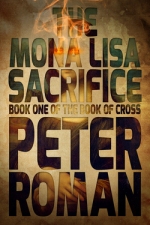
I just realized my first Cross novel, The Mona Lisa Sacrifice, is eligible for this year’s Aurora Awards. The Aurora Awards are often called Canada’s equivalent of the U.S.’s Hugo awards for science fiction and fantasy, although apparently that comparison is a contentious one. At any rate, The Mona Lisa Sacrifice is eligible for an award, so feel free to nominate it if you’re the type who likes to nominate things. Otherwise carry on with your Internet browsing.
Details on how to nominate are on the Auroras website.
A list of eligible works is on the Can Spec Fic List.
A call to represent western Canada is on the VCON site (the Vancouver convention is where the Auroras will be awarded this year).
OK, back to writing.




 peter darbyshire