Category Archives: The Writing Life
It’s not often I’m eligible for an award, you know
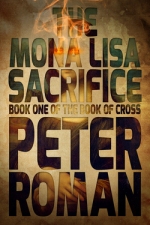
I just realized my first Cross novel, The Mona Lisa Sacrifice, is eligible for this year’s Aurora Awards. The Aurora Awards are often called Canada’s equivalent of the U.S.’s Hugo awards for science fiction and fantasy, although apparently that comparison is a contentious one. At any rate, The Mona Lisa Sacrifice is eligible for an award, so feel free to nominate it if you’re the type who likes to nominate things. Otherwise carry on with your Internet browsing.
Details on how to nominate are on the Auroras website.
A list of eligible works is on the Can Spec Fic List.
A call to represent western Canada is on the VCON site (the Vancouver convention is where the Auroras will be awarded this year).
OK, back to writing.
DRM rears its ugly head
My friend and fellow writer Brian Panhuyzen is writer in residence right now over at Open Book Toronto. He’s writing about DRM, otherwise known as digital rights management. It’s a contentious issue sure to sunder friendships and end marriages, but then what issue online doesn’t?
In his first post, Brian comes out in favour of DRM:
For me as a writer, DRM is a way of making it difficult to distribute my work without authorization. With the widespread distribution of music and movies and now books via the Internet, the public is clearly without conscience when it comes to disregarding copyright. In this climate, the worst thing you can do is make it easy. If I’m reading a book and loving it, I can email you and tell you that you must read it – but how much better if I simply attach the unprotected ebook to my email message, and in minutes, you can be reading it too. DRM complicates this process by inserting a critical step, a mild but important impediment, to the process: you need to software unlock the file, to remove the DRM. While it’s not terribly difficult to do, it does require a certain degree of technical savvy and comfort. And it’s illegal.
I’m usually all for consumer rights, but I lean more toward Brian’s side in this case. Almost everyone I know routinely downloads pirated movies or watches them on streaming sites. The same used to be true of music, but I’ve found that most of the people I know now pay for music. Why? Is it because it’s easier to buy than steal music? Is it the low price points, which movies have yet to match? (In fact, both movies and books are creeping up in price, which will probably lead to more piracy.)
I want it to be easy for readers to find my work online. I want it to be easy for readers to buy my work online. I want it to be easy for readers to read my works on whatever device they want, when they want. But I don’t want it to be easy for people to steal my work. It’s hard enough to time find time to write as it is. The less money coming in from my writing, the less time I have to write because I’ll have to work at other things to pay the bills.
Don’t like DRM? I’m afraid we’re stuck with it until people change their behaviour.
You just hit Level 3!
I just finished the first draft of The Apocalypse Ark, the third book in the Cross series. Like most of my first drafts, it’s pretty rough — there are a few scenes still missing, other scenes are more or less placeholders until I write something better, some characters will change in the next draft, and so on. But now I have something to work with. And I can prove to all my loved ones that I wasn’t just playing video games in my office all day!
(Bonus feature: I came up with some great ideas for the next Cross books, based on what happens in The Apocalypse Ark. Gotta love when that happens!)
Writing. It’s the new workout.
I just wrote a 5,000 word non-stop action scene. I feel exhausted and I think I need to nap now.
Fighting back against the bullies
Over at my day job, I wrote a piece about Anne Rice and others signing a petition urging Amazon to stop allowing anonymous reviews. The issue isn’t negative reviews, it’s trolls using the anonymity to personally attack writers.
I’m not the type to worry about bad reviews — in fact, I think the idea of reviews at all for fiction is sort of pointless in our modern age of book previews. I suppose nonfiction is a different story, but that’s a different post.
Attacks on writers — or other readers or reviewers, for that matter — is a real problem, as the article points out. There’s a little too much nastiness on Amazon and Goodreads, and it gets in the way of meaningful commentary/discourse/discussion, as when Rice was attacked in a writing advice forum.
As with anything else online, there are multiple sides to the story, and probably multiple sites telling each side of the story, but the article will give you a general idea of the battle lines. It would be nice if someone called a truce.
And they say poetry doesn’t pay
I tend to stay out of the tradpub vs. indiepub wars. Each model has its pros and cons for individual writers, so I’m of the mind to suggest you do what works for you. That may even change on a book by book model. I’ll just point out the article I wrote about B.C. poet Shane Koyczan’s Kickstarter for his new poetry collection, which earned him just over $91,000 — when he only asked for $15,000. (Note the article says $82,000, but the Kickstarter went on for a day after the article’s publication.)
Probably not a good career move

I didn’t have time to work on my fiction today, but I did manage to write an article about a writer attacking JK Rowling, then getting mobbed by the Internet. The whole thing makes me sad in a few different ways. I haven’t read either author, so I can’t really comment about their writing. I’m not the type to criticize other authors, as Shepherd does here, but I also don’t agree with the torches-and-pitchforks response to the column either. It seems to me there are better targets for outrage in the news right now.
The Internet has erupted in outrage after mystery writer Lynn Shepherd attacked J.K. Rowling in a Huffington Post column titled “If J.K. Rowling cares about writing, she should stop doing it.” You could sense this one wasn’t going to end well just from the headline.
Shepherd wasn’t attacking the Harry Potter books, which have made Rowling a household name and literary deity. In fact, Shepherd admits she hasn’t even read a word of the Potterverse, adding she thinks it a shame that adults read the popular YA books.
The horror, the horror…
In which I talk to some other writers about strange encounters with readers. Here’s a bit from Michelle Berry:
One night I was reading at the reference library in Toronto and, not really thinking, picked a passage about the embalming. As I was merrily reading along I glanced out into the audience and there, directly in front of me, were two middle-aged women huddled close together. They were both crying. The rest of the audience were laughing. But these women were crying.
I was reading about liver cancer and about a mortician using eye caps, and brushing makeup on the dead woman’s neck and whistling a merry tune, and it was a scene that was touching but also a bit odd and confusing — because it was also kind of funny. I faltered, of course, and my tone suddenly suggested that I didn’t really think what I was reading was humourous, so the rest of the audience kind of went blank.
The conversation

There are a few different reasons why I write. Sometimes it’s because a good story gets its hooks into me and drags me thrashing to my desk. Other times it’s because an interesting character demands to be brought to life and won’t leave me alone until I get him or her – or it – down on the page and out into the world. And sometimes it’s just to be part of a conversation – a literary conversation, that is.
Often when I write, I’m responding to other books out there – Please was largely a response to the “dirty realism” of Raymond Carver and the like, for instance. I don’t necessarily intend my books and stories to be answers to the works of others, but I do want them to be moments in a broader cultural conversation. I don’t really expect readers to see it that way, but that’s the way it often is in my head. So it is a nice surprise when someone does see one of my books as part of the conversation.
This morning I was awoken by my friend Jonathan Bennett messaging me to say he’d heard someone saying nice things about my book The Warhol Gang on the CBC’s Day 6 program. I dragged myself out of bed and went in search of a phone or iPad that still had battery power left and listened to Becky Toyne’s review of Shovel Ready (starts around the 41:30 mark), the debut novel by Adam Sternbergh, culture editor at the New York Times. (Is there a cooler title than that?) She mentioned The Warhol Gang as a similar read, as well as William Gibson’s books and The Road by Cormac McCarthy (also Andrew Kaufman, Sheila Heti, Lynn Crosbie, Patrick deWitt). I love Gibson, of course, and do count him as an influence – and I certainly had books like Pattern Recognition in mind while writing The Warhol Gang (also some Don De Lillo and a bit of Tibor Fischer). The funny thing is I haven’t read Sternbergh’s book, a noir futuristic thriller, but it’s on my to-read list. In fact, it just got moved to the top of the list.
Gibson, McCarthy, Sternbergh, Kaufman, Heti, Crosbie, deWitt… yeah, I like being part of that conversation.
Check out Shovel Ready. Here’s the blurb:
Spademan used to be a garbage man. That was before the dirty bomb hit Times Square, before his wife was killed, and before the city became a blown-out shell of its former self.
Now he’s a hitman.
In a near-future New York City split between those who are wealthy enough to “tap in” to a sophisticated virtual reality, and those who are left to fend for themselves in the ravaged streets, Spademan chose the streets. His new job is not that different from his old one: waste disposal is waste disposal. He doesn’t ask questions, he works quickly, and he’s handy with a box cutter. But when his latest client hires him to kill the daughter of a powerful evangelist, his unadorned life is upended: his mark has a shocking secret and his client has a sordid agenda far beyond a simple kill. Spademan must navigate between these two worlds—the wasteland reality and the slick fantasy—to finish his job, clear his conscience, and make sure he’s not the one who winds up in the ground.