Author Archives: Peter Darbyshire
It’s not often I’m eligible for an award, you know
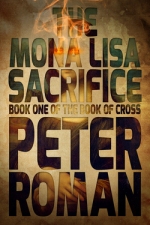
I just realized my first Cross novel, The Mona Lisa Sacrifice, is eligible for this year’s Aurora Awards. The Aurora Awards are often called Canada’s equivalent of the U.S.’s Hugo awards for science fiction and fantasy, although apparently that comparison is a contentious one. At any rate, The Mona Lisa Sacrifice is eligible for an award, so feel free to nominate it if you’re the type who likes to nominate things. Otherwise carry on with your Internet browsing.
Details on how to nominate are on the Auroras website.
A list of eligible works is on the Can Spec Fic List.
A call to represent western Canada is on the VCON site (the Vancouver convention is where the Auroras will be awarded this year).
OK, back to writing.
DRM rears its ugly head
My friend and fellow writer Brian Panhuyzen is writer in residence right now over at Open Book Toronto. He’s writing about DRM, otherwise known as digital rights management. It’s a contentious issue sure to sunder friendships and end marriages, but then what issue online doesn’t?
In his first post, Brian comes out in favour of DRM:
For me as a writer, DRM is a way of making it difficult to distribute my work without authorization. With the widespread distribution of music and movies and now books via the Internet, the public is clearly without conscience when it comes to disregarding copyright. In this climate, the worst thing you can do is make it easy. If I’m reading a book and loving it, I can email you and tell you that you must read it – but how much better if I simply attach the unprotected ebook to my email message, and in minutes, you can be reading it too. DRM complicates this process by inserting a critical step, a mild but important impediment, to the process: you need to software unlock the file, to remove the DRM. While it’s not terribly difficult to do, it does require a certain degree of technical savvy and comfort. And it’s illegal.
I’m usually all for consumer rights, but I lean more toward Brian’s side in this case. Almost everyone I know routinely downloads pirated movies or watches them on streaming sites. The same used to be true of music, but I’ve found that most of the people I know now pay for music. Why? Is it because it’s easier to buy than steal music? Is it the low price points, which movies have yet to match? (In fact, both movies and books are creeping up in price, which will probably lead to more piracy.)
I want it to be easy for readers to find my work online. I want it to be easy for readers to buy my work online. I want it to be easy for readers to read my works on whatever device they want, when they want. But I don’t want it to be easy for people to steal my work. It’s hard enough to time find time to write as it is. The less money coming in from my writing, the less time I have to write because I’ll have to work at other things to pay the bills.
Don’t like DRM? I’m afraid we’re stuck with it until people change their behaviour.
Things that drive me crazy
There are many things that drive me crazy. Other people in grocery stores. The willingness of everyone to divide themselves into left vs. right — can’t we all be ambidextrous? Netflix Canada vs. Netflix USA. But one of the things that drives me craziest is stories ignoring reality just to lazily advance a plot point.
I’m not talking fantasy stories here a la Game of Thrones. I’m talking stories that are supposed to be more or less realistic. Usually TV shows. TV shows are serial offenders.
Last night I was watching a show that I started out enjoying but am slowly growing grumpy about because of this. I like the characters a lot, I love the setting, I find it a good mix of humour and action (and no, I won’t mention the name here as it’s beside the point). But it’s increasingly presenting simply unbelievable scenes to reveal some plot point, get the character from A to B, etc. Last night’s episode involved a police officer helping a suspect in a major crime escape because… well, because the character needed to be somewhere else. That was really the only explanation the script offered. There were no real considerations of the impact of this on the officer’s career, why the other dozen officers at the scene didn’t notice, and so on. It was so completely unbelievable that it threw me out of the show. I skimmed the rest of it and seriously considered giving it up, as I do with most TV shows after a few episodes. Don’t even get me started on the bad guy hiding out of frame in an otherwise empty room, ready to throw a sucker punch….
I know TV writing is hard. There are crazy deadlines you have to meet, you’re always making up the story on the fly, and so on. But is it really worth taking a shortcut if you know it’s going to cost you viewers?
Or maybe I’m just turning into a grumpy old man, like one of those TV characters.
You just hit Level 3!
I just finished the first draft of The Apocalypse Ark, the third book in the Cross series. Like most of my first drafts, it’s pretty rough — there are a few scenes still missing, other scenes are more or less placeholders until I write something better, some characters will change in the next draft, and so on. But now I have something to work with. And I can prove to all my loved ones that I wasn’t just playing video games in my office all day!
(Bonus feature: I came up with some great ideas for the next Cross books, based on what happens in The Apocalypse Ark. Gotta love when that happens!)
Writing. It’s the new workout.
I just wrote a 5,000 word non-stop action scene. I feel exhausted and I think I need to nap now.
The muzzle of happiness
Sometimes there are so many things I could speak out against online, so many people doing nasty, stupid things, but I’m trying really hard to be only positive online, to speak out for things rather than against them. So on days like this, I have nothing to say at all. Instead, I think I’ll just keep on writing.
On a positive note, hey, at least the sun is finally shining in Vancouver.
Fighting back against the bullies
Over at my day job, I wrote a piece about Anne Rice and others signing a petition urging Amazon to stop allowing anonymous reviews. The issue isn’t negative reviews, it’s trolls using the anonymity to personally attack writers.
I’m not the type to worry about bad reviews — in fact, I think the idea of reviews at all for fiction is sort of pointless in our modern age of book previews. I suppose nonfiction is a different story, but that’s a different post.
Attacks on writers — or other readers or reviewers, for that matter — is a real problem, as the article points out. There’s a little too much nastiness on Amazon and Goodreads, and it gets in the way of meaningful commentary/discourse/discussion, as when Rice was attacked in a writing advice forum.
As with anything else online, there are multiple sides to the story, and probably multiple sites telling each side of the story, but the article will give you a general idea of the battle lines. It would be nice if someone called a truce.
The end is halfway nigh

Today I hit the 30,000 word mark on the third Cross book, The Apocalypse Ark. That’s probably the rough halfway point. So there’s that.
And they say poetry doesn’t pay
I tend to stay out of the tradpub vs. indiepub wars. Each model has its pros and cons for individual writers, so I’m of the mind to suggest you do what works for you. That may even change on a book by book model. I’ll just point out the article I wrote about B.C. poet Shane Koyczan’s Kickstarter for his new poetry collection, which earned him just over $91,000 — when he only asked for $15,000. (Note the article says $82,000, but the Kickstarter went on for a day after the article’s publication.)
Probably not a good career move

I didn’t have time to work on my fiction today, but I did manage to write an article about a writer attacking JK Rowling, then getting mobbed by the Internet. The whole thing makes me sad in a few different ways. I haven’t read either author, so I can’t really comment about their writing. I’m not the type to criticize other authors, as Shepherd does here, but I also don’t agree with the torches-and-pitchforks response to the column either. It seems to me there are better targets for outrage in the news right now.
The Internet has erupted in outrage after mystery writer Lynn Shepherd attacked J.K. Rowling in a Huffington Post column titled “If J.K. Rowling cares about writing, she should stop doing it.” You could sense this one wasn’t going to end well just from the headline.
Shepherd wasn’t attacking the Harry Potter books, which have made Rowling a household name and literary deity. In fact, Shepherd admits she hasn’t even read a word of the Potterverse, adding she thinks it a shame that adults read the popular YA books.




 peter darbyshire