Blog Archives
Weird Blood – The March 2025 Bibliofiles

My reading has been a little weird this month — weird westerns, weird SF, weird horror and so on. But hey, it’s a weird time!
Fiction
Blood Rush by Ben Galley

A young Merion Hark is sent to the wild west to live with a mysterious aunt after his father, Prime Lord Hark, is found murdered. Used to a life of luxury and power, Merion is out of his element in the rugged town of Fell Falls, where the railway is being expanded into the territory of those who don’t want it there and strange railwraiths terrorize everyone.
But Merion is not alone. A faerie warrior named Rhin has accompanied him to this new land and watches over him. But Rhin has secrets of his own that follow him to the new world and threaten to unleash chaos upon everyone.
In fact, everyone has secrets in Fell Falls, including Merion’s aunt, who collects the blood of different creatures, and her companion Lurker, who drinks blood to give him mystical powers.
But perhaps no one’s secret is greater than Merion’s, for it turns out he, too, has the ability to gain power from blood, but he is so much more powerful than Lurker or any others. So powerful, in fact, he draws the wrong sort of attenion.
A great start to a very weird west series!
Link: https://www.goodreads.com/en/book/show/23956571-bloodrush
Ancillary Sword by Ann Leckie

Breq, the ancillary that is all that is left of the ship Justice of Toren, is given command of a new ship by the emperor (or one of the emperors anyway, as it’s more or less a bunch of clones) and travels to the distant Athoek Station. The mission puts her in the middle of intrigue, as the station is near a strange Ghost Gate that periodically spits out strange artifacts and is watched over by a military ship that is clearly hiding something, while there’s also an ambassador of the alien Presger aboard the station.
The mission also puts Breq in contact with the family of a soldier she once knew — a soldier that Breq herself killed. Somehow, all of these stories become intertwined, along with a storyline about the a plantation planet and the exploitation of its workers. This isn’t a blasters and battle stations space opera — it’s a political mystery steeped in class struggle. It’s more Jane Austen and Downtown Abbey than Star Wars or the Expanse. It’s an interesting flavour but it’s not everyone’s cup of tea.
Link: https://www.goodreads.com/book/show/20706284-ancillary-sword
10 Visions of the Future; or, Self-Care for the End of Days by Samantha Mills

“There is a future where a hellgate opens off the coast of California.”
Things get weird and worse after that. An unfortunately timely tale.
Link: https://www.uncannymagazine.com/article/10-visions-of-the-future-or-self-care-for-the-end-of-days/
The Vermillion Guestbook by Andrew Zhou

A front desk clerk at an apocalyptic hotel where time makes little sense records notes about ever stranger guests and reveals secrets about his own past. It’s equal parts black comedy, weird SF and tragic romance.
Link: https://www.bourbonpenn.com/issue/35/the-vermillion-guestbook-aug-13-1998-by-andrew-zhou
Non-fiction
Transcendence in Horror by Simon Strantzas

“Horror is, of course, about how all love will end, how all lovers will die, how all plans will fail, how nothing will survive; but it can also be about how we deal with adversity and our fears and pains and not just persevere but how we can rise above them and be changed by them.”
Can horror be positive?
Link: https://www.weirdhorrormagazine.com/on-horror-10
Twenty-one Ifs by Thomas Wharton
If your inner voice could have a celebrity cameo for a day, who would you choose to narrate your thoughts? Werner Herzog? Margot Kidder? James Earl Jones? How might this guest voice change your behaviour and decisions?
If your anxieties had a customer service phone line, what would be their “please hold” music?
If every ordinary object had a hidden purpose completely unrelated to its usual function, what would be the most mind-boggling hidden purpose you could imagine for your toothbrush? Your favourite hat? That cracked slab of sidewalk down the street from your place?
If you could live inside a painting or work of art for a day, which painting or artwork would it be?
And so on.
Link: https://substack.com/home/post/p-158612818
A Weak and Misshapen Industry by Kenneth Whyte
Do Canadian publishers need to be more like U.S. and U.K. publishers? I think the emphasis on every cultural field turning more commercial is deeply misguided, but there are some interesting points here nevertheless — especially about how publishers embracing niches.
Link: https://shush.substack.com/p/a-weak-and-misshapen-industry
The Science of Fantasy: Respecting the Ecosystem by Kristi Charish
A great new column by Kristi Charish, author and science PhD, on what fantasy creatures would really be like in real life. First up, the charming fairy — which would likely be much less charming in reality!
Link: https://www.kristicharish.com/news/2025/3/8/the-science-of-fantasy-respecting-the-ecosystem
Another day, another pirated-books database

The Atlantic has created another search tool to reveal what pirated texts Meta used to train its AI, and once again many of my works appear, including Has the World Ended Yet? and several of my Azrael the Angel Gunslinger stories published in Beneath Ceaseless Skies.
This is incredibly frustrating as I suspect a company like Meta could certainly afford to pay licensing fees to use works rather than rip off creators (struggling or successful). But as The Atlantic makes clear, the use of pirated works was approved at the highest levels of Meta.
Hopefully there will be some legal action that addresses this scandal. In the meantime, if your AI seems fascinated with homicidal angels and has an unnatural obsession with supernatural six shooters, then you know who to blame.
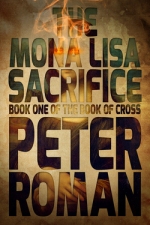
Get Lit with The Mona Lisa Sacrifice
I had a great conversation with Canadian writer and radio host Jamie Tennant for his show Get Lit on 93.3 CFMU. We talked why anyone would ever want to be a writer, where the idea for my Cross series of supernatural thrillers came from, and what it’s been like to publish the books in new editions, among other things. The interview is only a half hour so check it out when you have time!
Related: My other radio interviews and assorted video pieces.
Rituals, Hope and Ancillaries: The February 2025 Bibliofiles Edition

My reading list was varied this month. I finally finished Nick Cave’s Faith, Hope and Carnage, which I’ve been reading slowly over the course of several months. It’s the sort of book that needs you to take your time with it. The same goes for Mason Currey’s Daily Rituals. And I finally got around to reading Ann Leckie’s Ancillary Justice after all these years! Thanks, book club!
Fiction
Ancillary Justice by Ann Leckie

Breq is a soldier on a mission of vengeance on a frozen planet at the edges of the Radch, the galactic empire that has conquered much of the galaxy.
Breq is also one of many ancillaries — victims of the empire that have had their minds wiped and been replaced with a collective artificial intelligence that is Justice of Toren, the ship the ancillaries serve.
Only Justice of Toren has been destroyed and Breq is the last ancillary.
Ancillary Justice is not only a stunning first novel, it’s also an instant sci-fi classic. The book mixes history, politics, class, tech and philosophy — and throws in some action as a bonus!
Largely told in two storylines, it’s initially confusing as we see Breq in the present contrasted with the multiple POVs of countless ancillaries in the past. There are wonderful scenes in the past in which the narrative POV bounces from one ancillary to another and even the ship itself, telling part of a larger story. The scenes set in the present are a compelling counterpoint to these scenes, where we are confined to the POV of the surviving ancillary, who has much more agency and is driven to get payback for what happened to her ship.
The storylines begin to fuse together seamlessly as the book goes on, until readers are caught in a tale of political intrigue and covert warfare that leads Breq all the way to the head of the empire — or heads, in this case, as it is run by a cabal of clones that have their own agendas.
This is not your standard space opera with big ship battles and heroics. Instead, it’s an interrogation of humanity itself and thus one of the most compelling sci-works in ages.
Link: https://www.goodreads.com/book/show/17333324-ancillary-justice
World War Jake by Brad Dehnert

Jake works for an alphabet agency (think CIA but more tech) helping to edit the world order through use of misinformation and AI bots. When his work to install a Russian puppet goes wrong, Jake has to figure out a way to undo the nightmare he has created. A clever and timely look into how AI and disinfo is changing our world.
Link: https://www.goodreads.com/book/show/227005603-world-war-jake
Non-fiction
Faith, Hope and Carnage by Nick Cave and Sean O’Hagan

I’ve long been a fan of the musician Nick Cave because, well, he’s Nick Cave. If you like your music dark, with blends of twisted romance/lust, poetic songwriting, biblical and literary themes, sheer irreverence and gospel meets rock meets punk, then Nick Cave is your musical fallen angel.
But I never really expected Cave to also become a sort of modern-day prophet of uncertain, contingent faith and perhaps the most important philosopher of grief alive today.
Faith, Hope and Carnage is a must-read for any fan of Cave, but it’s also an important read for anyone concerned with spirituality in our troubled age, the role of music in an increasingly sterile society, the mysteries of artistic creation, how to grieve and live at the same time — and how all of these things come together.
The book chronicles a series of phone conversations between Cave and journalist Sean O’Hagan to record some of Cave’s thoughts on life. Much of it focuses on the tragic loss of Cave’s son Arthur, and his ghost very much haunts these conversations. How does one cope with such an event? In Cave’s case, he turned even more to music and spirituality.
“Things happen in your life, terrible things, great obliterating events, where the need for spiritual consolation can be immense, and your sense of what is rational is less coherent and can suddenly find itself on very shaky ground,” he says. “We are supposed to put our faith in the rational world, yet when the world stops making sense, perhaps your need for some greater meaning can override reason. And, in fact, it can suddenly seem the least interesting, most predictable and least rewarding aspect of your self. That is my experience, anyway. I think of late I’ve grown increasingly impatient with my own scepticism; it feels obtuse and counter-productive, something that’s simply standing in the way of a better-lived life.”
In his interrogations of spirituality, Cave has parallels with poet Christian Wiman’s meditative essays collected in My Bright Abyss. Both seem to share a sensibility that rejects any concrete truisms about spirituality while embracing the impulse toward it.
“Maybe the search is the religious experience,” Cave says in an echo of Wiman. “The desire to believe and the longing for meaning, the moving towards the ineffable. Maybe that is what is essentially important, despite the absurdity of it. Or, indeed, because of the absurdity of it. When it comes down to it, maybe faith is just a decision like any other. And perhaps God is the search itself.”
Cave sees a similar wonder in artistic creation: “You have to operate, at least some of the time, in the world of mystery, beneath that great and terrifying cloud of artistic unknowing. The creative impulse, to me, is a form of bafflement, and often feels dissonant and unsettling. It chips away at your own cherished truths about things, pushes against your own sense of what is acceptable.”
And then there are the conversations on grief, which connect many of the strands of the book and are sure to offer something deeply personal to every reader. “In grief, you become deeply acquainted with the idea of human mortality,” Cave says. “You go to a very dark place and experience the extremities of your own pain – you are taken to the very limits of suffering. As far as I can see, there is a transformative aspect to this place of suffering. We are essentially altered or remade by it. Now, this process is terrifying, but in time you return to the world with some kind of knowledge that has something to do with our vulnerability as participants in this human drama. Everything seems so fragile and precious and heightened, and the world and the people in it seem so endangered, and yet so beautiful. To me it feels that, in this dark place, the idea of a God feels more present or maybe more essential. It actually feels like grief and God are somehow intertwined. It feels that, in grief, you draw closer to the veil that separates this world from the next.”
I couldn’t help but think as I read these conversations that Cave has become as much a sort of prophet as a musician — a prophet of creativity, a prophet of spirituality, a prophet of grief. The church of Nick Cave is a church that more of us should attend.
Link: https://www.goodreads.com/book/show/59851730-faith-hope-and-carnage
Daily Rituals: How Artists Work by Mason Currey

Mason Currey’s Daily Rituals gives a glimpse into the working habits of pretty much any historical creator you can think of. Franz Kafka, Agatha Christie, Charles Dickens — if you can name them they’re probably in this book. There are many interesting insights into these creators collected here — and many anecdotes of sheer eccentricity! For instance, Currey describes Jonathan Franzen writing while wearing earplugs, earmuffs and a blindfold and Ayn Rand as going on writing binges fuelled by Benezdrine. (Substance abuse is a common theme among artists found in the collection.)
If you’re looking for tips to help you develop your own rituals, however, Daily Rituals will be of limited use. Often the creators featured here tend to be driven by some psychological quirk, addiction or even madness — hardly something to cultivate. Many others are able to lead a life of creativity because of family wealth — more desirable than madness, perhaps, but also more difficult to cultivate. The book is more interesting as a collection of trivia than a how-to guide.
If you’re curious about the lives of famous artists, though, Daily Rituals is worth the read. Think of it as a Lifestyles of the Eccentric and Famous.
Link: https://www.goodreads.com/book/show/15799151-daily-rituals
Poetry
Northerny by Dawn Macdonald

I was delighted to read Northerny by poet Dawn Macdonald because I was in the same writing group with her back in my university days. Dawn has always been one of the most unique souls I’ve ever met, and I urge all poetry lovers to read her book. It’s part examination of myths of the north, part memoir, all genius.
Link: https://www.goodreads.com/book/show/183935565-northerny
See also Dawn’s interview with poet rob mclennan about publishing her book in the midst of chaos, both cultural and personal: http://robmclennan.blogspot.com/2024/06/12-or-20-second-series-questions-with_0623544362.html
Play this: Wolves

I recently got together with some of my writing group for a games night and we decided to give Wolves by Coyote and Crow a try. We ended up liking it so much it’s all we played for the whole games night.
It’s the first “semi-cooperative” game I’ve tried, where you have to work with other players to survive but one player can still win the game. It’s an intriguing model that I’d like to try more in the future.
The premise is a familiar one: you have to gather resources to survive and have a shot at winning the game. Each turn you draw cards from your deck and have to assemble enough resource cards to fulfill three categories: fish, corn and bison. But drawing cards is risky, as there are three leader cards in your deck that act as wild cards. Draw one or two and you can use them as wild cards. But draw the third one and you can’t use them as wild cards — and you can’t draw any cards the next turn.
This is where the unique element of Wolves really shows itself, as you often have to help your fellow players gather their resources by gifting them cards or extra resources you have collected. If any one player is unable to assemble the resources they need, then everyone loses the game. So players are constantly working together to make sure everyone has what they need. This gets more and more difficult as the game goes on and the pool of available resources starts to shrink. (Cards are removed from your deck each turn.)
At the same time, however, players are competing with each other for status points. Status can be earned a number of different ways, but a significant part of it is giving gifts — that is, giving players the cards they need to survive. So the more you help each other, the more points you get. At the end of the game, the player with the highest status is named chief and wins the game. To be honest, though, this part almost felt like an afterthought to us as the game was challenging and tense enough just in the survival stages. We felt like we had all won simply by making it through to the end of the game.
So if you’re looking for a break from games like Settlers of Catan, I suggest giving Wolves a try. Bonus points for beautiful game boards and pieces!
PLR program an investment in Canadian culture

I’m so incredibly grateful to have received my latest payment from the Canada Council’s Public Lending Right program, which compensates Canadian authors for libraries providing free public access to their books. There are many reasons I love the PLR:
- I love libraries!
- The PLR payment helps keep me writing!
- I believe strongly in supporting Canadian writers!
The last point is probably the most important one in these challenging times. The PLR program is about more than just compensating writers. It’s an investment in the future of Canadian culture in many, many different forms. Each one of those payments helps a writer to buy time to create new works and add to the rich cultural history of this country. At a time when the very future of Canada seems at stake, you can’t put a price on this sort of support.
So thanks, PLR and Canada Council! And thanks to all of you who have bought my books and others from Canadian writers!
A Howling good time
I recently appeared on the radio show Howl on CIUT 89.5 FM to discuss the first book of my Cross series, The Mona Lisa Sacrifice. Topics covered:
- The pros and cons of writing immortal characters
- How much of the roguish antihero Cross is really me
- The experience of getting to update the book series for the newer editions
- And of course Dungeons & Dragons!
Bonus feature: I read from the first chapter of The Mona Lisa Sacrifice.
Interview starts around the 33:30 mark. I hope you’ll check it out.
Support your favourite magazines
I was saddened to see the news that On Spec, the Canadian magazine of the fantastic, will no longer be publishing print editions because of the increasing costs of print production and distribution. On Spec holds a special place in my heart, as it was the first magazine to publish my work. And it has incredible importance to the genre scene, both for Canadians and internationally.
On Spec isn’t alone in their struggles. Most magazine publishers have been ringing the alarm bells for some time now, especially after Amazon drastically reduced the ability to subscribe to their publications through its online service (a significant source of revenue for many magazines). There have been a number of magazines that have shut down over the last little while, and there will no doubt be more to come.
There are ways to support your favourite magazines, though. Many use Kickstarters to raise funds for the year, such as Uncanny, while others are increasingly using Patreon — see, for example, Beneath Ceaseless Skies, Apex, Grimdark, Bourbon Penn, Pulp Literature, etc. And there’s a good selection of magazines available on Weightless Books, either by the issue or by annual subscription. Often you can buy issues directly from the magazine publishers as well so they don’t have to pay a cut to another service — see Weird Horror magazine, for example.
So if you want to see your favourite magazines survive and keep providing you with reading material please support them today with a subscription or purchase of an issue! You may make the difference to the magazine continuing on or not.
As always, thanks for reading!
Azrael and the Dead Man’s Hand on Locus’s Recommended Reading List

I am beyond thrilled to see my latest tale of Azrael the angel gunslinger, The Angel Azrael and the Dead Man’s Hand, on Locus’s 2024 Recommended Reading List. It’s a wonderful honour, and I’m very grateful Azrael continues to find readers. Many thanks to Beneath Ceaseless Skies for publishing Azrael and the Dead Man’s Hand!
This marks the seventh Azrael tale in Beneath Ceaseless Skies. Here they are in order of publication:
- The Angel Azrael Rode Into the Town of Burnt Church on a Dead Horse – The angel Azrael rides into the town of Burnt Church for a drink and ends up helping the very strange inhabitants fight off a gang of demons that’s been tormenting them.
- The Angel Azrael Delivers Small Mercies – The angel Azrael encounters an angel who is determined to turn the world into her own personal Hell and only Azrael can stop her.
- The audio version of “The Angel Azrael Delivers Small Mercies” with a new introduction I recorded for the story
- The Angel Azrael Delivers Justice to the People of the Dust – The angel Azrael rides into a mining town that is under siege from curious bone creatures stealing the town’s children. When Azrael intervenes, he discovers that nothing is what it seems in this strange place.
- The Angel Azrael Encounters the Revelation Pilgrims and Other Curiosities – The angel Azrael is hired by a group of pilgrims to guide them through a dangerous stretch of land, where they encounter a city of the dead and an outlaw band of half angels intent on ensuring they don’t make it to their destination.
- The Angel Azrael and the War Ghosts – The angel Azrael tries to stop a group of ghostly soldiers from preying upon travellers and rides straight into his own troubled past.
- The Angel Azrael Battles a Dead God Among the Heretics – The angel Azrael encounters a village full of crazed golems intent upon resurrecting a dead god to unleash upon the world — a god that Azrael has already killed once.
- The Angel Azrael and the Dead Man’s Hand – The Angel Azrael wanders into a strange town and becomes trapped in a supernatural and deadly card game.
Excerpt from The Angel Azrael and the Dead Man’s Hand:
The angel Azrael rode the dead horse across the broken land under the light of a half moon until he came across a graveyard that seemed to have no end. Wooden crosses stretched away to the horizon, more than he could count. Many of the crosses were bent close to the earth by time and the elements. Some were decorated with worn hats or gun belts with guns still in their holsters while others were adorned with bits of tattered lace or other fabric. None of the crosses bore names, at least none that Azrael could see.
It had been a week since he’d last come across a trading post, and even then the proprietor had been the only living soul there. Azrael had traded her a feather from his ruined wings for some of her homemade whiskey, served in a battered cup decorated with bloodstains. The whiskey had left his thoughts in a haze for days, but Azrael was relatively certain the woman hadn’t mentioned this field of the buried dead. Maybe she’d never ventured this way. Or maybe there was some other reason she hadn’t said anything. Either way, it wasn’t the first time Azrael had stumbled across a forgotten graveyard in the middle of nowhere. The world was made of such places.
Azrael scanned the night sky for the buzzards that trailed him everywhere, and because he had the eyes of an angel, he was able to pick them out of the darkness. They were hanging back, as if they didn’t like the looks of all those crosses stretching to the end of the world. Azrael reined in the dead horse, contemplating whether he should pick some different direction to wander. But then he caught a flicker of light in the distance, and a few seconds after that the faint sounds of glasses clinking together. It was a sound he’d heard countless times before, and it meant there was a saloon ahead. And where there was a saloon, there was real whiskey. He rode on, ignoring the warning of the buzzards, because his saddlebags were as empty of spirits as everything else.
A cluster of structures grew out of the night as he neared some sort of small town in the middle of the graveyard. Although to call it a town was to embellish its nature considerably. There were three buildings side by side and leaning against each other like they would fall down if not for the others. A saloon, a hotel, and a church, in that order. Only the saloon had lights flickering in the windows, courtesy of the candles inside. There were none of the usual sounds of laughter or quarrelling coming from such a place. Instead, the whole town was as quiet as the surrounding graveyard.
The crosses stopped a few dozen feet away from the walls of the buildings, but the space around the town wasn’t empty. It was full of wagons that looked as weathered as the crosses. They were piled with wooden crates and barrels, bundles of shovels and hoes, rolls of canvas and rope, and so on. All the cargo had a thick layer of dust upon it, suggesting the wagons had been out here some time. As if abandoned or forgotten. A couple of the wagons were covered and held sleeping mats spread out inside, indicating they were home to entire families. Another wagon had painted words on the side of it. Sky’s Elixirs for Good Health and the Preservation of Your Soul. There was no sign of horses or any other beast of burden. Nor were there any roads leading to this town or away. Whatever travellers had come here must have done so in a distant enough past that the elements had covered up their tracks.
It was a peculiar sight, nearly as odd as the vast graveyard itself. But Azrael didn’t dwell on it. He’d seen plenty of peculiar things in his travels, and he wasn’t planning on lingering in this place.




 peter darbyshire