Category Archives: Reading List
Making CanLit a little more CanFantastic

Space vampires, murderous monks, Vancouver valkyries, zombie actors and aboriginal superheroes? This isn’t Susanna Moodie’s CanLit.
I’ve published a roundup of Canadian writers that have taken CanLit into CanFantastic territory over at the Wolsak and Wynn blog. Give it a read and share it with those you think may be interested. And suggest your own additions to the list! I’m always looking for new CanLit reads, so I’d appreciate any tips.
Thanks for reading!
– Peter
Welcome to the chaos machine – Bibliofiles August 2024

Murderous monks, creepy suburbia, giant brains, social media chaos machines — this month’s Bibliofiles of my latest reads is as weird and fantastic as it gets! Let me know if you have any tips about what I should read next.
Literary fiction
Satellite Image by Michelle Berry

A city couple move to a small town after one of them is assaulted, hoping for a quieter and safer life. But small towns have their own secrets, and the couple is soon haunted by a satellite image of a potential body in their yard and strange incidents happening within the home, to say nothing of a cast of curious neighbours. It’s a psychological thriller that cranks up the tension with each chapter. You’ll be checking the locks over and over on your own home during your sleepless nights after finishing this book.
Link: https://www.goodreads.com/book/show/214982605-satellite-image?ref=nav_sb_ss_3_15
Genre Fiction
Saevus Corax Deals with the Dead by K.J. Parker

Saevus Corax makes a living scavenging the dead of battlefields with a band of not-so-merry men and business is good. As it turns out, Corax is using his job to hide the fact he killed off his former self, but his past just won’t stay dead and soon he is forced to leave the battlefields for even more dangerous realms. It’s classic Parker, with smart and double-crossing antiheroes and enough twists and turns to throw out your back. Better buy the full series so you have something to read while you rest.
Link: https://www.goodreads.com/book/show/61030541-saevus-corax-deals-with-the-dead
Crucible of Chaos by Sebastien de Castell

The clever and wisecracking Greatcoat Estevar Borros arrives at an ancient abbey where the monks have gone mad, demons run amok and the dead gods may not be as dead as everyone thinks. This may be my favourite Greatcoats novel yet by de Castell.
Link: https://www.goodreads.com/book/show/197664774-crucible-of-chaos?ref=nav_sb_ss_1_17
Across the Street by Greg Van Eekhout
An office drone decides to try a new route on his lunch excursions and finds himself in a strange version of our reality – a pet shop with a dragon, a meat shop with human corpses, a manhole with a mysterious creature, a church with actual angels and more. A wonderfully bizarre daydream that will speak to all of us who spend in our days in cube farms.
Link: https://www.uncannymagazine.com/article/across-the-street/
Median by Kelly Robson
A care aide provider in a broken-down car on the highway starts getting emergency calls from people who need help – but she doesn’t know any of them. When she stumbles upon a different and fatal accident, as well as a three-headed dog, things get weird. Another delightfully strange story from Kelly Robson.
Link: https://reactormag.com/median-kelly-robson/
“Gold, Glory, and the McCorry Boys” by Christopher O’Halloran
The best lyrical weird western heist father-son zombie story I’ve read this year.
Link: https://kaleidotrope.net/summer-2024/gold-glory-and-the-mccorry-boys-by-christopher-ohalloran/
“How to Kill the Giant Living Brain You Found in Your Mother’s Basement After She Died: An Interactive Guide” by Alex Sobel
A fun little story about mother-daughter relationships, emotional baggage, and of course giant living brains in basements.
Nine Recordings of Grief by by Zachariah Claypole White
When the world ends, it probably won’t be with zombies or supernovas or alien invasions or something we understand. It’ll likely end with something weird and incomprehensible, something we simply can’t fathom. If an enigmatic apocalypse appeals to you, then I think you’ll like “Nine Recordings of Grief.”
Link: https://www.bourbonpenn.com/issue/33/nine-recordings-of-grief-by-zachariah-claypole-white
Non-fiction
The Chaos Machine by Max Fisher

Why did Facebook, YouTube and other social media platforms transform over time from hubs of connection to engines of radicalization and misinformation? The easy answer, as always, is to blame it on the algorithm. But how does code lead to conflict? The Chaos Machine by Max Fisher is an informative but chilling look inside the social media networks to reveal how they turn user feeds into echo chambers of infectious content designed to outrage and mobilize — but most of all to increase clicks/views. Nothing drives engagement like ragebait, after all.
But the algorithm is just code created by workers in shiny tech campuses, so it should be easy to correct this problem, right?
This is where Fisher reveals the more disturbing issue underlying the problem with the social media networks: there’s money to be made in chaos. The Chaos Machine provides example after example of Facebook and YouTube insiders coming up with ways to stop their platforms from encouraging murder, genocide and civil war, only to be overruled by leaders who would rather maximize profits than minimize the death and destruction caused by their products. The end result of this is the world we now live in.
The Chaos Machine should be required reading for anyone who uses social media, no matter what your political ideology, for it reveals how we’re all being manipulated to enrich the lives of a handful of tech barons. We’re not just the audience in the attention economy or even the product. We’re also the victims.
Link: https://www.goodreads.com/book/show/58950736-the-chaos-machine
Why are debut novels failing to launch?
There was a time when a young writer could publish their first book and have a chance at success on the writing alone. Do you have to be a social media influencer to have a shot at a writing career now?
Link: https://www.esquire.com/entertainment/books/a60924704/debut-fiction-challenges/
The Bibliofiles – June 2024
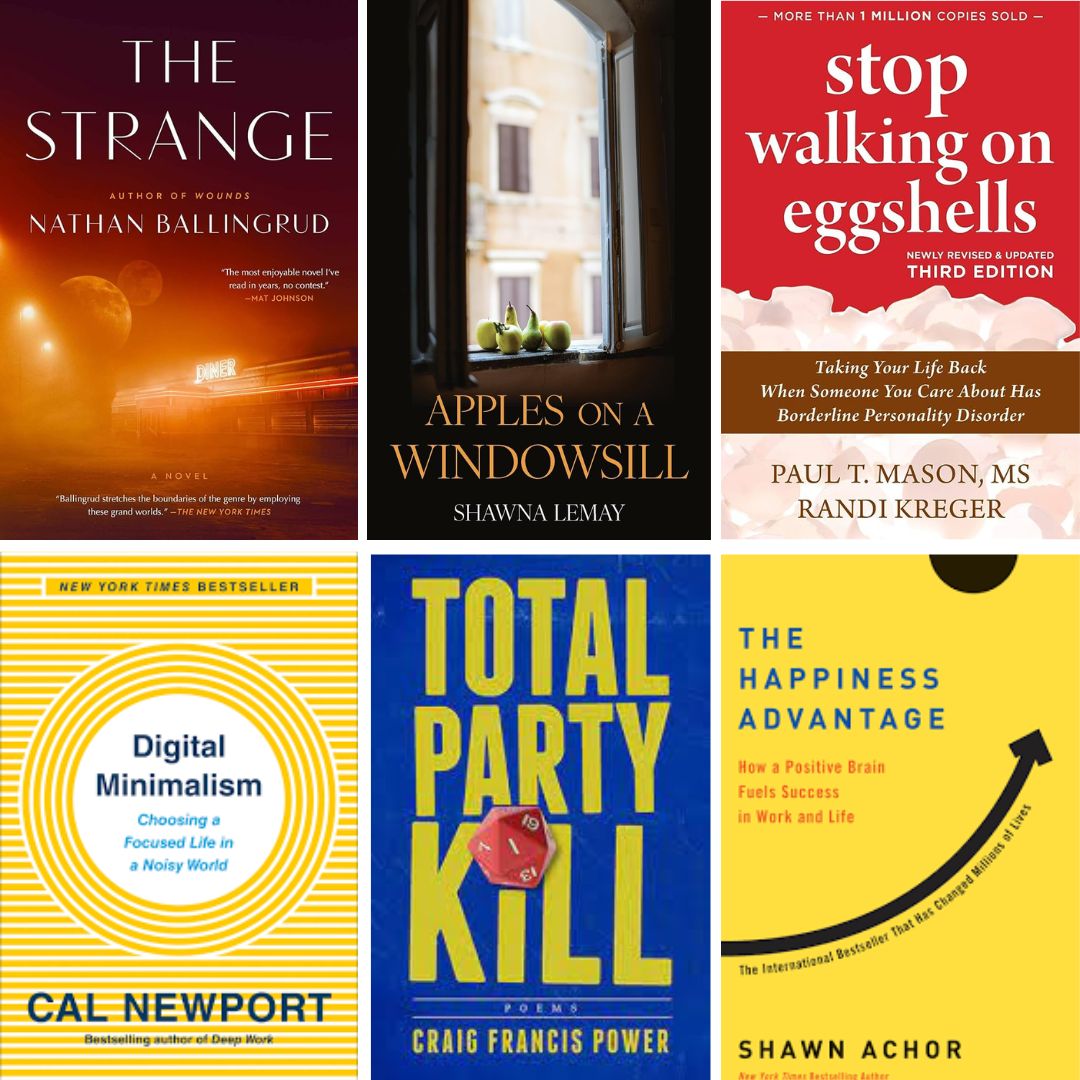
I’ve been riding the train a lot lately, which has given me more time to read. I leaned a bit toward non-fiction in June, but I did manage to read some pretty stellar fiction as well — and interstellar fiction! And whatever the hell Total Party Kill is….
Check out my latest recommended reads below. I hope you like them as much as I did.
Genre Fiction
The Strange by Nathan Ballingrud

I think The Strange by Nathan Ballingrud may be the best space western weird horror literary novel I’ve ever read. The tale of teen Annabelle venturing into the Martian wastelands to recover a recording of her missing mother after it was stolen in a robbery, it’s got quirky robot sidekicks, desperate and doomed settlers, outlaw societies, eerie ghosts, and hidden treasure that is as dangerous as it is alluring. A truly mad and visionary work from Ballingrud, as always.
Link: https://www.goodreads.com/book/show/61272810-the-strange
“In Bludd” by Jeffrey Ford
“In Bludd” is as if Raymond Carver’s stories had been written in a demonology tome. It’s a suburban dystopia of sorts, with the usual lost love and lonely souls. Only here one of the lonely souls is Hartly, who spies on his lost love, Verbena, in her house by means of a monstrous servant named Abelard (who has his own sad suburban back story). There’s a gun, a dangerous ex-husband, and ample amounts of alcohol, but the story is more emotional twists and turns than action tale. (Truth be told, it feels as if Harold Pinter snuck into one of the drafts and started moving things around.) I’m new to Ford, but he’s quickly become one of my favourite writers because of the way he turns our world inside out to reveal its weird, alien insides.
Link: https://www.sundaymorningtransport.com/p/in-bludd
“Shepherd Not Sheep” by Simon Strantzas
What happens when trolls maybe move in under some bridges of a strange town and children begin to disappear? Well, lots of council meetings, of course. And suspicion and conspiracy theories. And a curious encounter with one of those trolls. If you like weird lit, it doesn’t get much weirder than “Shepherd Not Sheep” by Simon Strantzas.
Link: https://www.bourbonpenn.com/issue/32/shepherd-not-sheep-by-simon-strantzas
“Sever and Bind” by Amanda Helms
A beautifully eerie tale of a young witch, her scheming mother, the Lord of the Dusklands, dead gods and a ghost dog. To say more would be to say too much. Just go and read it.
Link: https://www.beneath-ceaseless-skies.com/stories/sever-and-bind/
“A Magician Did It” by Rich Larson
An absolutely enchanting tale about a couple of petty crooks hired by a mage’s cockroach familiar to break the mage out of a prison for magicians. Of course, nothing is what it seems when dealing with magicians — including the prison, the guards, the mage and even the job itself. Magical!
Link: https://www.beneath-ceaseless-skies.com/stories/a-magician-did-it/
Non-fiction
Stop Walking on Eggshells by Paul T. Mason and Randi Kreger
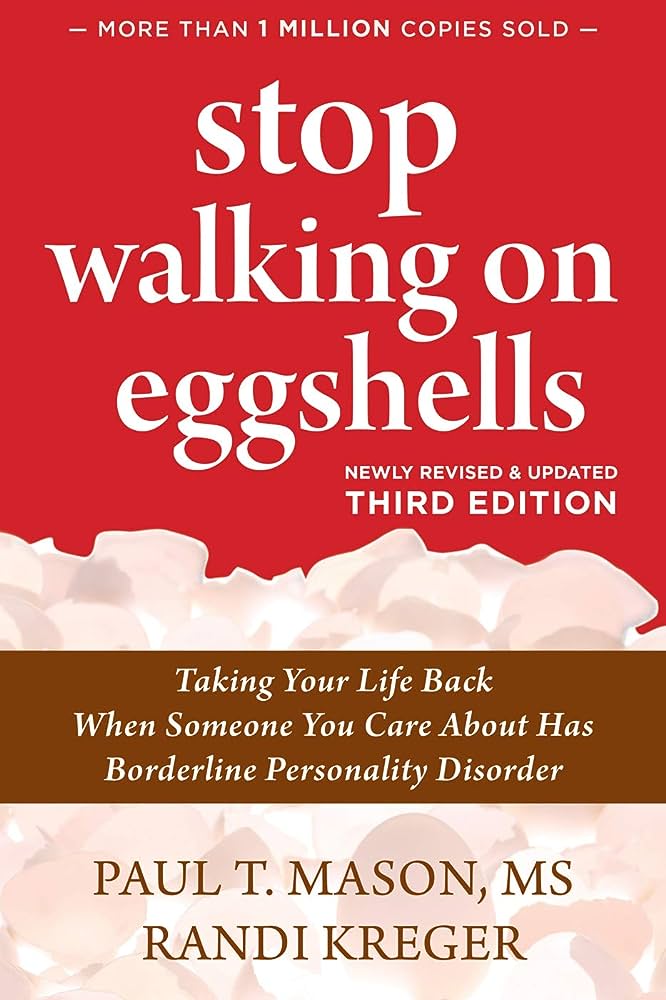
Does someone in your life have you “walking on eggshells” because of their volatile behaviour? If they lack emotional regulation, are disassociated from reality, see the world through feelings rather than facts, are estranged from most of their former friends and family, have substance use issues, engage in risky sexual behaviour, and fly into a rage over inconsequential things, then you may be dealing with someone who has borderline personality disorder (BPD). If your personal situation is hitting more than a few of the checkboxes here, then you’ll likely want to read Stop Walking on Eggshells by Paul T. Mason and Randi Kreger to educate yourself about BPD and learn how to navigate this confusing and often frightening scenario.
Link: https://www.goodreads.com/book/show/188013.Stop_Walking_on_Eggshells
Digital Minimalism by Cal Newport

Digital Minimalism by Cal Newport lays out the challenge faced by all of us in the attention economy: how do we have a healthy relationship with technology that is increasingly designed to hijack our minds to keep us glued to apps? The answer is not to stop using technology — who can really manage that, after all? — but to be more intentional and focused in our use of tech. That involves taking a digital detox in order to figure out which devices and services you actually need, then using them in a mindful and deliberate fashion to serve those needs (when too often we serve the needs of the tech companies). In other words, use the apps and don’t let them use you. Ideally, the resulting transformation should allow you to use tech effectively and efficiently, giving you more time to be present in the real world and your own life. Digital Minimalism should be required reading for everyone that owns a phone or has ever logged into social media.
Link: https://www.goodreads.com/book/show/40672036-digital-minimalism
Apples on a Windowsill by Shawna Lemay

A collection of beautiful and thoughtful essays from one of my favourite writers, Shawna Lemay — who is also the publisher of Transactions With Beauty. The essays in Apples on a Windowsill cover topics such as still lifes, Springsteen, creativity, marriage, photography and so much more. The subjects are all deeply personal to Lemay but at the same time thoughtful meditations on art – process, history, motivation and even technique. Lemay’s writing is so powerful and transcendent that you’ll find your own life reflected in these essays over and over again — I feel like I’m sitting at the kitchen table with her or walking the streets of Venice with her and her husband (the incredibly talented artist Rob Lemay). A warning, though: read each essay slowly as they are like sinking into a warm bath made of words. Savour the moment.
Link: http://www.shawnalemay.net/applesonawindowsill
The Happiness Advantage by Shawn Achor

Do you choose to be happy no matter the circumstances or do you wait for something external to make you happy (a lover, a good job, a lottery win)? If it’s the former, you are operating at an advantage over most people. If it’s the latter, then you should probably read The Happiness Advantage by Shawn Achor. The book has echoes of Stoicism, in that it says you can’t control the world but you can control how you react to it, and you should always be trying to find ways to be grateful, positive and optimistic no matter what your circumstances. According to Achor, happiness really is an advantage — we perform better in every aspect of life when we are happy, we have more friends (and a strong social network boosts your happiness in a nice feedback loop), we are more motivated and resilient, we are better at problem solving and more creative, and so on. Meanwhile, those who wait for happiness to come to them tend to be more stressed, more likely to be lonely or have anxiety, less productive and motivated, and stuck in a fixed mindset vs. the growth mindset of happiness.
The book isn’t just observations, though. Achor also has some tips on how we can learn to embrace happiness: see the opportunity in setbacks and learn from defeat, focus on changing the world in a small circle around you and then gradually expand that circle, learn how to decatastrophize, embrace “active leisure” where you must participate (games, sports) over mindlessly doomscrolling social media or binge watching Netflix, increase your social connections, and work to make those around you happy to better the mood and ability of everyone.
In short, choose happiness and you will indeed be happy.
Link: https://www.goodreads.com/book/show/9484114-the-happiness-advantage
“More reading, more books”
Read more, just read more. It’s good for your soul of whatever you want to call your inner self.
Link: http://transactionswithbeauty.com/home/morereadingmorebooks
“This Business Is Crazy”
Did you know that more than half of all books published sell less than a thousand copies? You may have thought publishing was a crazy business before, but you’ll really think it’s crazy after reading this SHuSH post.
Link: https://shush.substack.com/p/this-business-is-crazy
Poetry?
Total Party Kill by Craig Francis Power
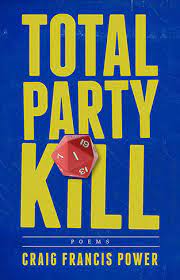
I don’t even know how to describe Total Party Kill by Craig Francis Power. The cover says “poems” but it’s more a collection of dungeon crawls through the soul. Total Party Kill fuses Dungeons & Dragons adventures with addiction memoir with trauma chronicle with pop culture fever dream and the result is as brilliant as it is indescribable. A natural 20 of artistic accomplishment.
The end times newsletter

I’ve just sent out my December newsletter, which collects a bit of publishing news (a new Azrael the angel gunslinger tale coming in the new year!), some recommended reads and views, and a bit of personal miscellany.
One note: The newsletter service that I use, Tiny Letter, is shutting down in February. I’ll likely migrate the newsletter to Substack as that seems to be working well for other authors and readers alike, but I’m open to suggestions.
On the Bookshelf: The Lonely City by Olivia Laing

During one of my lonelier periods as a young man I used to spend a lot of time wandering the city where I lived. Loneliness drives us to be around others or maybe to escape ourselves. Such moments tend to amplify the condition, though, as there’s nothing like feeling isolated in a crowd of strangers to really highlight your loneliness.
I’m tempted to say my wandering was aimless, but it wasn’t. It was undirected perhaps, but intentional. I wanted to experience some connection to others or perhaps even to the city itself. So it was I found myself in settings that inevitably attract the lonely — cemeteries, churches, hiking clubs, cafes, writing groups and the like. Who knows how many people like me were also in those places, searching for some connection? Entire communities, perhaps.
It’s this sense of communities of the lonely that pervades Olivia Laing’s book The Lonely City: Adventures in the Art of Being Alone. Equal parts autobiography, biography, art history, art theory and philosophical musing, the book chronicles Laing’s physical and emotional journeys after a breakup and connects them with biographies of famous and little known artists who all searched for or depicted dis/connection themselves in some form or another — Andy Warhol, Edward Hopper, Billie Holiday, Jean-Michel Basquiat and more. We learn about Warhol’s obsession with chronicling everything in his life to surround himself with an ever-present if virtual community, we consider the barriers to connection in Hopper’s famous painting of a cafe at night — the canvas and then windows separating the viewer from the subjects of the painting, who are themselves mostly isolated from one another, in a city cafe that seems to have no entrance or exit — and we experience Laing’s longings that will be so familiar to so many of us.
It’s a meandering yet purposeful book that somewhat alleviates the emotional crisis of loneliness by drawing the reader into Laing’s life and connecting author and reader both to a broader community of yearning souls. The entire book becomes an act of communion of sorts, where we can transcend our isolation by understanding the isolation of others who, despite their fame, were often more alone than we can ever imagine and who were able to convert their disconnection into a form of transcendence through their art. After all, what is a painting or a book or a song or even this review if not an attempt to communicate with others, to connect with others?
“Loneliness might be taking you towards an otherwise unreachable experience of reality,” Laing writes at one point. Isn’t that what all our wandering is about in the end?
On the Bookshelf: The Devil’s Detective

The Devil’s Detective by Simon Kurt Unsworth is one of the creepiest and disturbing visions of Hell ever created. Not because it’s all horrible monsters and terrible torments, but because it’s so close to our own world.
The book follows an Information Man aka detective in Hell named Fool. He is tasked by Hell’s incomprehensible bureaucracy to investigate murders in the infernal realm, which resembles a 1940s/50s town on the edge of a dying rural area (in my reading of it anyway). The setting synchs nicely with the noirish voice of the book, but Fool isn’t exactly your typical noir detective. For one, he never actually solves any murders. Every investigation gets closed with paperwork that says “Did Not Investigate,” and he works for the demons instead of being some sort of lone knight. The dead never get justice when they are killed by demons. Instead, they are tossed back into the seas of limbo, where they will be plucked out again at some future point to begin their torment again.
And torment it is, for those trapped in Hell are forced to endure never-ending labour for the demons with no source of light or happiness in their lives. Instead, there is only the constant existential anxiety of when not if those same demons will decide to turn on them and devour their souls. There’s no escape, not even for the demons, who were here long before the humans came and don’t seem that happy about Hell themselves. It feels like a manifesto against capitalism at points — the entire world seems dedicated to the torture of humans by the machinery of work, with overseers/managers being actual demons that want to feed on their workers’ souls — but it’s a familiar enough world that most readers will see their own personal Hell reflected in it.
Everything changes when the angels arrive, though. Fool is ordered to escort a group of them through Hell at the beginning of the book, when they are on a mission to seek out souls for ascension to Heaven. And this is where the truly chilling aspect of Hell becomes manifest. For the angels reveal there is just the tiniest shred of hope for escape from Hell — but it seems almost random. And it’s that hope that highlights all the other suffering. If there was no chance whatsoever of escape, perhaps the damned would eventually grow accustomed to their suffering or maybe even try to do something about it. But instead they are always captured by hope of escape to Heaven, even though they stand nearly no chance of ever seeing that hope realized. Hell is truly to be found in hope.
When the angels visit, Fool is drawn into a very curious string of murders in which the victims seem to be released from Hell. The question is who’s behind the murders and what they want, as the killings kick off a rebellion of sorts in Hell, where the damned rise up against their demon masters and Fool is caught in the middle. By the time he solves the mystery, all of Hell has been transformed. And even the demons don’t know what comes next.
The Devil’s Detective is a truly fabulous read that combines a number of genres into a chilling, terrifying and yet truly beautiful story. You’ll never think of Hell the same way again.
- Related reading: Nathan Ballingrud’s Wounds: Six Stories from the Border of Hell. It takes the opposite approach from The Devil’s Detective and presents Hell as something incredibly alien and ultimately unknowable. Very creepy and very beautiful. It’ll worm its way right into your soul.
On the Bookshelf: The Scroll of Years by Chris Willrich

I thought I’d resume discussing my current reads here on my journal, as I try to resist the irresistible trend of social media becoming the default platform for all conversations. (See my reasoning here.)
First up On the Bookshelf: The Scroll of Years by Chris Willrich.
I fell in love with Chris Willrich’s tales at first read, after coming across them in Beneath Ceaseless Skies. I was so excited about them I messaged BCS editor Scott Andrews to let him know, and he pointed me to Willrich’s novels.
I recently finished The Scroll of Years, and I still don’t know how to talk about it. Perhaps because it’s one of those books that defies categorization. A risky move for a genre book, sure, but one that’s paid off in this case.
It’s as if it were a fantasy novel co-written by the ghosts of Italo Calvino and Fritz Leiber and transcribed by a dragon monk who sees only in ethereal. This is a tale that revels not only in unconventional characters and unexpected twists but also in storytelling itself. In fact, this is very much a novel about storytelling at every level — the characters’ greatest powers are their abilities to tell tales, the narrative ventures into one different genre after another, and the idea of being able to escape into a good story is actually key to the plot here.
The book mostly follows the thieves Bone and Gaunt, lovers that are trying to escape their pasts and find a safe spot to raise their coming child. But the narrative often shifts away from them to explore other characters’ tales that intersect with the story of Bone and Gaunt. And it’s a wildly imaginative cast of characters — weird magical assassins, a band of mysterious thieves, and even an unconventional dragon. To say any more would be to reveal too much!
The Scroll of Years isn’t traditional fantasy — it’s certainly not high fantasy or grimdark. Nor is it an easy read, as it demands your attention at all times. But it is a unique read and unlike anything else being published at the moment. The literary magic and originality of it alone are enough to earn five out of five scrolls from me.
Related Links:
Website – http://www.chriswillrich.com
X: https://twitter.com/librariangoblin
BCS Stories by Chris Willrich:
- “Hausferatu” — Issue #384, June 15, 2023
- “On Magog’s Pond” — Issue #367, October 20, 2022
- “A Manslaughter of Crows” — Issue #341, October 21, 2021
- “Eyetooth” — Issue #314, October 8, 2020
- “Shadowdrop” — Issue #261, Tenth Anniversary Month Double-Issue I, September 27, 2018
- “How the Wicker Knight Would Not Move” — Issue #99, July 11, 2012
A Tiny Newsletter – The Heretics Edition
I’ve sent out the August edition of my newsletter, in which I discuss my latest writing news, a bit of life stuff, highlights from my D&D campaign, what I’m reading, why I’m taking spiritual advice from Dwight Schrute of The Office and other miscellany. You can read it online at tinyletter.com/peterdarbyshire or subscribe to have it delivered to your inbox so you can read it on company time. No judgement.
On the Bookshelf: The Death and Life of Strother Purcell by Ian Weir

If Shakespeare and Faulkner had a knife fight in a back alley, the blood they spilled would be the ink Ian Weir used to record The Death and Life of Strother Purcell. The tale of a legendary gunman and his outlaw brother is as mythic as it is down and dirty, crossing years, borders and near every moral and ethical boundary imaginable as the estranged brothers head for a reckoning that is sure to be as apocalyptic as it is inevitable. It’s fit for those who like the westerns of Cormac McCarthy and Annie Proulx in equal measures: as literary as it is lurid, as epic as it is eerie. Picture John Wayne riding into a Greek tragedy and you’ll have a notion of the peculiar brilliance that is The Death and Life of Strother Purcell.
Jacket copy:
In 1876, the fabled lawman Strother Purcell disappears into a winter storm in the mountains of British Columbia, while hunting down his outlawed half-brother. Sixteen years later, the wreck of Purcell resurfaces – derelict and homeless – in a San Francisco jail cell. And a failed journalist named Barrington Weaver conceives a grand redemptive plan. He will write Purcell’s true-life story. All it requires is a final act…
What unfolds is an archetypal saga of obsession, lost love, treachery, and revenge. A deadpan revisionist Western, refracted through a Southern Gothic revenge tragedy, The Death and Life of Strother Purcell is a novel about two cursed brothers, a pair of eldritch orphans, the vexed nature of truth, and the yearnings of that treacherous sonofabitch the human heart.
On the bookshelf: Certain Dark Things

What is there to say about Certain Dark Things, the vampire novel by Silvia Moreno-Garcia set in Mexico City that mixes up the entire cinematic, literary and mythic history of vampires with the narco conflicts of the Mexican drug wars, run through a noir filter with the thriller levels cranked up, to create her own dangerous species of vampire novel?
What is there to say other than read it?




 peter darbyshire