Blog Archives
What gentlemen do across the river on a seldom seen road: The July 2026 Bibliofiles
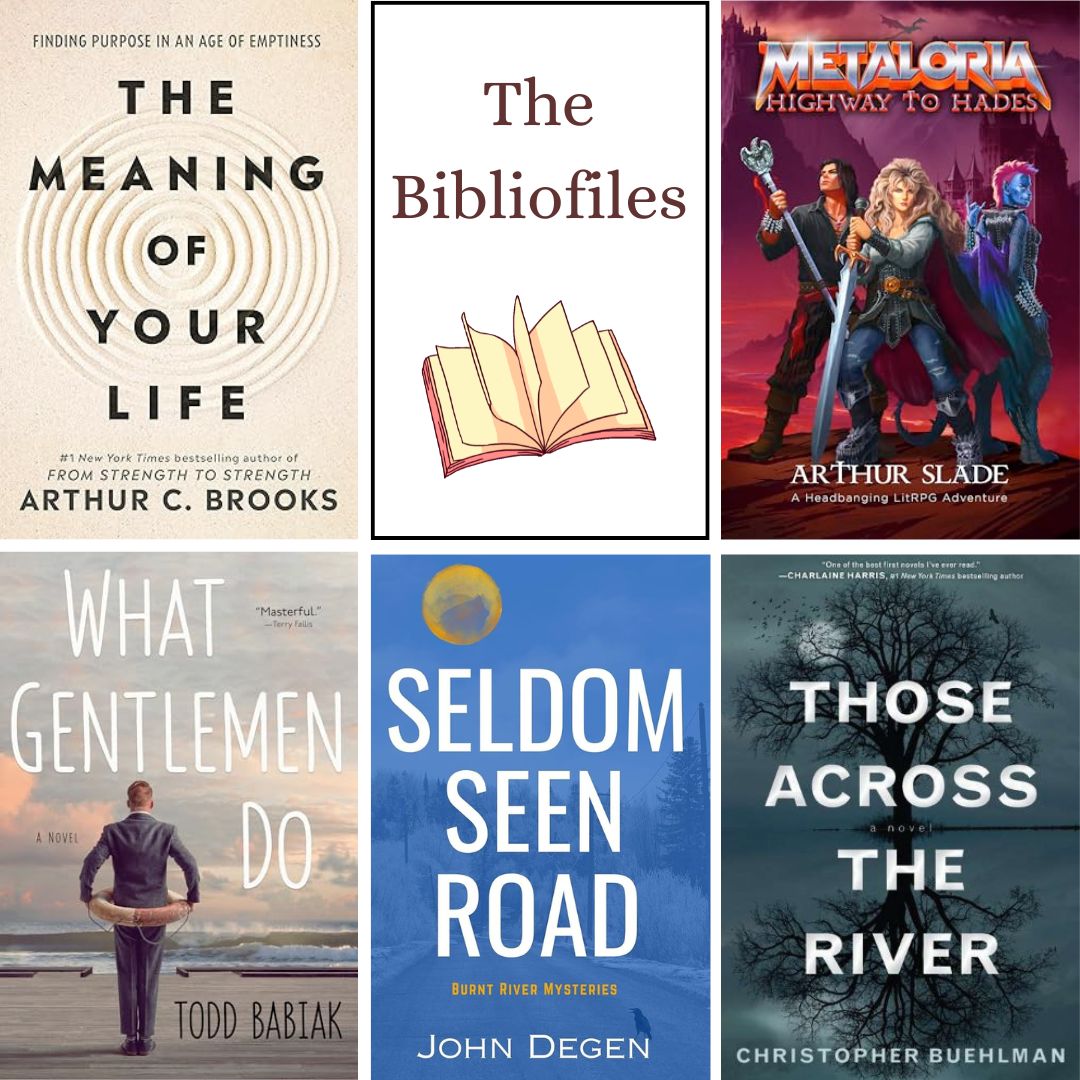
I think I hit all the genres for reading in July: literary fiction, non-fiction, mystery, horror, fantasy, LitRPG, weird lit — even some poetry!
Fiction
What Gentlemen Do by Todd Babiak
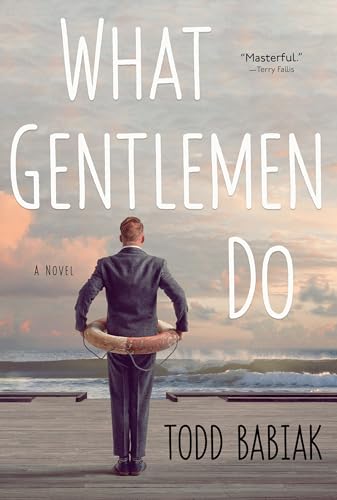
I love What Gentlemen Do because it brings together two of my favourite things: Todd Babiak and Stoicism.
Babiak’s novels are typically quiet, personal tales that extend out into the broader community, and What Gentlemen Do is no exception. It follows the young Waylan Gans after he has become the poster boy for right wing extremists due to his spontaneous involvement in a university protest related to a podcaster. Waylan now works at a bookstore in the small town of Walleye and tries to live down his unintended infamy while working through the emotional aftermath of his romantic coming out to a long-time friend, Derby, who rejected him. At the same time, his parents split up as his father has made a bad bet on cryptocurrency and they are about to lose the family home.
What Gentlemen Do is very much of the moment, as Waylon drifts first toward grievance culture of the sort favoured by young men, then toward Stoicism as a healthier antidote.
Like real life, though, What Gentlemen Do is more nuanced and complicated than a simple clash of values between toxic masculinity and Stoicism. Walleye is representative of dying small towns across North America, where those who can get out do and those who cannot face no future whatsoever. In that sense, the novel is as much an exploration of class culture and perhaps even capitalism as anything else. As Waylan reflects at one point, “No matter what I did I could never be one of them.”
In a bizarre twist, Waylon becomes the pet project of a wannabe political influencer thanks to his online fame and she sets him on a path to running for mayor of Walleye. This is where perhaps the true heart of the book lies, as Waylon genuinely tries to change the town for the better so people will stop leaving — Derby, his Stoicism professor, anyone else who can — and make a future for Walleye. In doing so, he may just create a future for people like himself as well.
This may be the real solution to the problem facing young men — not finding solace in online communities of other alienated individuals like themselves, but making change in their own community that helps build a stronger community.
Babiak, who works as a consultant for cities around the world, suggests as much in a Substack entry titled “One Thousand Small Things.” He spent years immersed in the feeds of online influencers and determined the audience was less interested in their messages and more in meaning and togetherness. Mass movements can’t save young men, Babiak argues, but perhaps a decentralized model of small ideas, projects and policies can.
“Young people can find meaning and togetherness on the streets when the local team wins a game, but they need something more enduring: an invitation to get out there and improve something, save something, create something with friends and like-minded strangers that can only happen in their communities.”
This is exactly what takes place in What Gentlemen Do as Waylan struggles against online extremism, political duplicity and even the shortcomings of Stoicism to maintain newfound values of hope and change in his community, where everyone can belong.
What Gentlemen Do is a quirky, funny, sad and timely novel – and it’s one of Babiak’s most important works yet.
Seldom Seen Road by John Degen
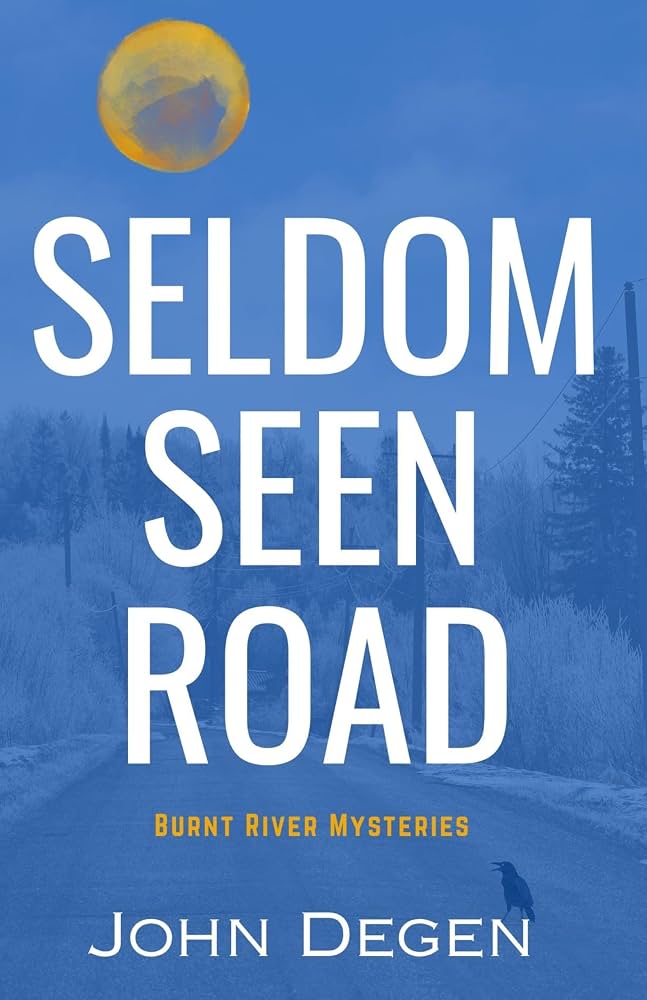
Seldom Seen Road by John Degen is a slow burn of a mystery novel that constantly defies expectations to become something unique in the genre.
It begins with the murder of a local environmentalist, who is fished out of a river with most of his face consumed by lamprey eels. At first glance, it seems comparable to Giles Blunt’s psychologically dark Cardinal mysteries.
But the cast of characters here are unlike other contemporary mystery series. Sure, there’s the northern cop Jeremy Roth, but much of the tale centres on his cousin Mark Roth, a widowed former musician who is hard of hearing and not at all inclined toward police work. The two are joined by Mark’s daughter Stephanie, a criminologist at Lakehead University who is dealing with the aftermath of not only her mother’s death but also of the end of her relationship.
Together the three of them put together the different pieces of the puzzle and tie the murder to the local drug trade, which is in a state of flux thanks to the legalization of marijuana.
But that is only part of the book. The real heart of Seldom Seen Road lies in its exploration of small town life — the characters found in the diners and gas stations, the constant threat from wildlife as development pushes up against and through nature, the solitude and loneliness, the hard life of resource extraction, the criminal and political tides of distant Toronto washing through the town every now and then, and more.
Seldom Seem Road is a murder mystery, yes, but it’s also a portrait of a community in a time that is leaving it behind. But even such a small town can have a powerful impact on the rest of the world, as becomes clear to everyone when the mystery leads to the town’s uranium refinery.
Seldom Seen Road is the first in Degen’s Burnt River series set on the north shore of Lake Huron. I hope there’s many more to come.
Metaloria by Arthur Slade
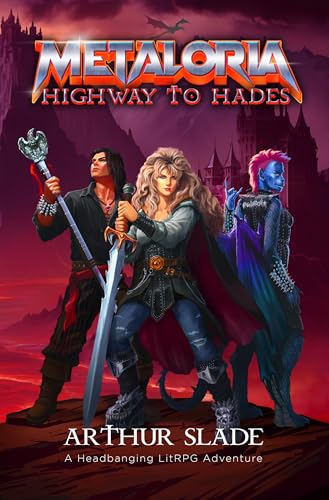
Metaloria is the latest fun tale from Canadian author Arthur Slade, who has made a name for himself in the field of fun fantasy novels. In Metaloria he puts a heavy twist on things in the form of heavy metal, as the novel follows a group of characters yanked from an Anvil concert and thrown into a most metal fantasy world ruled over by a deadly wizard.
Metaloria has an 80s D&D meets metal vibe, as the characters find themselves in a dungeon where every room has traps and creatures waiting to kill them. Their only hope is to level up and become powerful enough to take on the wizard – and level up they do as this is a LitRPG tale.
This is the book for you if you like your fantasy relentlessly comic and resonating with musical references both popular — “all we have to do is take a skiff up the Bretbachneil River to Twistysista and follow the Highway to Hades past Sweet, Child, and O’Mine until we reach Everyrosehasitsthorn” — and niche — “The only rangers we have here,” Fiora said, “are night rangers, and they eat the hearts of unwary travelers at the command of their leader, Sister Christianne.”
As a bonus feature, Slade included many of the people he’s played D&D with over the years in Metaloria, including myself: “The Mullet King McCann rules them. In his presence, you will always feel your hair is inadequate. Even Darbyshire and Latimer, his Metal Ball minstrels, have hair that would make rock gods weep with jealousy.”
What a motley crew!
Those Across the River by Christopher Buehlman
Those who follow me here know I’m a big fan of Christopher Buehlmann — The Blacktongue Thief, The Daughters’ War and Between Two Fires are some of my favourite books ever. So I thought I’d check out some of his earlier work, which is lesser known.
Those Across the River is a more horror than the fantasy Buehlmann typically writes these days, but it’s as different from everything else in its genre as his fantasy books are.
A tale of a small town in the south plagued by a supernatural and existential threat, Those Across the River is like reading Faulkner combined with Jim Thompson. It’s a got a lyrical voice with the kind of eye for detail that Buehlmann excels at, set in a southern gothic landscape haunted by the ghosts of slavery.
The book is told from the point of view of Frank Nichols, a former war vet and history professor who arrives in the town with his lover Dora, a schoolteacher he’s poached off a colleague. Dora teaches at the local school while Frank tries to write a book about his slave-owning ancestor in the town, who used to have a plantation that is now lost to the wilderness.
The town is one of those small villages that is doomed to die out eventually, but in the meantime the residents manage a hardscrabble existence that is made even harder by their ritual of releasing pigs into the forest across the river each month — which also happens to be where the lost plantation is located.
When the villagers decide to stop the ritual, horrifying things begin to happen. But this isn’t just some monster tale. The horror that descends on the town is straight out of the Jim Crow era and there is no escape — not even for Frank or Dora.
There’s a LOT going on this book — racial conflict, the urban vs. rural divide, post-war trauma, supernatural horror, an unreliable narrator and more. But it’s the characters that are always at the heart of the tale. Every single character is brought to life in unique and compelling ways in Those Across the River, including those who have only brief cameos. And the horror of the book relies upon their strong characterization. There are two scenes in the book — one involving a creepy boy and one with Dora — that are some of the most memorable horror moments I’ve ever read.
So if you’re a Buehlmann fan like I am, check out Those Across the River for another masterpiece.
Unprecedented Weather Patterns by Julia Leef
It’s raining blood, ping-pong balls, frogs, armadillos, asbestos and more in this beautiful tale of well, if not the end times, different times.
Link: https://redivider.emerson.edu/unprecedented-weather-patterns/
Non-fiction
The Meaning of Your Life by Arthur Brooks
Does your life feel like it is missing something, no matter how much you do? If so, you’re not alone. And Arthur Brooks may have an answer for you in his book The Meaning of Your Life.
Brooks argues that what too many of us are missing is meaning. Our lives may be busy, full of information and overscheduled with experiences, but they are not necessarily meaningful. In fact it’s quite the opposite, as we are distracting ourselves to the point of despair.
Like others writing in this field, Brooks points to the “doom loops” of social media and new technologies such as smartphones. Brooks adds a new angle with his argument that our constant busyness and addiction to tech keeps us locked in the analytical, left-brain mode while the right-brain sphere of mystery, love and yes, meaning atrophies. Brooks argues we need to embrace the right side of the brain again to unlock our full selves.
How to do that, though? The first step is to break the patterns of modern life — “to interrupt the doom loop” and regain your full attention to life. For Brooks, this means a digital detox a la Cal Newport.
“It also means detoxing from the addictive properties of the tech we have adopted to anesthetize ourselves in a world that once felt boring – but that most definitely is not. Finally, it means refusing to give in to the antiboredom devices – and, indeed, getting bored in a productive, healthy way, perhaps for the first time in a long time. These steps will unshackle your brain, heart, and soul to seek the mysteries of true meaning.”
Brooks urges people to “ditch all the empty cultural calories” that fill their lives and focus only on what is nourishing.
“Devote your attention only to what is edifying and uplifting.”
Excellent advice so far, but what exactly does nourish our selves in the modern age?
For Brooks, leisure is incredibly important. He does not mean simply relaxing and doing nothing, though. Instead, Brooks means leisure as the sort of activity that you do for yourself rather than for a paycheque and you need to be as disciplined about it as you are about work. Leisure is more than “not work” – it is a different skill.
“Properly understood, leisure is the work you choose to do for yourself without the economic whip driving you.”
Brooks cites the influence of philosopher Josef Pieper on his thoughts about leisure, noting that when life becomes an endless cycle of working and recovering only to work again then culture dies. Leisure is less recuperation then and more development of your whole identity. Another parallel may be Simone Stolzoff’s The Good Enough Job, which also stresses the importance of having purpose outside of work. (And all of this seems an important counter to the fanatics calling for 996 working culture – 9-9, 6 days a week.)
Brooks also stresses the importance of more abstract and emotional/philosophical pursuits, such as immersing yourself in nature similar to the Japanese idea of Shinrin-yoku (forest bathing), falling in love and seeking the divine. Brooks stresses that all of these take actual work to transform the abstract into the concrete in your life.
“Religious practice is the set of actions and rituals you adhere to as your observance of faith with others. Practice takes your faith beyond abstract belief and makes it part of your daily life: you can believe in the ideas of Zen or the divine inspiration of the Bible, but until you practice Zen meditation or attendance at a house of worship, belief without participation doesn’t mean much.”
Brooks incorporate a bit of Stoicism as well, particularly around the idea of suffering and our constant attempts to escape even the possibility of it.
“Suffering will certainly find you. Don’t try to avoid it, and when it comes, don’t try to eliminate it. Instead, learn to manage it so that it leads to learning and growth.”
So if you are missing something in your life, I recommend you check out The Meaning of Your Life as the first step in your meaning journey.
Related:
- Digital Minimalism by Cal Newport
- The Obstacle Is the Way by Ryan Holiday
- Stillness Is the Key by Ryan Holiday
- Four Thousand Weeks by Oliver Burkeman
- The Good Enough Job by Simone Stolzoff
Poetry
My House Is Not On Fire by George Murray
Another poem of lingering beauty from Canadian poet George Murray.
Conjuring a magical Canada with Canadian Urban Fantasy
Canadian publisher Wolsak and Wynn has launched a new online magazine called House Style, which will feature fiction, poetry and essays with a Canadian slant. As publisher Noelle Allen says in her thoughtful piece “Why We’re Not Afraid to Be Provincial,” readers want more Canada.
Canada is beautiful and complicated, pieced together over the lands of many Indigenous nations who still struggle for autonomy today. Our history is breathtaking and bloody, not boring. Our people are fascinating and dynamic. Why wouldn’t we want to delve into these stories? Why wouldn’t we want to publish them? Why wouldn’t we try to share them across provincial lines? The life you live in Fredericton is very different from the life you live in Hamilton and not at all like your life in Calgary. The stories, poems, songs and art from each city are equally different and fascinating. Why don’t we know them as well as those stories streaming to us from the States?
I had the privilege of writing one of the first essays featured on House Style, “Conjuring a Magical Canada with Canadian Urban Fantasy.” I consider a number of Canadian urban fantasy books and try to get to the heart of how Canadian urban fantasy may be different from other works in the genre — and why we need Canadian urban fantasy at the moment.
I hope you’ll give the essay a read and then check out some of the writers mentioned in it. They include:
- Jes Battis
- Kristi Charish
- Andrew Kaufman
- Chadwick Ginther
- David Neil Lee
- JR McConvey
- Silvia Moreno-Garcia
- Corey Redekop
- Eden Robinson
- Andrew Sullivan
- Drew Hayden Taylor
- Richard Van Camp
- Katie Welch
- Thomas Wharton
- Robert J. Wiersema
Weird Fantasy – The January 2025 Bibliofiles edition

I leaned toward fantasy reads this month — the weirder the better. And there were some real weird reads in this edition of the Bibliofiles.
Fiction
Sycamore by Ian Rogers

I’ve always loved Ian Rogers’ tales of The Black Lands, an eerie and deadly realm that intersects with our own and provides PI Felix Renn with supernatural creatures to investigate. So I was delighted to read Sycamore, which follows Renn to small-town Ontario and a mystery involving a string of murders, a missing man, a mysterious librarian, an eerie child — and a hidden portal to the Black Lands. Weird lit at its finest. You’ll be afraid of the dark all over again.
Link: https://www.goodreads.com/book/show/220978924-sycamore
We Are the Dead by Mike Shackle

What happens when the bad guys win in a fantasy novel and take over the world? The resistance fights back, of course. This is the premise of We Are the Dead by Mike Shackle. The land of Jia is overrun by the Egril hordes, which have united under a mysterious leader with powerful magic. Jia falls instantly to the Egril forces, which rule the land through a puppet government. But not everyone is willing to accept their rule. Brutal, bloody and action-packed, this is a nice twist of the blade for the fantasy genre.
Link: https://www.goodreads.com/book/show/42602296-we-are-the-dead
Kaiju Agonistes by Scott Lynch

A well-meaning but increasingly monstrous kaiju goes head to head with politicians in this blackly comic and delightful tale.
Link: https://www.uncannymagazine.com/article/kaiju-agonistes/
Foundryside by Robert Jackson Bennett

Foundryside by Robert Jackson Bennett presents one of the most original worlds to ever hit the fantasy genre. The city of Tevanne is ruled by merchant houses that use a hybrid of magic and technology to maintain their power and live a near godlike existence. The entire society is built upon the practice of scriving — altering reality by inscribing objects with enchanted sigils to convince them to act in ways contrary to their nature. Scrived pieces of wood can be hard as stone, swords can hit much harder than they should be capable of, lights can burn forever and so on.
The only problem is no one truly understands how it works. The technology comes from an ancient race long gone who had attained the power of godhood, and the people of Tevanne are trying to understand it as they slowly piece the remains together.
But Foundryside is not just an impressive piece of worldbuilding. It’s also a clever heist tale, as the thief Sancia steals an artifact that turns out to be from that ancient race — and is itself sentient. Sancia is a unique character herself, as she is a scrived human being that can essentially hear the thoughts of inanimate objects — the result of unthinkable experiments by the rulers of Tevanne.
It’s also very much a political novel as it depicts deep divides between the wealthy and the poor, between those who aspire to godhood and those who are trapped in the worst gutters of humanity. There are more than a few parallels to our own society here.
There’s even a philosophical element, as Foundryside explores what is to be human — and what it is to be a god. And there’s an interesting angle in our AI age of what it means to be a sentient object.
All of these things come together over the course of the book, as the secrets of the dead race are discovered and the story shifts from being a clever fantasy novel to a near existential horror. If you’re looking for a truly different reading experience unlike anything else in the genre, then Foundryside is the book for you.
Link: https://www.goodreads.com/book/show/37173847-foundryside
The Fantasy Writer’s Assistant by Jeffery Ford

The Fantasy Writer’s Assistant is one of the weirdest and best collections I’ve ever experienced. Humans on a strange planet dress as old movie stars for celebrity-obsessed aliens. An interviewer has tea with a very odd Jules Verne. A writer obsessed with a mysterious Kafka story finds himself at odds with the writer Jeffrey Ford. And many more tales straight out of Twilight Zone episodes written by Borges.
Link: https://www.goodreads.com/book/show/39748.The_Fantasy_Writer_s_Assistant_and_Other_Stories
The Wish Doctor by Arlen Feldman
A charming tale about an expert in contracts for binding djinn who finds himself summoned to the royal palace to study the most important contract of his life and find the hidden trap.
Link: https://www.baen.com/wish_doctor
Non-fiction
The Big Five Publishers Have Killed Literary Fiction by Elizabeth Kaye Cook and Melanie Jennings
Is consolidation among the big publishers slowly killing off literary fiction? And can the small presses save it?
Link: https://www.persuasion.community/p/the-big-five-publishers-have-killed
New Star Pushed Over the Ledge
The world of CanLit was shocked and puzzled when publisher New Star suddenly announced it was shutting down. Now it seems a dispute with the BC Arts Council may have led to the closure.
Link: https://shush.substack.com/p/new-star-pushed-over-the-ledge
On the Bookshelf: Happinesswise by Jonathan Bennett

Happinesswise by Jonathan Bennett could just as easily have been called Intimatewise or Intimacywise or some such thing. While the poems are all over the map when it comes to style and subject matter, at their core they are glimpses into the secret lives we all carry within us.
The book opens with a series of poems called Palliative Care Reflective Portfolio, which yes, are about death, but in that are also about entire lives lived. The poems feature notes about end-of-life care and the mundane minutia of death, or at least of putting off death for a few more ragged heartbeats: “the machine drone, the urine sting, the sour C. diff smell, the pump throb, the infection control, latex-free signage.” But the clinical language of the palliative care experience are countered in the same poems with the beautiful, transcendent moments of life, the memories that actually make us what we are: “tinkling wind chimes, your still-beautiful clavicle” and “My son’s first steps – across the lichen at the lake.” In an interview, Bennett states these poems are inspired by his own experiences working in a hospital and reading doctors’ portfolios: “Somewhere in the fog of pain meds and held hands, of DNR’s and oncoming grief, people retell stories that have bound them to one another over the course of a lifetime. Or else they sit in silence and just know, together. Is this happiness? Is it the end of happiness? These are the things the poem pursues.”
While the Palliative Care Reflective Portfolio is not specifically about Bennett, other poems do provide more intimate glimpses into his life. The poems found in Neurotypical Sketches offer insights into Bennett’s relationship with his autistic son – and insights perhaps into his relationship with autism, or at least autism as he has experienced it. There’s a map drawn by his son, Thomas, and moment after moment of a life transformed by something ultimately unknowable:
“He asks: Do cyclops blink or wink?
We laugh and and I ask him to tell me
the riddle of Theseus’s ship again
because I can’t get enough of him
charting his way through a paradox.
And to hear him argue the case
for Bigfoot is to doubt everything
you thought was true in the universe.”
There are other examples of this intimacy throughout the book – the series Concession Line Signs uses signs in Bennett’s region for inspiration, and as a vegetarian I certainly found a connection with his poem “Vegetarians Use the Back Door.” But really, it’s one of those collections best read and not talked about too much, because its true power is in how you will find yourself in the poems. How are you doing, happinesswise?