Author Archives: Peter Darbyshire
Everyone reading this is a suspect: The December 2025 Bibliofiles
December saw me on a mystery reading binge. Why do my thoughts turn to murder around Christmastime? Who can say…?
Fiction
Ocean Drive by Sam Wiebe
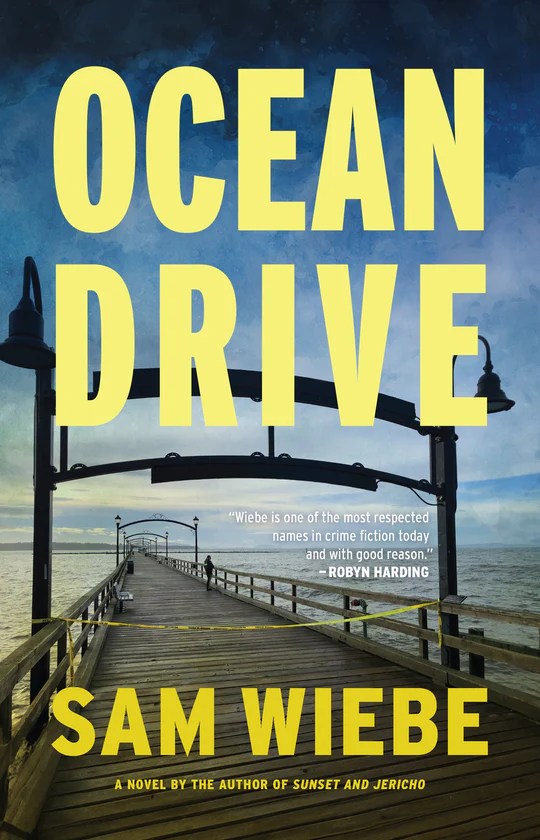
Hard-boiled British Columbia.
That’s what best describes Sam Wiebe’s Ocean Drive, a dirty thriller set in the idyllic community of White Rock on BC’s West Coast. Only this paradise by the water has a seamy underside of sex, drugs and murder. Lots of murder.
Ocean Drive tells two stories: that of Cam, a troubled young man who’s just been released from prison for manslaughter; and Meghan, a divorced “cop mom” who’s trying to solve a murder where Cam quickly becomes a suspect.
Both are caught up in a world of urban gangsters and a changing world, where the old farmland of the West Coast is being replaced by urban sprawl and casinos, and society is increasingly divided between the generationally wealthy and those who can never get ahead.
Ocean Drive could have been pulled from the headlines of BC’s newspapers — it has bloody gang warfare, crooked lawyers, desperate losers, infamous criminal brothers and cops that walk all the grey alleys in between.
You’ll never look at Beautiful BC the same again.
Link: https://www.goodreads.com/book/show/200358289-ocean-drive
Everyone On This Train Is a Suspect by Benjamin Stevenson
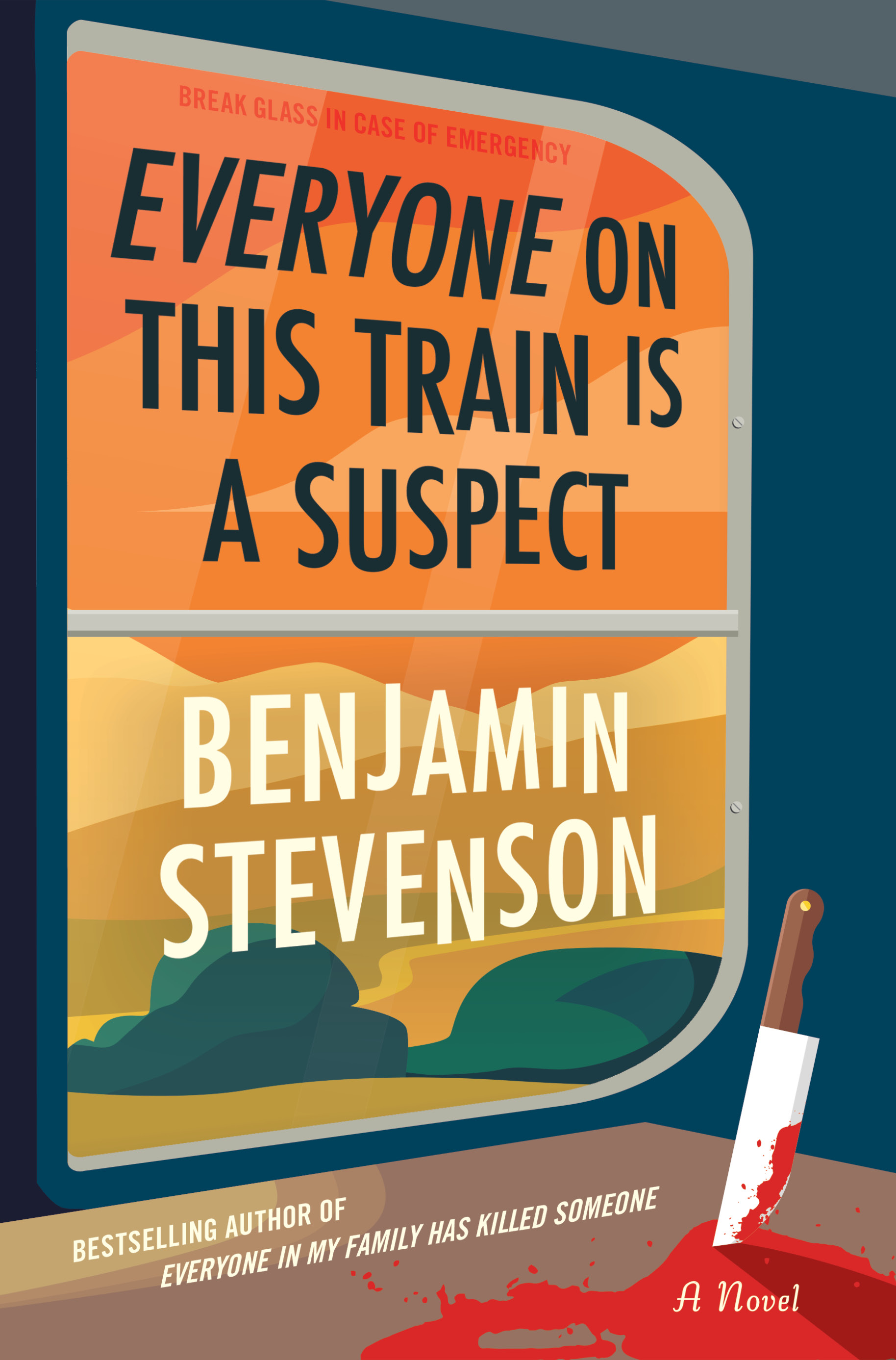
Author Ernest Cunningham joins a writers fest on a cross-country train in Australia in the hopes of finding inspiration to follow his debut book, Everyone in My Family Has Killed Someone. You can probably see where this is going right away and, yes, his fellow travellers are a cast right out of a classic murder mystery novel in an even more classic setting. The bodies start piling up and each of the suspects has their own secrets, grudges and schemes — layers upon layers of secrets, grudges and schemes in fact. What makes the novel all the more fun is that the suspects are writers, publishers and agents.
And Everyone On This Train Is a Suspect is very fun. It’s not just a murder mystery with multiple bodies but a meta-mystery with one of the most unique and clever narrators ever in the genre. Cunningham — or is that Stevenson? — knows all the rules of mystery novels and delights in incorporating them all into his tale with conspiratorial charm, delivering a masterclass in storytelling to the reader in a wonderfully self-aware reinvention of the genre. It’s clever and funny while at the same time being a wicked mystery.
Truly a revelation!
Link: https://www.goodreads.com/book/show/167006698-everyone-on-this-train-is-a-suspect
Rashomonster by Michael Allen Rose
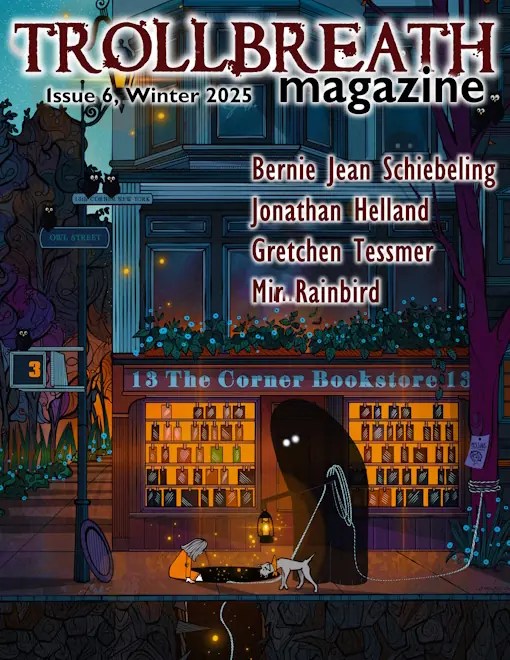
This rather sums up this bizarro monster story:
“The wolfman, in human form, attended a birthday party, which his friends had put together for him. At some point in the evening, two children played a prank resulting in the wolfman being fully startled, and this caused an expulsion of breath beyond normal expectations, setting a nearby mummy on fire. The wolfman, still human, tried to extinguish said mummy, but due to a mixture of incompetence and comic misadventure, the wolfman caught fire as well, was horribly burned and otherwise injured, and proceeded to transform into a wolf, because of the stress. The wolfman was subsequently taken to the veterinarian by Frankenstein’s non-monstrous person consisting of collected body parts repurposed for new opportunities.”
Link: https://magazine.trollbreath.com/rashomonster-2/
Non-fiction
How to Fix Book Publishing by Kenneth Whyte
Canadian-published books now account for less than 5% of the Canadian publishing market — and the situation is getting worse, not better. How to turn that around?
How about reinventing the PLR (public lending right program) to better reward authors with Canadian publishers and the publishers themselves?
Link: https://substack.com/home/post/p-180628703
Keep Going by Austin Kleon
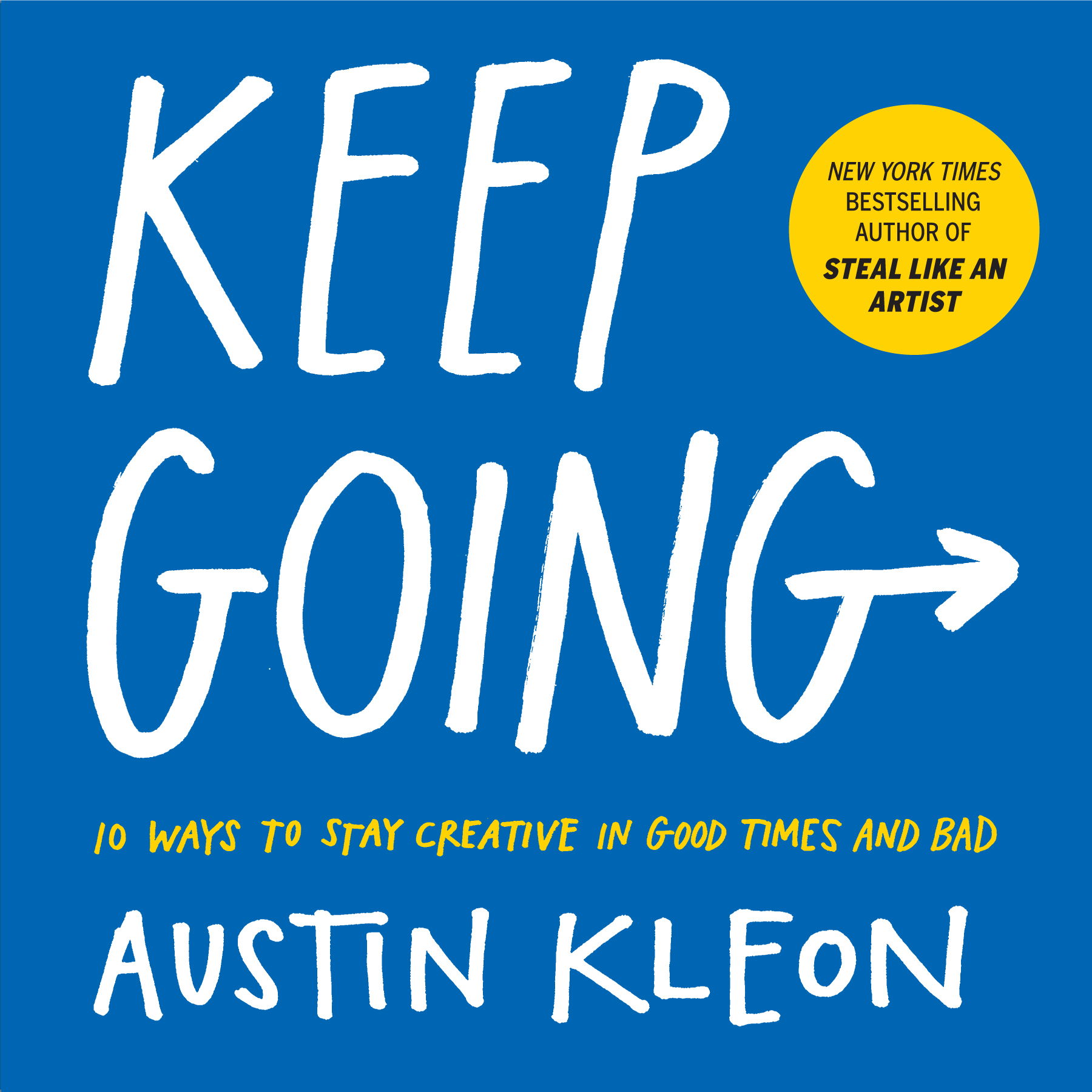
Keep Going by Austin Kleon is a slim little book but it’s one of my most highlighted books after only one read. Billing itself as a primer on “ways to stay creative in good times and bad,” Keep Going is an informal yet deeply insightful series of meditations on not only the importance of creativity but the sustainability of creativity.
Kleon acknowledges the world can beat down creatives but that a shift in mindset can keep creativity alive. Focus on the daily rituals and routines of creativity and find a “bliss station” so that the creative practice becomes not a means to some illusory goal but a meaningful thing on its own.
Keep Going isn’t a how-to manual or a deep dive into creative strategies and techniques. It’s a book about perspective and mental shifts and probably belongs on the same shelf as James Clear’s Atomic Habits and Ryan Holiday’s Stillness Is the Key. It extends beyond creativity to living a good life overall. As Kleon says in the book: “None of us know how many days we’ll have, so it’d be a shame to waste the ones we get.”
Link: https://www.goodreads.com/book/show/40591677-keep-going
The Fall of the English Department by Adam Walker
There was a time in my life when I was a graduate student eyeing the contemplative life of a professor. The Fall of the English Department by Adam Walker lists more than a few of the reasons I eventually left the ivory tower for the delightful chaos of the outside world.
Link: https://substack.com/@adamgagewalker/p-177582596
If Chatbots Can Replace Writers, It’s Because We Made Writing Replaceable by Andre Forget
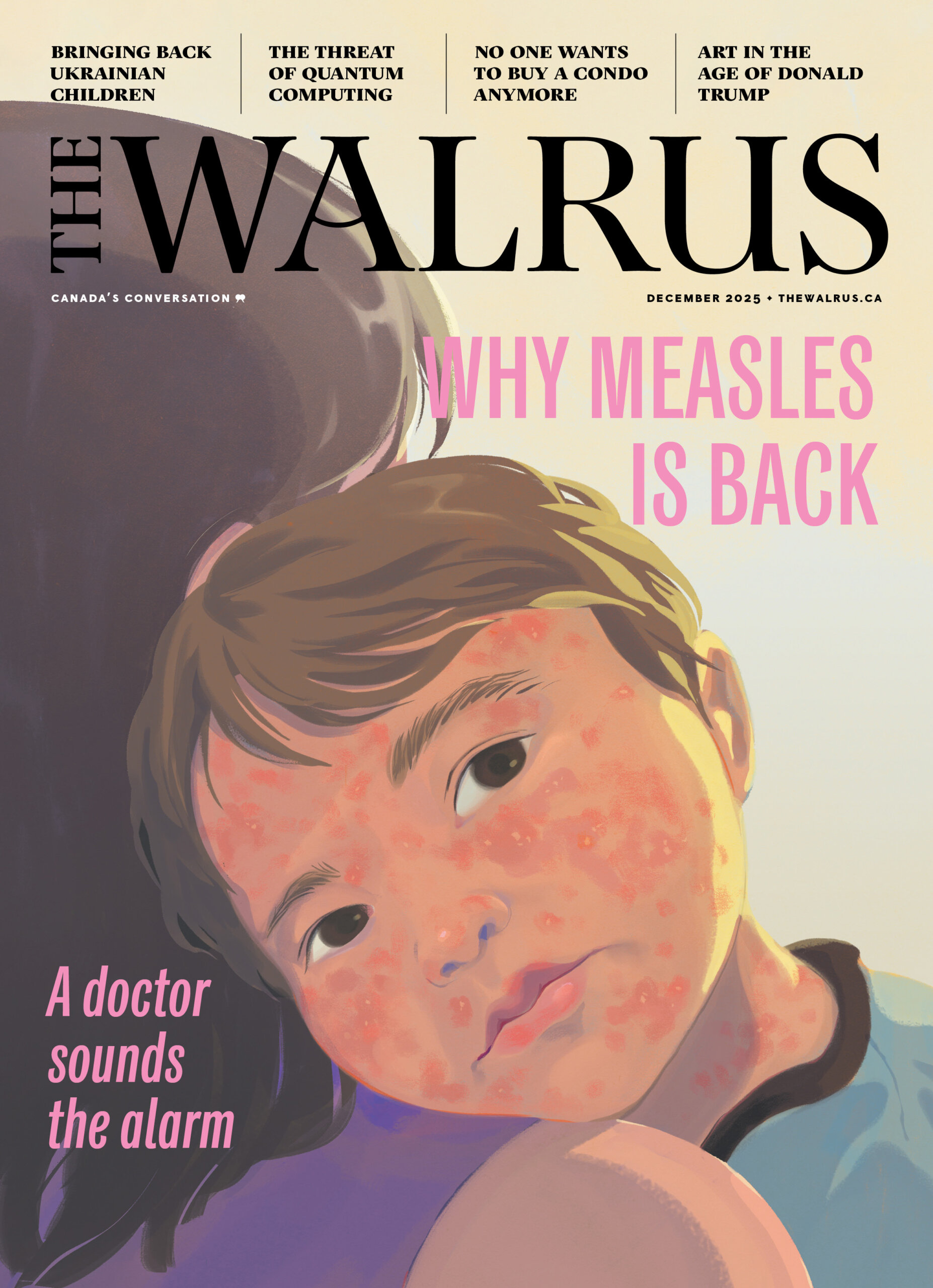
“Market pressures are now so intense, and industries have become so consolidated, that a good deal of what gets published every year already reads like a photocopy of a photocopy.”
Publishing was already in trouble before AI turned up.
Link: https://thewalrus.ca/if-chatbots-can-replace-writers-its-because-we-made-writing-replaceable/
Poetry
Grawlix by George Murray
They’re not done following you,
these childish angers, like stormy
weather pushing in, memories
hovering near the edge of the panel,
peripheral to the eye.
30% off all books!

My publisher Wolsak and Wynn is holding a holiday sale and all books are 30% off until Dec. 15. Plus free shipping on orders over $50. Here’s your chance to complete your library of my books at a discount!
Direct links from Wolsak and Wynn
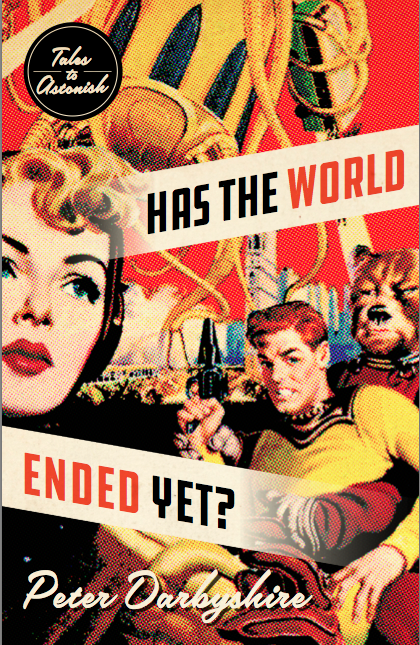
In Has the World Ended Yet? we start with retired superheroes living in a soulless suburbia where everyone gets lost trying to get home. Then the angels start to fall from the sky. Is it Armageddon? And do we want the world to end or not?
These tales link together superheroes, ghosts, the undead, a hired hitman, the Cold War, the Rapture and avenging angels in a Twilight Zone–style collection that is riveting and human. We follow characters that are identifiable through situations that are unreal, through a technicolour landscape we are all familiar with. The end of the world is not what we expect, what any of Darbyshire’s characters expect and may not really be happening at all. But should it?

“Even angels have to make a living these days.”
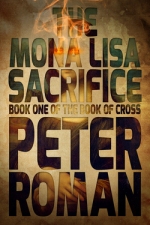
With this dry observance Peter Darbyshire introduces us to Cross, a man who has lived thousands of years, though he’d prefer not to have, and who is now hunting angels in a Barcelona filled with tourists, phone cameras and deep mystery.
The Mona Lisa Sacrifice is a layered supernatural thriller, filled with history, magic and beloved characters. When an angel promises to deliver Judas, a forgotten god of a forgotten people, to Cross for revenge if he can find the real Mona Lisa, a cascading set of mysteries involving a sisterhood of gorgons, Alice from Alice’s Adventures in Wonderland, Morgana le Fay and renegade angels is set in motion. Everything hangs in the balance. Even the fate of the world.

The Witches never failed to extract a price somehow.
When Cross stumbles drunkenly into a darkened Berlin theatre that is staging Hamlet, he does not expect to see Morgana le Fay on stage as Queen Gertrude or witness a real murder. But a deadly ghost is haunting the faerie queen’s plays and Morgana expects Cross to solve the mystery or risk his daughter, Amelia, becoming the next victim. With the fate of Amelia in the balance Cross tries to unravel a mystery that takes him to libraries outside of time, into battles alongside an undead Christopher Marlowe and to bargaining with the real Witches of Macbeth. But is the play the thing, or is there something far older haunting Shakespeare’s famous work?

“You fool,” Sariel said. She gestured with a hand and the table between us slid to the side. “You ridiculous mortal fool. What did you do with the sphinx?”
With these words Cross finds himself thrust into his most dangerous adventure yet, working with the double-crossing angel Sariel to stop Noah from ending his eternal suffering by ending the world. But this Noah has not saved any beings from the flood, he is God’s warden, and he is bound to hold all God’s mistakes captive on his ark for eternity. And he has gone mad. Between provoking the sorcerous pirate Blackbeard, dealing with the devious vampire Ishmael and travelling beneath the seas with Captain Nemo and the last of the Atlanteans, Cross struggles to keep one step ahead of Noah until the last battle occurs before the very doors of Atlantis itself.

The immortal Cross is back in a wild new adventure – a desperate hunt to find the enigmatic Alice from the Wonderland tales. Alice has helped Cross save the world countless times over since she stepped out of the pages of her book, but now she is the one that needs rescue after vanishing during an apocalyptic battle. Aided by the faerie queen Morgana and her court, Cross journeys to mystical islands populated with murderous immortals and into famous libraries with powerful librarians and magical texts until they reach the chaotic and terrifying Wonder Lands, the dangerous inspiration for the original Alice tales. But they are not the only ones looking for Alice – a rogue group of angels are also hunting her for mysterious reasons of their own. The very fate of the world may rest upon who finds Alice first.
Malevolent babbling: The November 2025 Bibliofiles
This month saw me reading some heady, intellectual historical fantasy while at the same devouring a book about vampire kangaroos and other strange creatures. Plus a bit of weird fiction and weird journalism!
Fiction
Babel by RF Kuang

Babel by RF Kuang is a complex and multilayered novel that defies easy description — which is befitting, given its subject matter.
Equal parts historical fantasy, dark academia, anticolonial manifesto and coming-of-age tale, Babel relates the tale of Robin Swift, a Chinese child orphaned by a plague and whisked away to Oxford to study the secret arts of magic.
In the world of Babel, magic is generated by the sort of imaginative gaps that occur when words are translated from one language to another and their meaning changes, creating a sort of linguistic loose energy. This energy is in turn channeled through silver bars — the physical manifestations of empire and power. It’s a compelling and utterly unique magic system that is well developed by Kuang, and there are echoes of, well, Eco here in the book’s linguistic and historical awareness.
The wonder of the magic system, which is used to transform every element of western society, is put into stark contrast with the abuses of the colonial system. The enchantment that Oxford holds for Robin soon fades as he realizes it is but another tool for sustaining the colonial machine — and he and his friends are but a cog in the machine.
Things inevitably come to a head when a war with China looms, driven by false pretences, and Robin joins an underground rebellion that strikes at the heart of the empire’s power.
The coming of age elements are layered everywhere throughout these events, as Robin confronts what it means to grow up in a place that was never meant for you, where you can never belong, and which uses you while abusing your people. It’s an interrogation of empire that examines more than colonialism and stretches wide to include capitalism itself. It’s all the more timely because of it.
Link: https://www.goodreads.com/book/show/57945316-babel
The Malevolent Eight by Sebastien de Castell
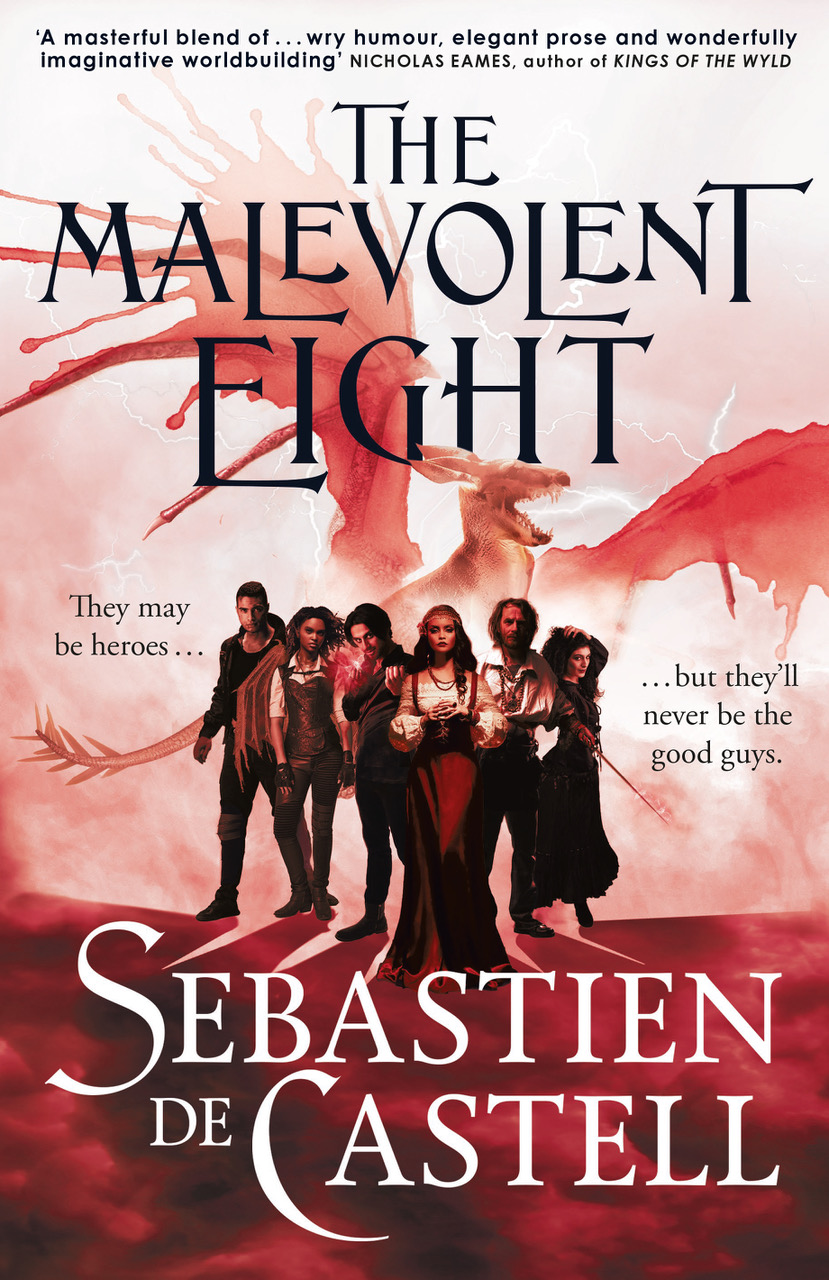
Deranged mercenary war mages, scheming celestials, diabolical infernals, dark magic, black humour and vampire kangaroos. Enough said.
Link: https://www.goodreads.com/book/show/223758590-the-malevolent-eight
Doctors HATE Her!! Local Woman Is NOT Cursed by Bree Wernicke

A woman starts coughing up Lego blocks and then instructions for a town. After that things get strange.
Link: https://www.bourbonpenn.com/issue/37/doctors-hate-her-local-woman-is-not-cursed-by-bree-wernicke
Non-fiction
How the Fight to Save Canadian Publishing from the American Market Shaped my 50-Year Career by Scott McIntyre
“Books are not mere merchandise. Books are a nation thinking out loud.”
Link: https://thewalrus.ca/i-was-warned-theres-little-money-to-be-made-in-publishing/
Forget Running Groups and Work Socials. Find a Book Club by Janna Abbas
Are book clubs the new way to make connections in an increasingly lonely world?
Link: https://thewalrus.ca/find-a-book-club/
Investigating a Possible Scammer in Journalism’s AI Era by Nicholas Hune-Brown
Who was the writer Victoria Goldiee? Did she even exist?
The Wonder Lands War on Night Beats
I’m over at Night Beats talking about the inspiration for my new novel, The Wonder Lands War, and why my characters never listen to me.
Excerpt:
Who are the Cross readers?
Peter: Anyone who loves a serious mix of the literary and fantastic, who wants to see their favourite characters from other books and plays and myths in one place, and who loves seeing literary tradition torn apart and reassembled into new forms. So basically I’m writing for people like me.
I’ve been amazed and gratified by the audience that is out there for these books, which is much larger and diverse than I expected. The Cross series started out being a love letter to literature but I feel it’s grown into a love letter to an entire community.
Reading aftermath

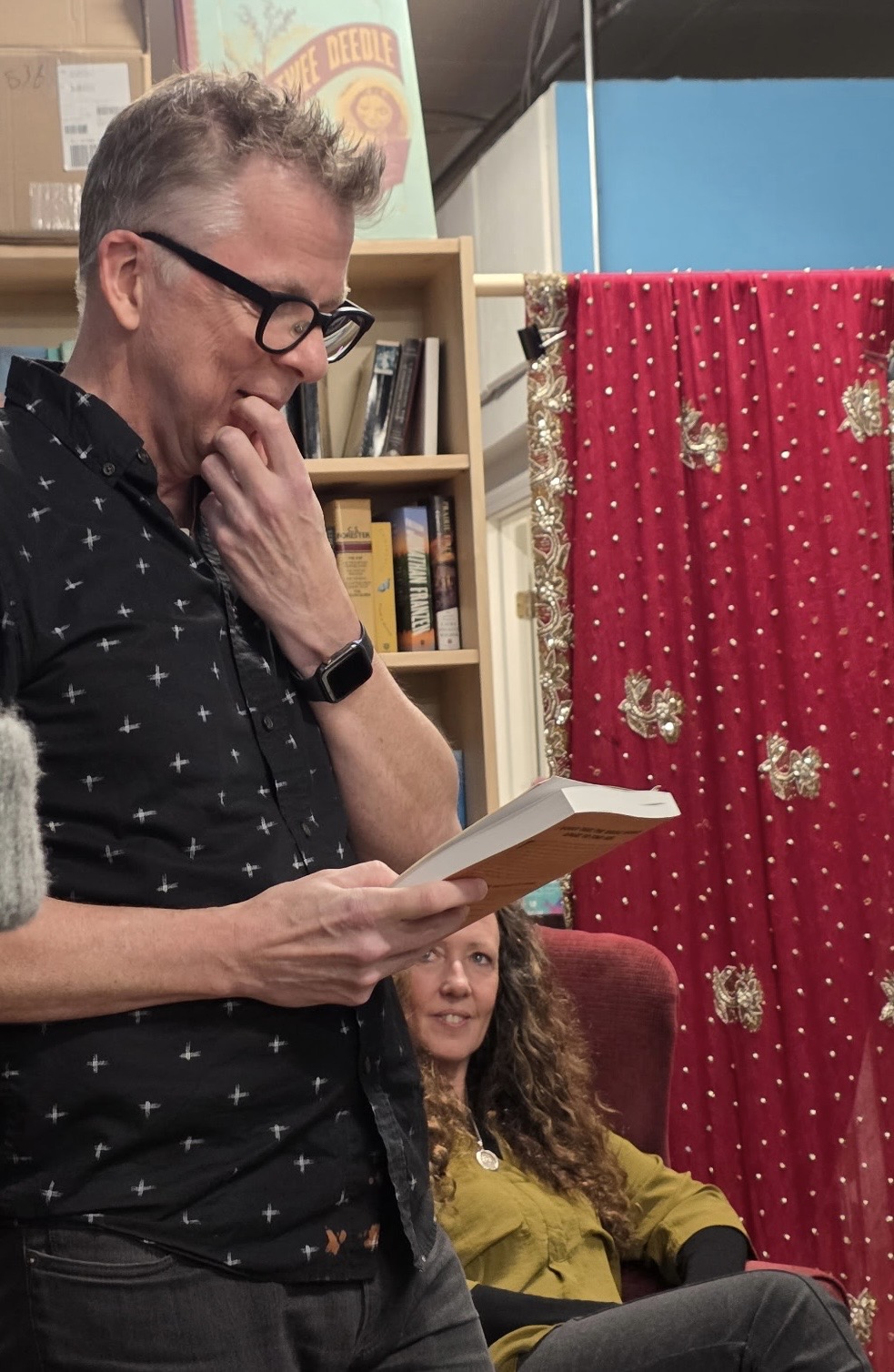

I had a lovely time reading from my new book, The Wonder Lands War, alongside Katie Welch at Cross and Crows bookstore in Vancouver recently. It was the first event I’ve done in years but I managed to keep my stage fright at bay. Many thanks to all those who attended!
The Wonder Lands War on NetGalley until Nov. 30
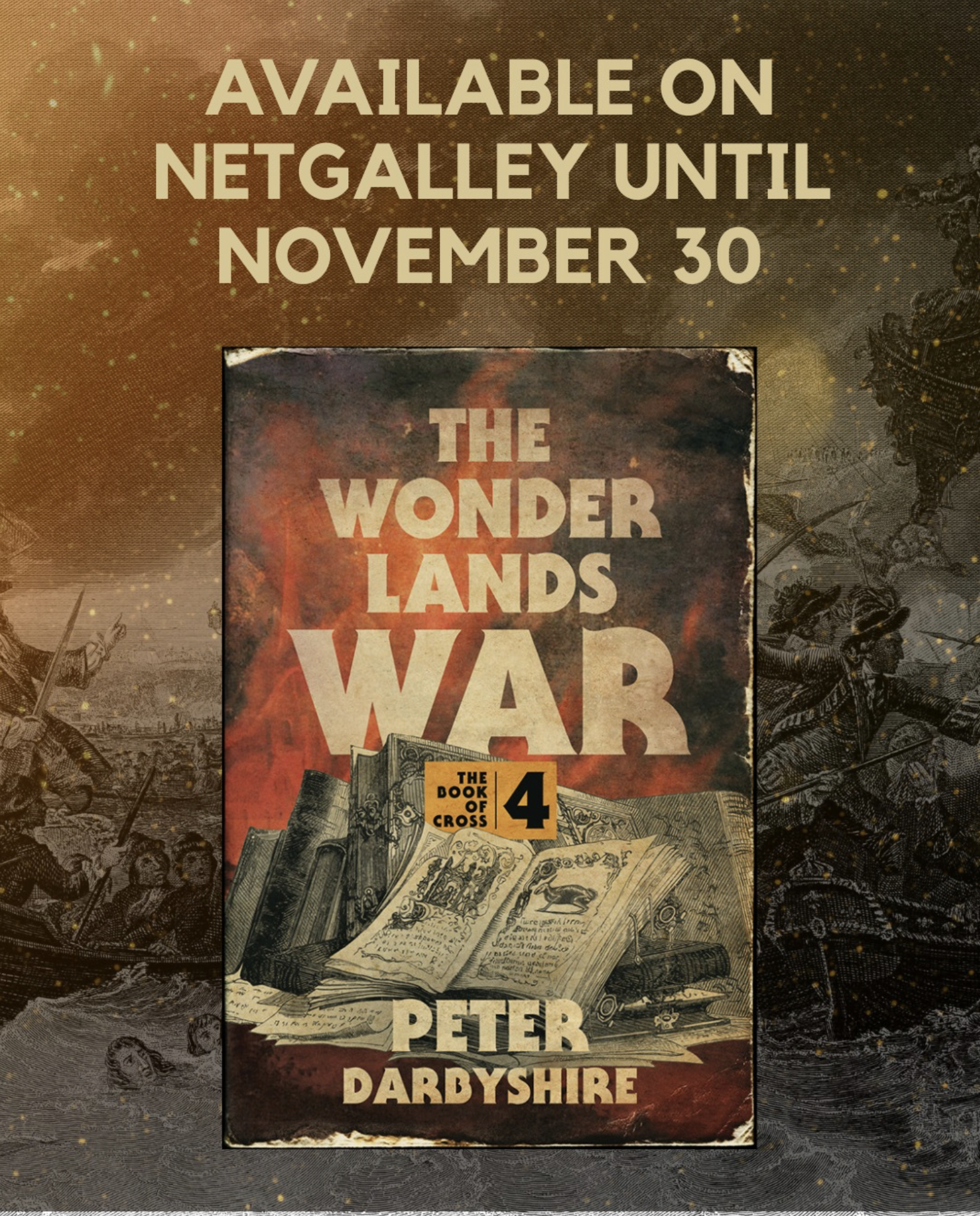
If you’re on NetGalley, my latest Cross book, The Wonder Lands War, is available until Nov. 30.
If you prefer to buy the book, links are below.
Buy The Wonder Lands War
Hope you like it!
Whispers from the shelves
Why do we all love books about secret, hidden or forgotten texts?
It’s certainly a major element of my own writing — secret texts play prominently in The Dead Hamlets (a haunted manuscript of Hamlet), The Apocalypse Ark (God’s lost bible) and The Wonder Lands War (magical Wonderland books that spawn strange creatures), as well as a number of my Azrael the Angel Gunslinger tales.
But I’m not the only writer fixated on such things. When I look at my bookshelves, it seems half my reading is also concerned with the topic. So why are we all so obsessed with secret texts?
There are a few reasons that immediately come to mind. Secret texts can often show us the truth of the world and make sense of its chaotic, unpredictable or even incomprehensible nature. They offer an x-ray of our world or turn it inside out, particularly when combined with elements of the horror genre. HP Lovecraft is perhaps the most obvious example of this, with his frequent uses of mythical, forbidden texts that reveal humanity’s true insignificance in the cosmos and the monstrous forces that actually shape the universe. Nobody said the hidden truth of the world had to be pleasant. In fact, that’s often why the books are hidden away: to protect the rest of us from going mad when we realize the truth.
A more contemporary version of this is Jonathan L. Howard’s Carter and Lovecraft series, which features the cop-turned-PI Carter inheriting a bookstore run by a descendant of HP Lovecraft. The unlikely duo stumble into a supernatural plot that reveals Lovecraft was writing about real cosmic horrors and his books were portals to other realms, or to simple impossibilities in our meagre understanding of the cosmos.
Secret books are also often about power. Books are knowledge, after all, and knowledge is power. Some books are hidden away not to protect humanity but to protect those with the power. Umberto Eco’s The Name of the Rose is an intriguing example of this, where a mad monk in a labyrinthian library carries out a series of murders to stop knowledge of the lost comedies of Aristotle to escape. It’s a delightfully literary murder mystery, but it’s also a tale of the attempted suppression of free speech by those who want to maintain their power and not share it with the world. The ones with the access to the secret books get the power while everyone else is denied it.
More modern readers may see a similar dynamic at work in RF Kuang’s Babel, which has more than a few similarities to Eco’s work. In Babel specially trained scholars work magic by exploiting the gaps in meaning that occur in translations, with the tension between different meanings of words conjuring a sort of magical energy that can be used for nearly every purpose that has a word assigned to it.
Finally, forgotten texts can be about forgotten — or suppressed — knowledge. In Angela Carter’s The Bloody Chamber, for instance, characters are often confronted with texts or mythic structures created by men and they must reimagine them from a different perspective to survive. Indeed, the stories of The Bloody Chamber are themselves reimaginings of patriarchal tales, told in ways that give the female characters more agency and power.
One way or another, secret books seem to be about revealing secret truths, to understand the world in a new light. And isn’t that why we all read in the first place?
(This post was inspired by the Whispers from the Archives panel at the WCSFA CONnections convention, where I was a participant.)
Excerpt of The Wonder Lands War live at Civilian Reader
If you’re curious about the latest book in my Cross series of supernatural thrillers, Civilian Reader has posted an excerpt.
Learn more about The Wonder Lands War.
Reading at Cross and Crow Books in Vancouver
I’ll be reading from my new book, The Wonder Lands War, at Cross and Crow Books in Vancouver Nov. 20 at 7 p.m. I’ll be sharing the reading with Katie Welch, who is launching her new book, Ladder to Heaven. Hope to see some of you there!
The Angel Azrael Visits the Trading Post at the End of the World a Final Time
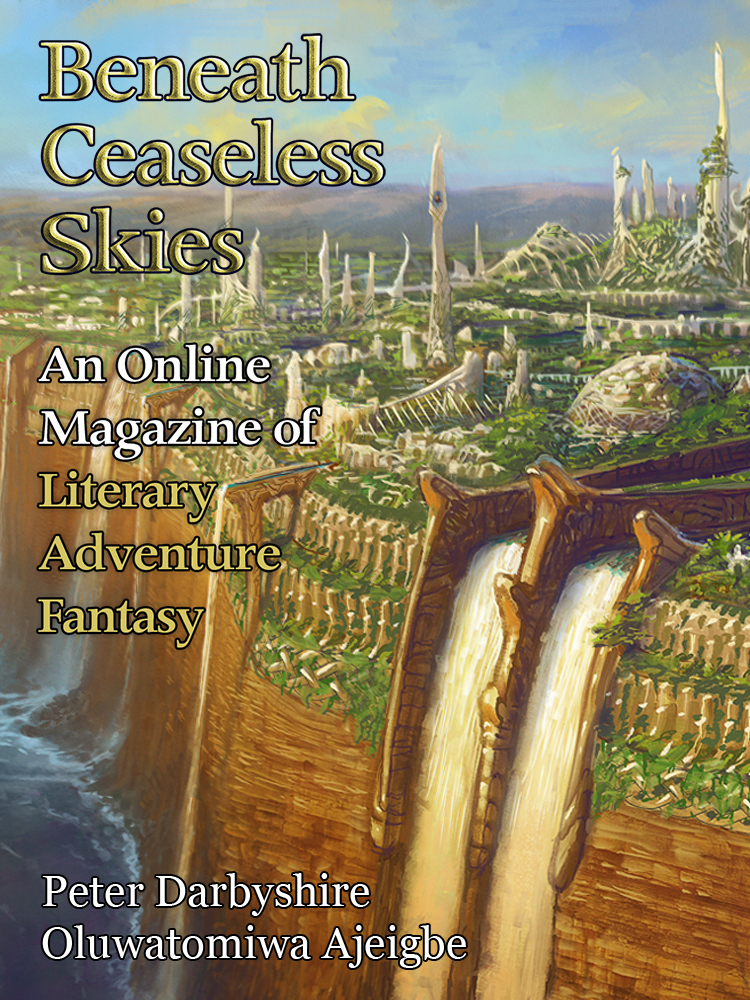
I’ve published a new Azrael the Angel Gunslinger tale at Beneath Ceaseless Skies, The Angel Azrael Visits the Trading Post at the End of the World a Final Time.
The tale follows Azrael as he returns to the mysterious Trading Post at the End of the World in an apocalyptic storm to repay a debt to its angel proprietor. Only there’s a gang of strangers at the trading post who are strange in every sense of the word — and they have their own interest in Azrael’s angel friend.
Soon supernatural six-guns are blazing and the trading post becomes a battleground — and Azrael may finally have met his match.
If you like your westerns weird, it doesn’t get any weirder than this. Hope you check out it.
Here are the previous tales of Azrael the Angel Gunslinger:
- The Angel Azrael Rode Into the Town of Burnt Church on a Dead Horse – The angel Azrael rides into the town of Burnt Church for a drink and ends up helping the very strange inhabitants fight off a gang of demons that’s been tormenting them.
- The Angel Azrael Delivers Small Mercies – The angel Azrael encounters an angel who is determined to turn the world into her own personal Hell and only Azrael can stop her.
- The audio version of “The Angel Azrael Delivers Small Mercies” with a new introduction I recorded for the story
- The Angel Azrael Delivers Justice to the People of the Dust – The angel Azrael rides into a mining town that is under siege from curious bone creatures stealing the town’s children. When Azrael intervenes, he discovers that nothing is what it seems in this strange place.
- The Angel Azrael Encounters the Revelation Pilgrims and Other Curiosities – The angel Azrael is hired by a group of pilgrims to guide them through a dangerous stretch of land, where they encounter a city of the dead and an outlaw band of half angels intent on ensuring they don’t make it to their destination.
- The Angel Azrael and the War Ghosts – The angel Azrael tries to stop a group of ghostly soldiers from preying upon travellers and rides straight into his own troubled past.
- The Angel Azrael Battles a Dead God Among the Heretics – The angel Azrael encounters a village full of crazed golems intent upon resurrecting a dead god to unleash upon the world — a god that Azrael has already killed once.
- The Angel Azrael and the Dead Man’s Hand – The Angel Azrael wanders into a strange town and becomes trapped in a supernatural and deadly card game. A recommended read by Locus!




 peter darbyshire