The Write Life: Characters are the story
Where does your story start? For me, the foundation of every story is the characters. Without them, there is no story. (Let’s leave aside for the moment certain experimental texts or tales where characters are minimal, such as Italo Calvino’s Invisible Cities.)
So how are characters story? There are a few different layers to this.
Above all, characters must be interesting. It doesn’t matter how rich the worldbuilding is or how exciting the plot may be if the character can’t hold the reader’s attention. Most of my DNFs are because of characters I find boring or unoriginal. Give the main character an interesting and unique personality or trait or something that engages the reader. Sherlock Holmes is a great example of this — but so is The Dude from The Big Lebowski. Different variations on the same theme, perhaps.
Adding some vulnerabilities or flaws to the character can make them very intriguing as well, although I think it’s best to make these emotional or mental vulnerabilities/flaws than physical ones. It’s why I prefer Marvel movies to DC ones — Tony Stark’s character flaws are much more interesting to me than Superman’s situational vulnerabilities to kryptonite. That said, physical issues can make for an intriguing character. See any werewolf tale for an example.
Once you’ve come up with an interesting character, you have to introduce some stakes for them. Give them a goal at the overall level of the book or story that drives their action. But — and this is key — their pursuit of that goal should also transform them. This can be a relatively straightforward hero’s journey sort of goal (see Luke Skywalker in Star Wars for a classic example) or a broader social sort of transformation (such as The Wizard of Oz, where Dorothy initially just wants to return home but ends up changing an entire world).
Almost every type of story, whether it’s Save the Cat or picaresque or slice of life tale or rags to riches or romance or whatever features characters involved in chasing some goal that ultimately transforms them.
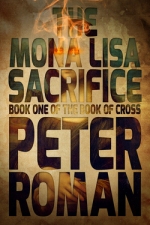
What really matters is that the stakes matter to the character, which means they will then matter to the reader. In my Cross series of books, the main character, Cross, is an immortal rogue who can’t die permanently. He dies all the time, usually because of his bad decisions, but he has the gift of resurrection. This makes for challenging stakes as a writer, because there’s no real tension around life or death decisions when death is little more than an inconvenience. So I had to make the stakes matter on a different level for him. He needs to save the world from supernatural threats or, more often, needs to save his friends and family. The fact those he’s trying to save are often as rogueish as Cross doesn’t matter to the reader. What matters is the dramatic tension of Cross facing overwhelming odds while trying to save the lives of others from truly monstrous fates.
The big picture goals for characters are important but they matter on a chapter level as well. Each scene or chapter should have its own goal for the character, which is usually linked to the main goal. There should be some obstacle to the character achieving that goal and then a resolution (character succeeds or doesn’t). If the chapter/scene doesn’t have this structure, then what’s the point of including it? An easy way to compose these smaller moments is this: Goal→Obstacle→Resolution→Setup or transition to next scene.
Remember, by giving a character a goal you automatically create conflict that drives the story, so choose the goal well.
Make sure you do the same for the secondary characters, villains and other characters as well. Some characters may be too minor to have goals but you should still make them interesting. Any character that has any significant amount of time in the story should have their own goals, though. This is where much of the tension arises for readers, as we see conflicting goals played out in the story — especially when one character’s goals come at the cost of the other characters’ goals. This can be particularly interesting if characters friendly or allied with the main character have different objectives that bring them into conflict with the main character. Christopher Buehlman’s fantasy masterpiece The Blacktongue Thief has many great examples of this.
If the secondary characters aren’t interesting with their own goals, they often become little more than ciphers or vehicles to advance the story. I think of Watson from the Sherlock Holmes tales here, who to me is more of a device than an actual character. Compare this to Din from Robert Jackson Bennett’s Tainted Cup series, where Din is a much more fleshed out and complicated companion to the Holmes-like Ana detective character.
Remember that readers don’t always have to like the characters or view them as heroes to find them compelling. Some of the best characters are antiheroes that operate outside of society’s rules (so perhaps there is some wish fulfillment for readers there) or villains who act in ways that readers can understand and perhaps even agree with at some level. Consider for example the “Thanos did nothing wrong” meme.
How to set all this up? The best way to reveal character is in what they say and do more than what they think. A character’s actions reveal who they are. Even better is a character whose actions contradict what they feel or think or reflect conflicting emotions. As Donald Maass says in his wonderful Writing 21st Century Fiction, “Conflicting feelings snare readers. They’re a puzzle that demands a solution.”
Determine where/how/when/why the characters change by ensuring there is a good reason for it. Often the best way to do this is create an outer turning point where the character’s circumstances change, which then drives the inner turning point that transforms the character. The first John Wick film has a great example of this when Wick is captured and forced to become the old, merciless John Wick in the “I’m thinking I’m back” scene where he accepts who he really is.
One final note: don’t overexplain the character. A little mystery where we don’t always know what they’re thinking can make for a very intriguing story, especially when the characters deliberately withhold information or make a startling reversal. KJ Parker aka Tom Holt is a master of this in his fantasy tales.
So there you have it. Start with the characters and the story will follow.
Related
- The Write Life: You need a second brain
- The Write Life: Make your desk a happy space
- The Write Life: You can’t do it alone
- The Write Life: Support your community
- The Write Life: Plotting or pantsing?
- The Write Life: How’s your focus?
- The Write Life: Write wonder
- The Write Life: What kind of book is this?
- The Write Life: Why use word trackers?
- The Write Life: Research but don’t research too much
Posted on November 16, 2026, in Journal and tagged Journal, The Write Life. Bookmark the permalink. Leave a comment.




Leave a comment
Comments 0