Blog Archives
A lament for book publishing and other hells: The August 2026 Bibliofiles

August always feels like the fading of a time to me, so it’s appropriate that much of my reading for the month was focused on the precariousness of book publishing. And vampires!
Fiction
Vlad by Chris Humphreys
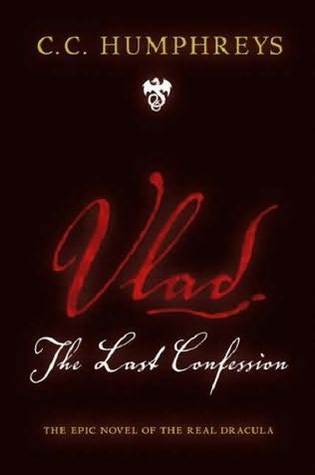
I’ve long been a fan of Canadian writer Chris Humphreys and his historical fiction. Shakespeare’s Rebel, Plague, the Jack Absolute novels — they’re all some of my favourite reads.
(I know Humphreys doesn’t live in Canada anymore but he’ll always be Canadian to me!)
I finally got around to reading Vlad and wish I had done so years earlier, as it’s one of his best works.
Humphreys takes the figure of Vlad the Impaler and creates a real human being behind the monstrous legends, one whose cruelty is not mindless but deliberate and forged in pain and suffering.
The book follows Vlad through his childhood years trapped in the Ottoman court to his later rise to the leader of Wallachia, a kingdom torn apart by corruption and political infighting. Vlad unifies the kingdom through terrifying displays of power so that he can take on the Ottoman Empire. His rise to power and devotion to duty comes at terrible cost, though, as Vlad must sacrifice his love and everything else that matters to him.
It’s a tale of truth vs. legend, and of the real people behind history’s horrors.
And if anyone knows history, it’s Humphreys. He’s one of the best historical novelists alive, and his attention to historical detail, politics, court intrigues and more is unmatched. Humphreys immersed himself in both the legends and the historical sites of his novel, and it shows in every page. Another masterpiece from a master writer.
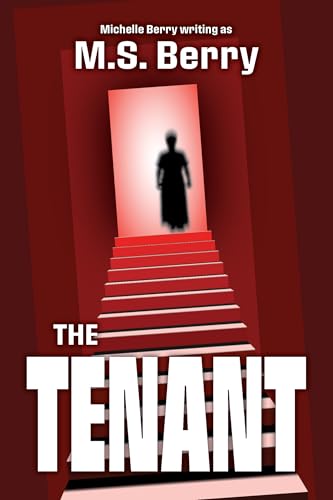
The Tenant by MS Berry
Ever wish your favourite writer would hurry up and finish a new book? Have you considered embarking on a murder spree to help them along?
That’s more or less the premise of The Tenant by MS Berry, otherwise known as the Canadian author Michelle Berry.
Writer Amy Ellis moves to Freiburg, Germany, for a year with her husband and young daughter in the hopes it will help break her writer’s block. It turns out writing has become challenging since she started a family. Who could have known?
They find their rented flat already occupied by the mysterious Eleanor, an old and odd English woman who soon inserts herself into the family’s life.
Eleanor isn’t just odd, though — she’s also a serial killer. And Amy is her favourite author. Eleanor is killing people with the hope it will give Amy plot ideas for her next book.
But when the book doesn’t meet the killer’s expectations, she decides to take things into her own hands and the book moves from psychological mystery to thriller.
So what do we have to do to hurry along the next book by MS Berry?
The Lesser Dead by Christopher Buehlman
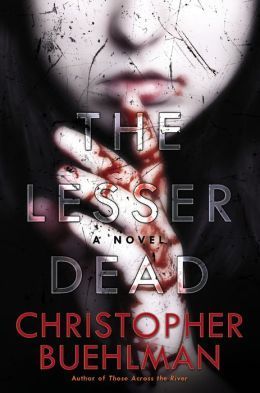
The Lesser Dead is one of the creepiest vampire tales I’ve ever read and way more complex than it initially seems to be. It follows the vampire Joey, who’s been trapped in a teen body for some time and living with a clan of vampires in the city’s underground. They’ve established a careful routine of bleeding favourite victims but not killing them, so they can essentially go unnoticed forever.
That all changes when they encounter a pack of feral children vampires who are much more bloodthirsty than them. Joey and his pack try to tame the younger vampires but things get very strange. And very bloody.
A must-read if you are into vampire stories or a fan of Christopher Buehlman.
A Short Stay in Hell by Steven L. Peck
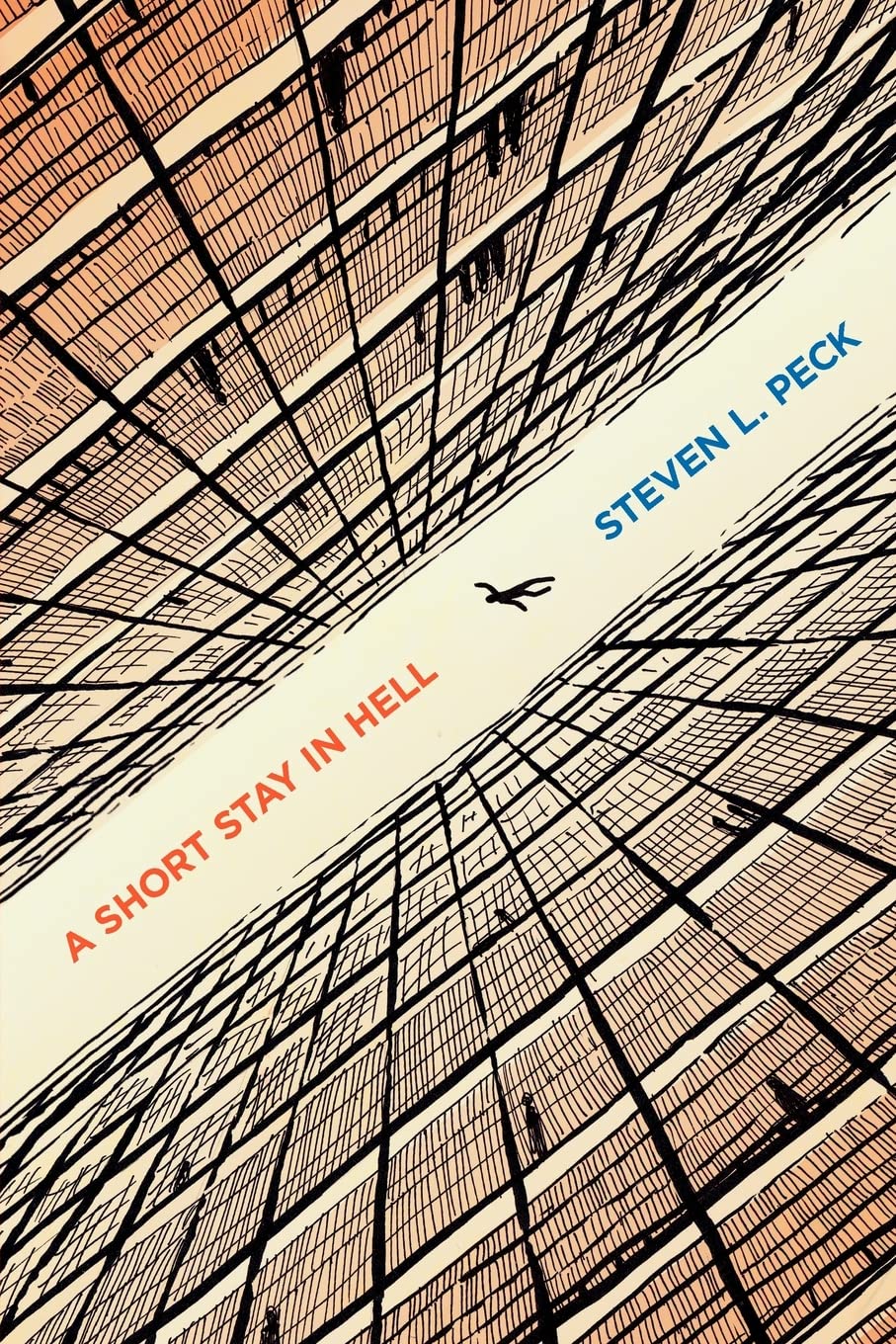
I’ve long been a subscriber to Borges’ notion that paradise will be a kind of library.
But what if Hell is a library?
That’s the premise of the novella A Short Stay in Hell by Steven L. Peck. It follows Soren, a Mormon who dies and finds himself in the waiting room of Hell. A bureaucrat demon explains to him that pretty much everyone winds up in Hell for not following the one true religion, which turns out to be Zoroastrianism. Every one of the damned gets condemned to their own personal Hell, which in Soren’s case is an endless library.
Well, that doesn’t sound so bad. But of course there’s a catch.
The library contains every book that can be written, but the books don’t have to make sense. So everything around Soren and the other damned are texts of gibberish. The only way they can escape is to find the books that tell their earthly life story — a search that promises to take all eternity.
A Short Stay in Hell is beautiful and terrifying at the same time — and unlike anything else I’ve read. It’s like some strange book discovered in the library of Hell itself. My only complaint with it is its length — I wish it were a full novel rather than a novella. But that’s Hell for you.
Leprechaun Gold Accepted by Vivian Chou
A delightful little story told as updates to a Go Fund Me for a fairy attacked by toddlers.
Link: https://flashpointsf.com/2024/03/08/leprechaun-gold-accepted/
Non-fiction
Lament for a Literature by Richard Stursberg

Canadian publishing is the weakest domestically owned publishing sector in the industrialized world.
That is the argument put forward by Richard Stursberg in Lament for a Literature, but it’s nothing new for any of those involved in the Canadian culture scene. We’ve all been witness to a once-proud publishing ecosystem “deeply engaged with exploring and understanding Canada” becoming little more than a dumping ground for American publishers.
Stursberg points to a number of reasons for this, including government inaction as multinationals took over Canadian publishing and almost all of the domestic market. HarperCollins, Penguin Random House and Simon & Schuster became the key players in CanLit over a period of time thanks to purchases and consolidation, but they have little interest in maintaining the proud and innovative tradition of that same CanLit.
“They were essentially vehicles for the sale of foreign, most American, books,” Stursberg writes. “They were not much interested in Canadian authors unless they were well established, in which case they were happy to poach them from the smaller Canadian-owned publishers.”
Combine this with the rise of Chapters and Indigo, and you had the perfect storm for Canadian publishing. Chapters was able to insist on discounts because of their size, which meant less margin for smaller publishers. The big multinationals, of course, could afford it or negotiate their own terms.
Amazon has played a role as well, with its recommendation engine favouring popular books, which skews heavily toward the American market.
If all this weren’t bad enough, the decline of newspapers and other media further added fuel to the fire, with books sections usually among the first to get cut.
So can anything be done to reverse the death of Canadian publishing?
Maybe.
Certainly the Canada Council is a lifeline of sorts, but it is only that: a source of funding that helps some publishers and writers survive but only barely. Stursberg argues convincingly that more needs to be done in terms of government support and points to the models used to bolster Canadian television and film as an example. It’s a descent into bureaucratic madness too convoluted to get into here, but basically Canadian publishing is stuck in a competition funding model whereas the film and TV funding works more on rewarding Canadian production.
At the same time, Stursberg states that Canadian funding needs to move away from identity politics as it has become more of a wedge that divides than a unifying and progressive force: “These strictures have narrowed the boundaries of discourse and cast a chill on what can be said, written, or shown, radically restricting artists’ freedom of expression.”
Whatever your position on Canadian culture may be, it is clear that something must be done and that government action (after decades of inaction) is the only thing that may reverse the decline of Canadian publishing. As Stursberg concludes: “Saving Canadian media and, most centrally, Canadian books is essential to saving ourselves.”
Why Is Book Publishing So Precarious by Sara King-Abadi
Cuts to funding signal a new chapter for Canada’s books sector.
Link: https://thetyee.ca/Culture/2026/08/07/Why-Is-Book-Publishing-So-Precarious/
Abolish the Top Ten Books List by Thea Lim
Every writer loves to make a top 10 list (or top 50 or top 100, etc.) because we need all the publicity we can get. But most writers also realize such lists are as absurd as ranking books with a star system. Evaluating your personal relationship with a work of art is not the same as ranking microwaves. We need to return to ways of talking about culture that connect books with their ideal readers, not rank them on some arbitrary scale that will be different for each person.
Link: https://thewalrus.ca/abolish-the-top-ten-books-list/
The Buck-a-Book Solution by Ken Whyte
What’s the best way to compensate authors and publishers for their works in the library system? Does a dollar a borrow make sense?
“A public lending right shouldn’t start by pretending that each book borrowed represents a lost sale, as the librarians sometimes do. Let’s make it really simple, taking a cue from the Danish model. A buck a book. Every time a book is borrowed from a public library in the US or Canada, the federal government should compensate the author and the publisher, $1 to each. A buck a book.”