Author Archives: Peter Darbyshire
It’s Word Vancouver time again!
It’s September and you know what that means. It’s back to school time — and back to Word Vancouver! I won’t be reading at any of Canada’s annual litfests this year, but I’ll be hosting a group of writers at the Canada Writes tent for Vancouver’s street fest of all things literary. Details:
Sunday, Sept. 28
4:00 pm Kim Fu
For Today I Am a Boy (HarperCollins Canada $19.99)
4:15 pm Caroline Adderson
Ellen in Pieces (Patrick Crean Editions $22.99)
4:30 pm Geoff Berner
Festival Man (Dundurn $17.99)
4:45 pm Aaron Bushkowsky
Curtains for Roy (Cormorant Books $21.00)
Get all the full details at the Word Vancouver site.
The travelling music show
For a couple of years now, I’ve been trying to get together with Victoria writer Robert Wiersema for a coffee. He lives on Vancouver Island and I live in the Vancouver area, but we rarely manage to synch our schedules. That’s a shame, as he’s a great writer and a great guy to hang out with and talk books and music. Strangely, we found ourselves in St. John’s, Newfoundland, recently at the same time. It was rather random. But we managed to have lunch at a great restaurant! We talked a little about books and a little about music. I sang the praises of The Wooden Sky to him and promised to send him a song taster. I thought I may as well post it here because I do love The Wooden Sky and want everyone to experience them. So here you go, Rob and others.
I am holidaying
I am taking a bit of a break for the next few weeks. I may or may not check in here, depending on the weather and how much of my reading list I manage to work through. Be good.
The truth is a lie
Here’s a little interview/profile type of thing I did with bestselling author Steven Galloway about his latest novel, The Confabulist. As Steve would say, good times.
“One of the things this book is really about is the relationship between fact and fiction,” Galloway says, admitting he has a preference for the latter. “I think we spend a lot of time worrying about or placing emphasis on whether something happened or didn’t happen. Whether it’s true or not true. In the case of memory, what’s more important is the story of that memory — what that memory is saying to you in the present moment about the world and about what happened. I think if we took some focus off arguing about ‘did this actually happen?’ and put more focus on ‘what does it mean that I think it happened?’ then we’d probably solve a lot more problems and be a lot happier than if we just continued to argue about history.”
Check out these panels I’m hosting at the Vancouver Writers Fest
The Vancouver Writers Fest just announced its 2014 lineup, and it’s another great one. I’ll be hosting two panels — details below. The full lineup is pretty great — check it out if you can.
Familiar Haunts
Friday, October 24, 2014 – 6:00pm to 7:15pm
Waterfront Theatre
$20
Ready for some hair-raising tales from three frightfully good Canadian writers? Meet Jacqueline Baker, whose compelling, creepy novel features the ailing, impoverished and frightening H.P. Lovecraft, a true historical figure who was America’s first horror writer. Eric McCormack’s masterpiece of literary Gothicism stars a man haunted, literally and figuratively, byhis past in an isolated Scottish village. And Russell Wangersky’s dark psychological thriller spotlights a grocery store cleaner who collects the shopping lists people leave behind, providing him with an invisible net to throw over those who leave traces of their life in his path. This is perfect fodder for a fall Friday.
Probables and Impossibles
Saturday, October 25, 2014 – 10:30am
Granville Island Stage
$20
What’s the difference between fantasy and science fiction? Fantasy can’t happen. Science fiction is something that hasn’t happened, but could. Two fantasy writers and one science fiction writertalk about the worlds of the probable and the impossible that they’ve imagined onto the pages of their new novels. William Gibson’s The Peripheral is his latest invention in a long string of inventive novels that have earned him rave reviews and a worldwide following over three decades. Working in the world of the impossible are fantasy writers A.M. Dellamonica and Sebastien de Castell. Travel to Dellamonica’s Stormwrack, an ocean- based world on the other side of the portal. Or duck the barbarians at the borders of de Castell’s Tristia. Good thing these worlds are impossible—and very entertaining.
On Spec loses its Canada Council funding

This is a hard blow for the Canadian genre scene. On Spec, Canada’s leading sci-fi and fantasy magazine, has been denied funding by the Canada Council. The Canada Council said the jury assessing On Spec’s application called the quality of writing low and added there were production problems, including copy editing, layout and proofreading. So the jury really didn’t like it.
Well played, Apple, well played

My screensaver was this just before my computer crashed and had to be re-imaged.
The Dead Hamlets has a cover
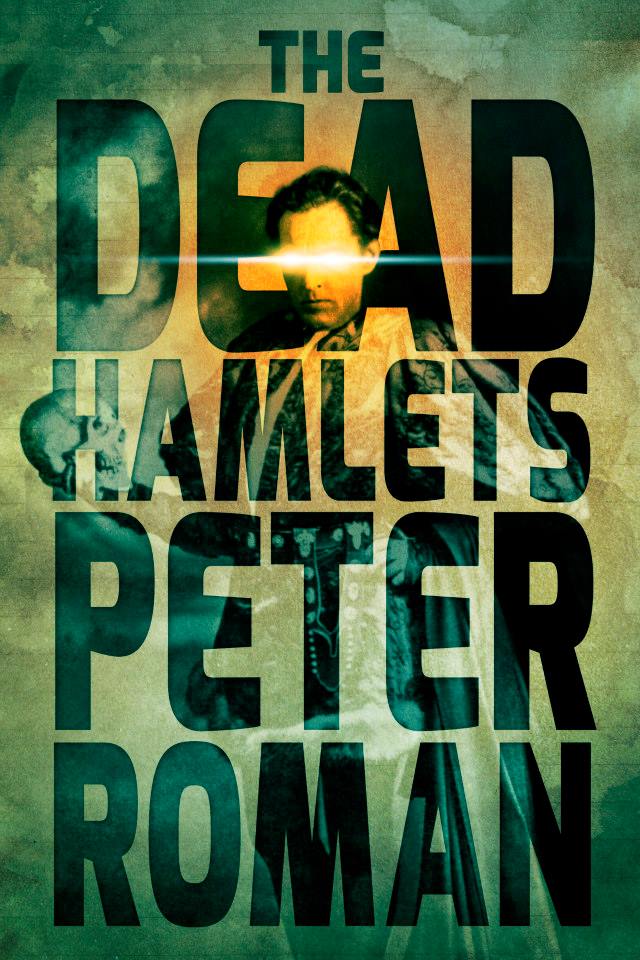
I finally handed in the edits for my new book, The Dead Hamlets, and ChiZine rewarded me with a shiny new cover!
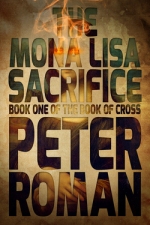
The Dead Hamlets is the second book in the Cross series, following The Mona Lisa Sacrifice. For those of you unfamiliar with my genre work, the Cross books follow the misadventures of Cross, the soul who woke up in Christ’s body after the resurrection. He’s got all of Christ’s powers but none of his sensibilities. He’s also got some strange friends and even stranger enemies.
But the beard is where I keep my deleted scenes
Yesterday I was going to post a photo of myself with my editing beard. It’s like a playoff beard, only wilder — I think all the caffeine makes it go crazy. But then I walked into a tailor’s to get measurements for a suit for a friend’s wedding. The tailor looked at my beard and said, “Sorry, can’t help you.”
So I went home and decided maybe I shouldn’t post that pic, after all. Then I shaved.
With any luck, I will be finishing the edits today. Then I’ll try that measurement thing again.
Suit size is always the same as your age, isn’t it?
I’ve been editing editing editing The Dead Hamlets, the sequel to my first Cross book, The Mona Lisa Sacrifice. The edits are almost done, which is nice. I can’t wait to get this one out there into the world.
Plus, I have to finish soon because I have to leave for a friend’s wedding. He messaged me the other day asking my suit size and I said I would have to get back to him. I haven’t worn a suit in years, so I have no idea what my size is now.
Then I realized that the fact I haven’t worn a suit in years means I’ve been living life in the right way. I sure hope I can keep it up. Weddings and funerals, that’s what suits are for. And maybe trials.
And with that, back to the editing!