Author Archives: Peter Darbyshire
It’s alive!
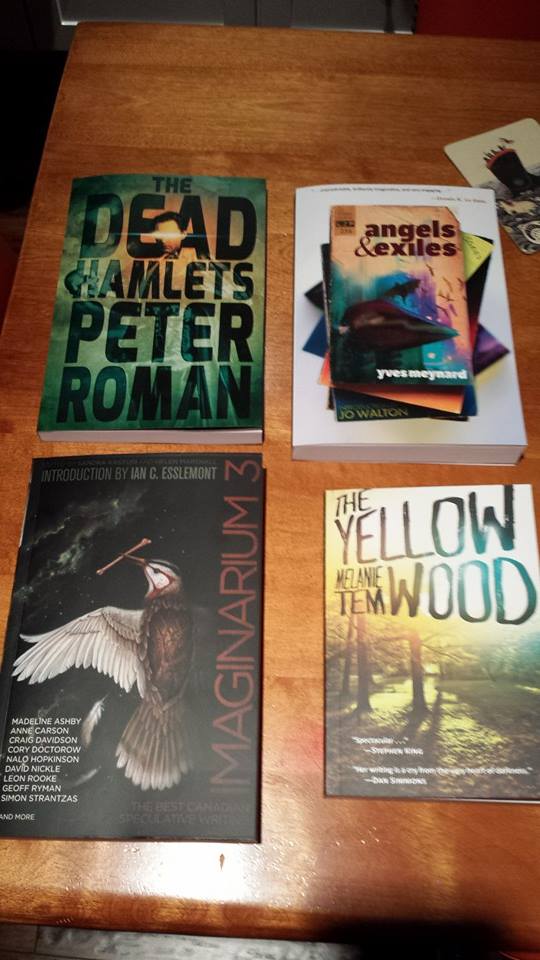
My publisher teases me by posting a photo of my new novel, The Dead Hamlets, partying somewhere in Toronto with new friends, in no hurry to find its way home to me. Wicked, wicked publisher.
The Peter Darbyshires: We are legion
A little while back I got contacted by another Peter Darbyshire who was getting ready to publish his first book. That’s right — there’s another Peter Darbyshire author out there. Cue the Highlander music!
I promised him I’d give the book a shout-out when he published it, so check out The Carpenter’s Tale if you want to read a book by another Peter Darbyshire. (It just launched, although he went with the name P.A. Darbyshire to avoid confusion. Or maybe he just didn’t want to be associated with me. I can’t blame him if so.)
Hmm, maybe if there are more Peter Darbyshires out there we could all band together and make the bestseller lists through our accumulated sales….
Licence Expired
Here’s a piece of interesting news: my publisher ChiZine is publishing an unauthorized James Bond anthology. Ian Fleming’s work has hit the public domain in Canada (there’s a whole other post about copyright in regard to that), and ChiZine is looking for works of a certain flavour. Full press release follows. Read the rest of this entry
Kind of like Jekyll and Hyde
The Globe and Mail profiles Craig Davidson, who also writes horror thrillers under the pen name Nick Cutter, and wonders if multiple writing streams is the way of the future for writers.
The unholy coupling of Craig Davidson and Nick Cutter points to a potential solution. If you can’t survive as a novelist in Canada, what about as two? Or three, for that matter?
I’m not sure the recent trend toward using pen names — Michael Redhill also springs to mind for his Inger Ash Wolfe books, and you may have heard of Peter Roman — is a result of writers trying to diversify their income so much as it is embracing the collapse of the genre walls in publishing. It used to be that if you were a writer of serious literary fiction, that had better be all you write. Similarly, if you wrote fun, crowd-pleasing genre fiction, you’d best stay away from that literary crap that may be good for you but tastes awful. These days, it seems readers are OK with writers who can do more than one thing — and why not? We all love fast food and fine dining, right? We all watch brainless TV sitcoms and smart movies. So why can’t we all read fast-paced fun thrillers and smart, well-crafted literary books?
That was the case when I began to write under the Peter Roman pen name. It certainly wasn’t a financial decision — I’d be better off working overtime at my other job. It was just trying to keep myself entertained by writing things of a different flavour. As it turns out, readers liked the Cross books as well as my literary fiction — and maybe even a bit more. I’m now in the midst of writing more Peter Roman books than Peter Darbyshire books, but sometimes you just discover that favourite dish….
Anyway, check out Davidson’s books — he’s one of the best damned writers I’ve ever encountered. Whatever name he’s using.
And so it begins
The first reviews of my second Cross novel, The Dead Hamlets, have been spotted in the wild. That came as a surprise to me, as the book’s pub date is now mid-February — and I don’t even have a final copy of the book myself yet! I hope the advance reviewers have the most up-to-date version….
I was impressed by a Goodreads review by Pop Bog, which called The Dead Hamlets “A Rewarding, Witty, Hot Mess of Angel-Pummeling, Action and Noir Detective Fiction.” (Warning: minor spoilers.) The reviewer really embraced what I was trying to do and had a great sense of how my work relates to the rest of the genre. That was a relief, as you always wonder if readers are going to get what you’re going for. Also, I had to laugh when the word “unhinged” came up — I think that’s the third time now that I’ve been called unhinged for these books. I should put that on the jacket of the next book.
Please let me know if you see any other reviews of The Dead Hamlets. I do like to read them, as it’s always interesting to know what people think of the Cross books. And you never know: sometimes if you ask for something in a review it may just come true in a future book.
OK, I really should get back to finishing that third book in the Cross series now.
Also on Instagram!
If you’re interested in such things, I’ll point out that I also post lifestream-type photos on Instagram as well as Flickr. The WordPress theme I’m currently using doesn’t allow me to put an Instagram badge up on the top of the site beside the Flickr one, so I thought I’d mention it here. Now back to your regularly scheduled programming.
The things that matter

Operation Let’s Fix the Baby’s Heart seems to have been a success.
I mentioned in an earlier post that our new baby was born with a heart defect that would require a medical procedure. The good doctors and nurses at B.C. Children’s Hospital performed the procedure yesterday – a heart catheterization to fix our son’s pulmonary valve stenosis. Basically, they threaded a line up through the femoral artery in his groin to his heart, where they inflated a balloon to force open the problem valves and relieve the pressure on his heart. We won’t know for a while if it’s a permanent fix or if they’ll have to perform actual heart surgery to fix the problem, but everyone is optimistic at this point. And the baby? He’s happy and sleepy.
Not long ago, the only fix to this problem would have been heart surgery, which is always a dangerous affair. Procedures like the one our son had are fairly new but incredibly safe and much less invasive. Medicine has come a long way, thanks to people like the health professionals at B.C. Children’s and other hospitals. Once again, I am humbled by the daily miracles they routinely perform.
OK, now it’s time to initiate Operation Reduce Parents’ Stress Level.
Change the category to non-fiction
Years back, I wrote a little book called The Warhol Gang. The narrator of the book goes to accident scenes and pretends to be a cop/paramedic/firefighter/etc. I got the idea after I read a news story about a guy going to accident scenes in Alberta pretending to be a first responder. Today, I read a story about a guy in Alberta pretending to be a cop, pulling people over, etc. Is it something in the oil in Alberta?
The ultimate weapon
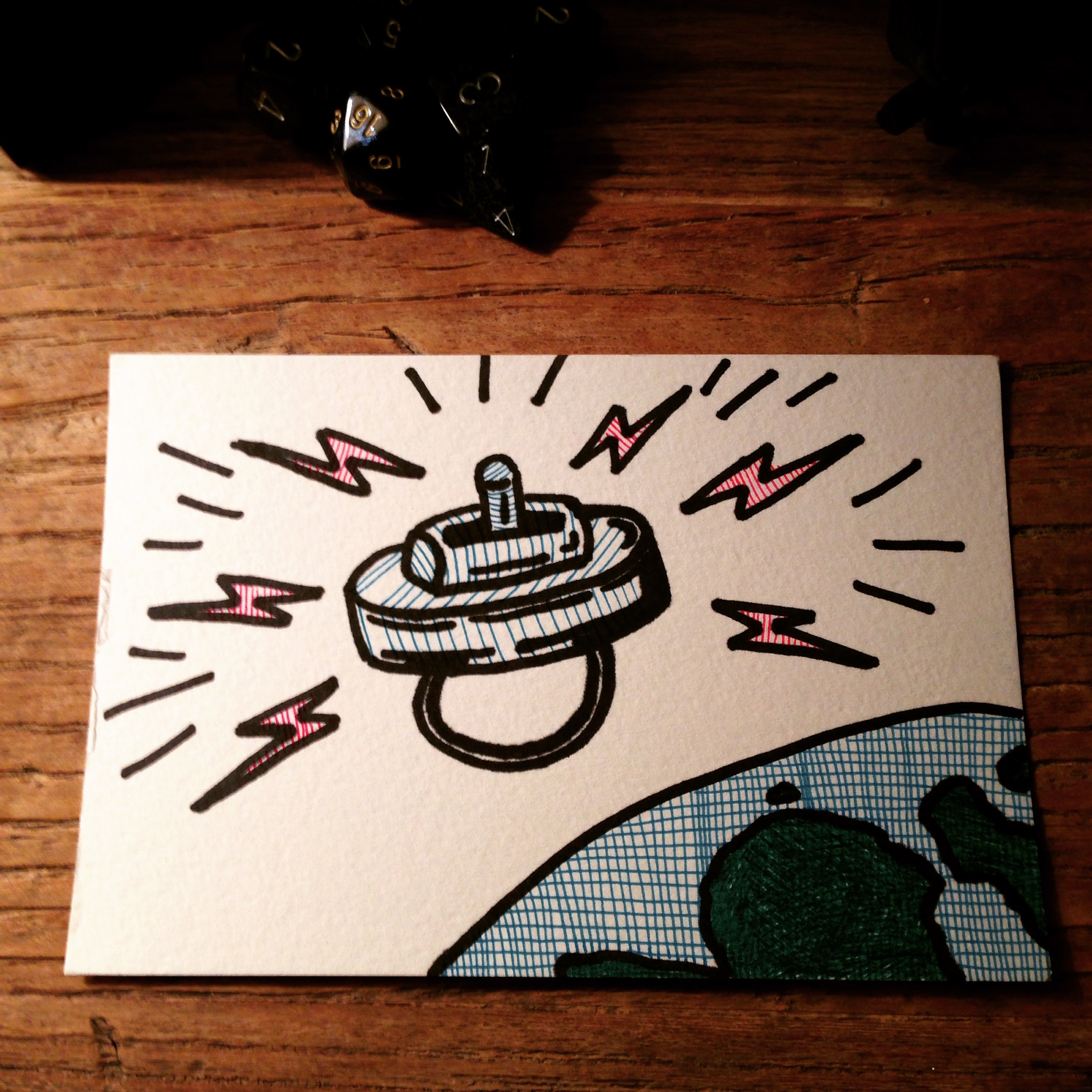
I love getting surprises in the mail — especially when it’s the ultimate weapon, created by my good friend Paul Vermeersch. Thanks, Paul!
I guess it’s actually done now?
The Dead Hamlets, the second Cross book and sequel to The Mona Lisa Sacrifice, is officially done and off at the printers. You can expect to find it at local bookstores and fine online emporiums everywhere shortly. I will hold off on promotion until it is available.
In the meantime, I am working on the latest draft of the third Cross book. Things definitely take a turn for the crazy in that one. More to come soon, dear friends!




 peter darbyshire