Blog Archives
Welcome to the chaos machine – Bibliofiles August 2024

Murderous monks, creepy suburbia, giant brains, social media chaos machines — this month’s Bibliofiles of my latest reads is as weird and fantastic as it gets! Let me know if you have any tips about what I should read next.
Literary fiction
Satellite Image by Michelle Berry

A city couple move to a small town after one of them is assaulted, hoping for a quieter and safer life. But small towns have their own secrets, and the couple is soon haunted by a satellite image of a potential body in their yard and strange incidents happening within the home, to say nothing of a cast of curious neighbours. It’s a psychological thriller that cranks up the tension with each chapter. You’ll be checking the locks over and over on your own home during your sleepless nights after finishing this book.
Link: https://www.goodreads.com/book/show/214982605-satellite-image?ref=nav_sb_ss_3_15
Genre Fiction
Saevus Corax Deals with the Dead by K.J. Parker

Saevus Corax makes a living scavenging the dead of battlefields with a band of not-so-merry men and business is good. As it turns out, Corax is using his job to hide the fact he killed off his former self, but his past just won’t stay dead and soon he is forced to leave the battlefields for even more dangerous realms. It’s classic Parker, with smart and double-crossing antiheroes and enough twists and turns to throw out your back. Better buy the full series so you have something to read while you rest.
Link: https://www.goodreads.com/book/show/61030541-saevus-corax-deals-with-the-dead
Crucible of Chaos by Sebastien de Castell

The clever and wisecracking Greatcoat Estevar Borros arrives at an ancient abbey where the monks have gone mad, demons run amok and the dead gods may not be as dead as everyone thinks. This may be my favourite Greatcoats novel yet by de Castell.
Link: https://www.goodreads.com/book/show/197664774-crucible-of-chaos?ref=nav_sb_ss_1_17
Across the Street by Greg Van Eekhout
An office drone decides to try a new route on his lunch excursions and finds himself in a strange version of our reality – a pet shop with a dragon, a meat shop with human corpses, a manhole with a mysterious creature, a church with actual angels and more. A wonderfully bizarre daydream that will speak to all of us who spend in our days in cube farms.
Link: https://www.uncannymagazine.com/article/across-the-street/
Median by Kelly Robson
A care aide provider in a broken-down car on the highway starts getting emergency calls from people who need help – but she doesn’t know any of them. When she stumbles upon a different and fatal accident, as well as a three-headed dog, things get weird. Another delightfully strange story from Kelly Robson.
Link: https://reactormag.com/median-kelly-robson/
“Gold, Glory, and the McCorry Boys” by Christopher O’Halloran
The best lyrical weird western heist father-son zombie story I’ve read this year.
Link: https://kaleidotrope.net/summer-2024/gold-glory-and-the-mccorry-boys-by-christopher-ohalloran/
“How to Kill the Giant Living Brain You Found in Your Mother’s Basement After She Died: An Interactive Guide” by Alex Sobel
A fun little story about mother-daughter relationships, emotional baggage, and of course giant living brains in basements.
Nine Recordings of Grief by by Zachariah Claypole White
When the world ends, it probably won’t be with zombies or supernovas or alien invasions or something we understand. It’ll likely end with something weird and incomprehensible, something we simply can’t fathom. If an enigmatic apocalypse appeals to you, then I think you’ll like “Nine Recordings of Grief.”
Link: https://www.bourbonpenn.com/issue/33/nine-recordings-of-grief-by-zachariah-claypole-white
Non-fiction
The Chaos Machine by Max Fisher

Why did Facebook, YouTube and other social media platforms transform over time from hubs of connection to engines of radicalization and misinformation? The easy answer, as always, is to blame it on the algorithm. But how does code lead to conflict? The Chaos Machine by Max Fisher is an informative but chilling look inside the social media networks to reveal how they turn user feeds into echo chambers of infectious content designed to outrage and mobilize — but most of all to increase clicks/views. Nothing drives engagement like ragebait, after all.
But the algorithm is just code created by workers in shiny tech campuses, so it should be easy to correct this problem, right?
This is where Fisher reveals the more disturbing issue underlying the problem with the social media networks: there’s money to be made in chaos. The Chaos Machine provides example after example of Facebook and YouTube insiders coming up with ways to stop their platforms from encouraging murder, genocide and civil war, only to be overruled by leaders who would rather maximize profits than minimize the death and destruction caused by their products. The end result of this is the world we now live in.
The Chaos Machine should be required reading for anyone who uses social media, no matter what your political ideology, for it reveals how we’re all being manipulated to enrich the lives of a handful of tech barons. We’re not just the audience in the attention economy or even the product. We’re also the victims.
Link: https://www.goodreads.com/book/show/58950736-the-chaos-machine
Why are debut novels failing to launch?
There was a time when a young writer could publish their first book and have a chance at success on the writing alone. Do you have to be a social media influencer to have a shot at a writing career now?
Link: https://www.esquire.com/entertainment/books/a60924704/debut-fiction-challenges/
The Bibliofiles – June 2024
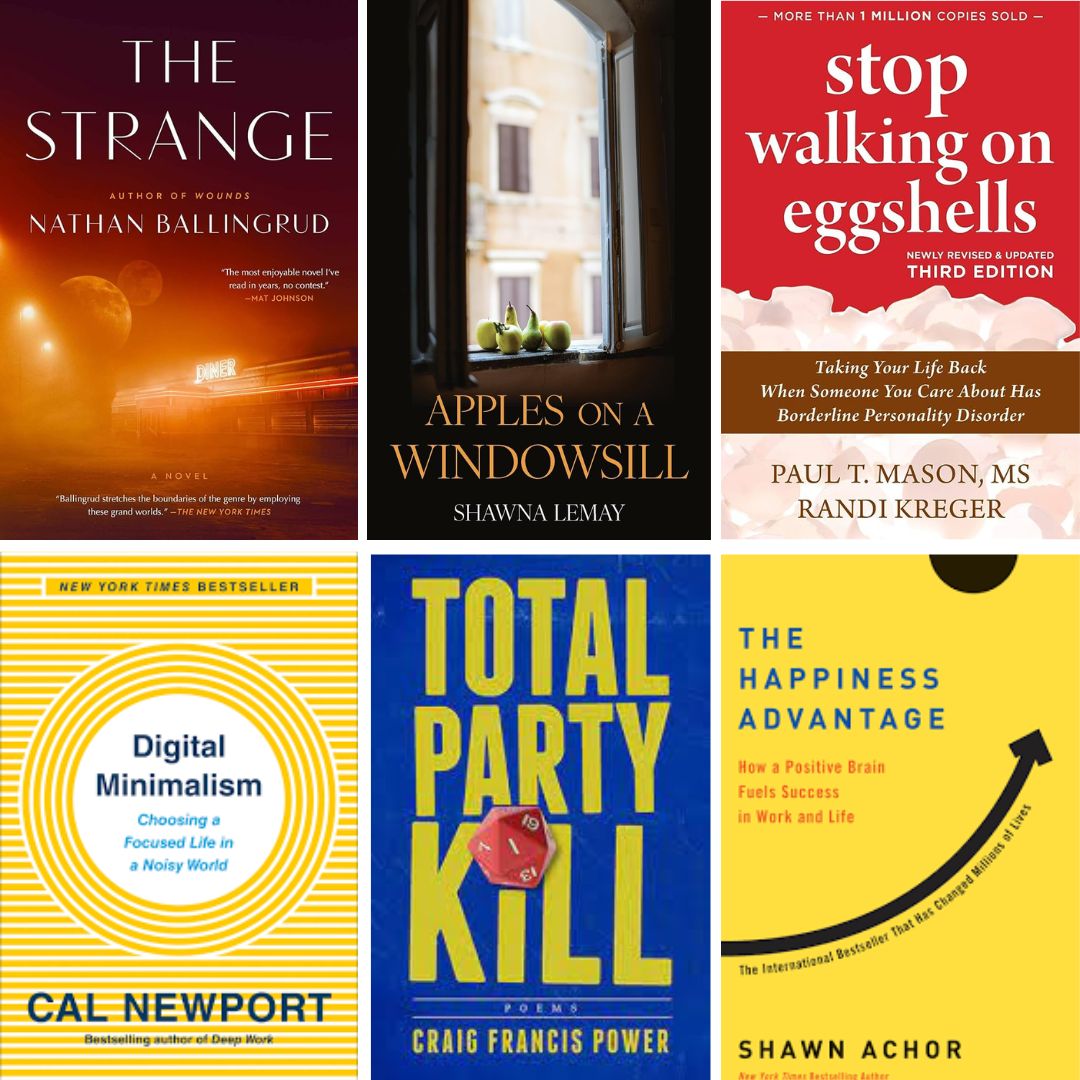
I’ve been riding the train a lot lately, which has given me more time to read. I leaned a bit toward non-fiction in June, but I did manage to read some pretty stellar fiction as well — and interstellar fiction! And whatever the hell Total Party Kill is….
Check out my latest recommended reads below. I hope you like them as much as I did.
Genre Fiction
The Strange by Nathan Ballingrud

I think The Strange by Nathan Ballingrud may be the best space western weird horror literary novel I’ve ever read. The tale of teen Annabelle venturing into the Martian wastelands to recover a recording of her missing mother after it was stolen in a robbery, it’s got quirky robot sidekicks, desperate and doomed settlers, outlaw societies, eerie ghosts, and hidden treasure that is as dangerous as it is alluring. A truly mad and visionary work from Ballingrud, as always.
Link: https://www.goodreads.com/book/show/61272810-the-strange
“In Bludd” by Jeffrey Ford
“In Bludd” is as if Raymond Carver’s stories had been written in a demonology tome. It’s a suburban dystopia of sorts, with the usual lost love and lonely souls. Only here one of the lonely souls is Hartly, who spies on his lost love, Verbena, in her house by means of a monstrous servant named Abelard (who has his own sad suburban back story). There’s a gun, a dangerous ex-husband, and ample amounts of alcohol, but the story is more emotional twists and turns than action tale. (Truth be told, it feels as if Harold Pinter snuck into one of the drafts and started moving things around.) I’m new to Ford, but he’s quickly become one of my favourite writers because of the way he turns our world inside out to reveal its weird, alien insides.
Link: https://www.sundaymorningtransport.com/p/in-bludd
“Shepherd Not Sheep” by Simon Strantzas
What happens when trolls maybe move in under some bridges of a strange town and children begin to disappear? Well, lots of council meetings, of course. And suspicion and conspiracy theories. And a curious encounter with one of those trolls. If you like weird lit, it doesn’t get much weirder than “Shepherd Not Sheep” by Simon Strantzas.
Link: https://www.bourbonpenn.com/issue/32/shepherd-not-sheep-by-simon-strantzas
“Sever and Bind” by Amanda Helms
A beautifully eerie tale of a young witch, her scheming mother, the Lord of the Dusklands, dead gods and a ghost dog. To say more would be to say too much. Just go and read it.
Link: https://www.beneath-ceaseless-skies.com/stories/sever-and-bind/
“A Magician Did It” by Rich Larson
An absolutely enchanting tale about a couple of petty crooks hired by a mage’s cockroach familiar to break the mage out of a prison for magicians. Of course, nothing is what it seems when dealing with magicians — including the prison, the guards, the mage and even the job itself. Magical!
Link: https://www.beneath-ceaseless-skies.com/stories/a-magician-did-it/
Non-fiction
Stop Walking on Eggshells by Paul T. Mason and Randi Kreger

Does someone in your life have you “walking on eggshells” because of their volatile behaviour? If they lack emotional regulation, are disassociated from reality, see the world through feelings rather than facts, are estranged from most of their former friends and family, have substance use issues, engage in risky sexual behaviour, and fly into a rage over inconsequential things, then you may be dealing with someone who has borderline personality disorder (BPD). If your personal situation is hitting more than a few of the checkboxes here, then you’ll likely want to read Stop Walking on Eggshells by Paul T. Mason and Randi Kreger to educate yourself about BPD and learn how to navigate this confusing and often frightening scenario.
Link: https://www.goodreads.com/book/show/188013.Stop_Walking_on_Eggshells
Digital Minimalism by Cal Newport

Digital Minimalism by Cal Newport lays out the challenge faced by all of us in the attention economy: how do we have a healthy relationship with technology that is increasingly designed to hijack our minds to keep us glued to apps? The answer is not to stop using technology — who can really manage that, after all? — but to be more intentional and focused in our use of tech. That involves taking a digital detox in order to figure out which devices and services you actually need, then using them in a mindful and deliberate fashion to serve those needs (when too often we serve the needs of the tech companies). In other words, use the apps and don’t let them use you. Ideally, the resulting transformation should allow you to use tech effectively and efficiently, giving you more time to be present in the real world and your own life. Digital Minimalism should be required reading for everyone that owns a phone or has ever logged into social media.
Link: https://www.goodreads.com/book/show/40672036-digital-minimalism
Apples on a Windowsill by Shawna Lemay

A collection of beautiful and thoughtful essays from one of my favourite writers, Shawna Lemay — who is also the publisher of Transactions With Beauty. The essays in Apples on a Windowsill cover topics such as still lifes, Springsteen, creativity, marriage, photography and so much more. The subjects are all deeply personal to Lemay but at the same time thoughtful meditations on art – process, history, motivation and even technique. Lemay’s writing is so powerful and transcendent that you’ll find your own life reflected in these essays over and over again — I feel like I’m sitting at the kitchen table with her or walking the streets of Venice with her and her husband (the incredibly talented artist Rob Lemay). A warning, though: read each essay slowly as they are like sinking into a warm bath made of words. Savour the moment.
Link: http://www.shawnalemay.net/applesonawindowsill
The Happiness Advantage by Shawn Achor

Do you choose to be happy no matter the circumstances or do you wait for something external to make you happy (a lover, a good job, a lottery win)? If it’s the former, you are operating at an advantage over most people. If it’s the latter, then you should probably read The Happiness Advantage by Shawn Achor. The book has echoes of Stoicism, in that it says you can’t control the world but you can control how you react to it, and you should always be trying to find ways to be grateful, positive and optimistic no matter what your circumstances. According to Achor, happiness really is an advantage — we perform better in every aspect of life when we are happy, we have more friends (and a strong social network boosts your happiness in a nice feedback loop), we are more motivated and resilient, we are better at problem solving and more creative, and so on. Meanwhile, those who wait for happiness to come to them tend to be more stressed, more likely to be lonely or have anxiety, less productive and motivated, and stuck in a fixed mindset vs. the growth mindset of happiness.
The book isn’t just observations, though. Achor also has some tips on how we can learn to embrace happiness: see the opportunity in setbacks and learn from defeat, focus on changing the world in a small circle around you and then gradually expand that circle, learn how to decatastrophize, embrace “active leisure” where you must participate (games, sports) over mindlessly doomscrolling social media or binge watching Netflix, increase your social connections, and work to make those around you happy to better the mood and ability of everyone.
In short, choose happiness and you will indeed be happy.
Link: https://www.goodreads.com/book/show/9484114-the-happiness-advantage
“More reading, more books”
Read more, just read more. It’s good for your soul of whatever you want to call your inner self.
Link: http://transactionswithbeauty.com/home/morereadingmorebooks
“This Business Is Crazy”
Did you know that more than half of all books published sell less than a thousand copies? You may have thought publishing was a crazy business before, but you’ll really think it’s crazy after reading this SHuSH post.
Link: https://shush.substack.com/p/this-business-is-crazy
Poetry?
Total Party Kill by Craig Francis Power
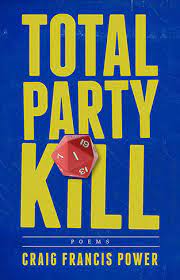
I don’t even know how to describe Total Party Kill by Craig Francis Power. The cover says “poems” but it’s more a collection of dungeon crawls through the soul. Total Party Kill fuses Dungeons & Dragons adventures with addiction memoir with trauma chronicle with pop culture fever dream and the result is as brilliant as it is indescribable. A natural 20 of artistic accomplishment.
The Bibliofiles – May 2024
Welcome to the May 2024 edition of The Bibliofiles, which collects what I’ve been reading lately. I hope something here catches your interest.
Literary Fiction
The Winter Knight by Jes Battis
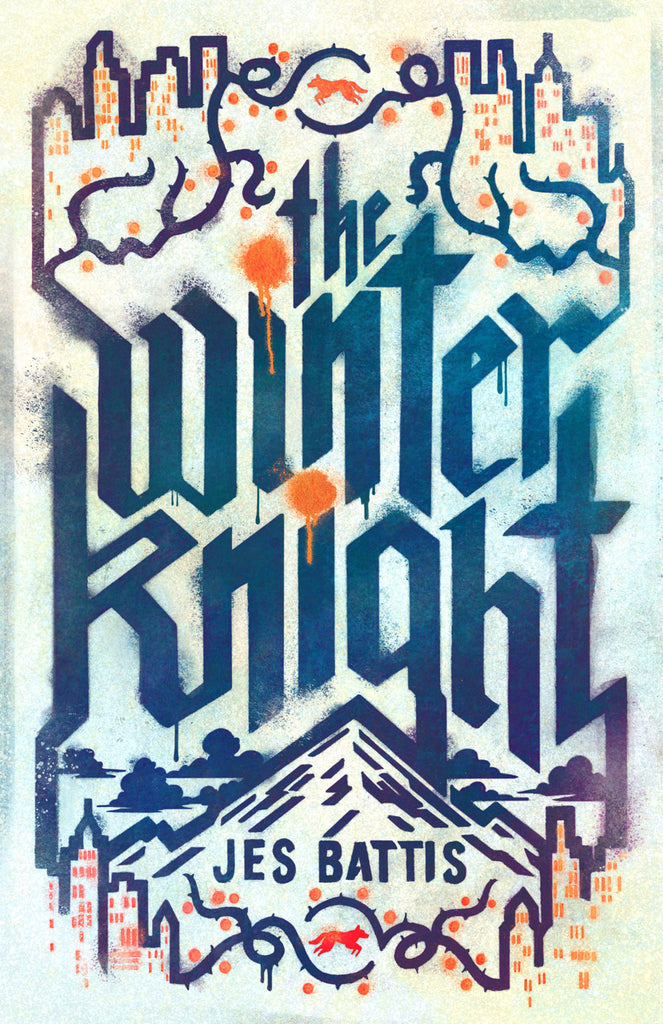
The Winter Knight by Jes Battis had me hooked at the very premise of a murder mystery in modern Vancouver populated with valkyries and the surviving Knights of the Round Table. Throw in a queer coming-of-age story, absolutely magical characters and enchanting prose, and you have the most original and inventive work of Canadian literature in years. If you like well-written weird lit, it doesn’t get any better than this.
Publisher link: https://ecwpress.com/products/the-winter-knight
Genre Fiction
The Two of Swords by K.J. Parker
I love basically everything by K.J. Parker, also known as Tom Holt, and the Two of Swords series is no exception. The trilogy follows a cast of minor and major characters in a war that has split an empire apart into East and West. The characters always seem to be at the periphery of the action — until they’re not — so this may be a frustrating read to those who prefer more traditional high fantasy and the like. But Parker’s works are more character studies than plot-driven tales — and his characters are all fascinating. Imagine Elmore Leonard writing fantasy tales, and you’ll have an idea of the nature of these books. I could get into the nuts and bolts of the stories, but honestly, just pick up these books and start reading.
Publisher link: https://www.orbitbooks.net/orbit-excerpts/the-two-of-swords-volume-one/
Wolves and Girls and Other Dark Gems by Maria Haskins

You may already know Maria Haskins because of her “Maria’s Reading” roundup of genre fiction, which is the go-to guide for all the latest speculative fiction releases. But she’s also a darkly brilliant writer herself and Wolves and Girls should be at the top of your to-read pile.
The collection is a wild and unpredictable mix of short but intense tales — a quirky take on the “troll bridge” story, a version of the tale of the sirens that begins on Europa and travels the solar system, a bloody unicorn fable and more. The stories border on flash fiction and you can easily read one in a few minutes — but you won’t be able to stop at one.
Link: https://mariahaskins.com/shop/
The Doomsday Book of Labyrinths by L.M. Zaerr
The story “The Doomsday Book of Labyrinths” features an odd taxman who enters a labyrinth shop run by a mysterious child for an assessment — and then of course does not leave the labyrinth. It’s a weirdly beautiful little tale that makes me want to seek out more by the author, L.M. Zaerr.
Story link: https://www.unchartedmag.com/stories/the-doomsday-book-of-labyrinths/
Non-fiction
Number Go Up by Zeke Faux
Is crypto just the latest in a long string of investment bubbles or outright scams akin to the housing bubble or even the tulip frenzy of the 17th century? Or is it actually a revolutionary new technology that the world just isn’t ready for yet?
Perhaps the answer is that it’s both.
Zeke Faux’s book about his adventures in the weird state of crypto, Number Go Up, reads more like a sci-fi novel co-written by William Gibson and Thomas Pynchon than non-fiction. Sadly, the book chronicles one of those moments in history that is stranger than fiction.
Intrigued by the constant news stories about crypto, and perhaps jealous of his friends’ financial gains when they started to invest, reporter Faux decided to embed himself in the crypto world to determine whether it was a true revolution or one of the biggest scams in human history. Of course, by now we know the popular answer, and the book does not offer many surprises in its outcome. But it does shock in the extremes — or perhaps excesses — of the crypto boom.
We follow along as Faux attends conferences and parties at mansions, mingling with celebrities, partying with owners of virtual mutated apes, and hanging out in Bahamian luxury towers with one of the richest people on the planet. His adventure introduces him to an eccentric cast of characters — a mysterious plastic surgeon turned financial titan; a wannabe rapper, influencer and hacker who almost got away with the theft of a lifetime; a child actor turned guru; and even Jimmy Kimmel for some reason. It’s as if your annual corporate retreat went to Burning Man for an investment pitch. In a truly news weird moment, it recently came out that one of the crypto CEOs doesn’t even exist.
Faux describes a very quirky and bizarre world in the book — but also a dangerous one. He nervously tries to explore a scam factory where workers are lured and imprisoned in order to have them run crypto scams on strangers through text messages and the like. Those who don’t comply are beaten or even killed. And the entire foundation of the crypto industry seems to be built on scams, as Faux highlights how the exchanges and companies behind crypto are often built on false promises if not outright fraud. The book is a list of crypto exchanges failing and funds disappearing, with investors going broke. Not that everyone gets away with it. Sam Bankman-Fried, the stupidly rich young man in the Bahamas, eventually gets taken into custody when his exchange collapses with bewildering speed, and there are no shortage of others who face similar fates. But there’s also no shortage of people who continue to be insanely rich thanks to crypto, no matter the dubious nature in which they acquired their fortune.
You’ll likely put the book down thinking that crypto is no more than an incomprehensible scam, but it is worth noting that it was born in an attempt to actually make the world a better place. The whole craze began with the publication of “Bitcoin: A Peer-to-Peer Electronic Cash System” by a mysterious figure known as Satoshi Nakamoto. It’s too difficult to sum up the ideas that have gone into this here, but basically blockchain technology like crypto is seen by many as a counter to global inequities in financial systems and an attempt to create peer-to-peer systems that don’t require intermediaries such as banks. If you want too know more, Freakonomics has an interesting three-part podcast series on blockchain — including how Walmart is using it to improve their shipping logistics and how crypto took over the art world with NFTs.
So what’s the future of crypto? Is it destined to be no more than another investment scam that is popular now and then? Or will it eventually become a legitimate technology that actually transforms the world? It’s too early to say at this point in history, but one thing is certain: there will likely be many more books like Number Go Up written over the next few years.
Publisher link: https://www.penguinrandomhouse.com/books/711959/number-go-up-by-zeke-faux/
The Daily Dad by Ryan Holiday
For many people, the greatest multigenerational effect they will have is how they raise their children. Yet most people don’t put much thought into it and simply repeat the behaviours and patterns their parents used to raise them. Parenting is one of those things that deeply and permanently changes you, though, so you should always be thinking about it — not just how to make your children better people, but how to make yourself a better person, too.
The Daily Dad follows the model of Ryan Holiday’s The Daily Stoic book, which offers short but meaningful meditations on how to better face the world and its challenges. Each entry of The Daily Dad is a page or two in length, often featuring historical figures such as Bruce Springsteen, Lyndon Johnson and Eleanor Roosevelt. The entries usually feature some lesson about how to behave with your children, or what kind of support to offer them, but they often have some import for the reader as well. For example:
“However we conduct ourselves in front of our children — particularly at home, in private — they will come to see as normal. If we are rude or unkind to our spouse, they will assume that is an appropriate way to treat people they love. If we are anxious and overly worried, they will come to think the world is a scary place that must be feared. If we behave unethically or cynically, they too will begin to cheat and lie.”
If you are a parent or thinking about being a parent, you will likely find something of value in this book — for yourself as well as your children.
Link: https://www.dailydadbook.com
John Carter and the Gods of Hollywood
John Carter and the Gods of Hollywood by Michael D. Sellers is a curious case study of the 2012 film adaptation of the John Carter books by Edgar Rice Burroughs. Written by a fan who really wanted the movie to succeed and spawn sequels — and who runs the John Carter Files website — the book investigates not only how the movie came to be but also how it came to be such a perceived flop. It’s actually a fascinating dive into a number of intersection subjects — a literary history of Edgar Rice Burroughs, the nature of fandom, the appeal of the escapism of the John Carter tales, the internal politics of Disney, the creative processes of Pixar, the marketing of major motion pictures, and more.
The book is certainly not neutral in regards to its subject matter — Sellers yearns for the series that could have been and points blame for the film’s failings at various Disney execs (some of whom were involved in the acquisition of Marvel and the Star Wars empire and so were less preoccupied with the success of the John Carter film). But that bias aside, it’s a very compelling read about how the movie making industry works and about the troubled collision of a popular fantasy world with the world of cutthroat capitalism. A recommended read if you want to know how the magic is made — and sometimes butchered.
Amazon link: https://www.amazon.com/John-Carter-Hollywood-Michael-Sellers/dp/0615682316
Stolen Focus by Johann Hari
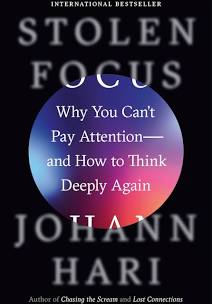
Why can we no longer focus on anything? Why are we addicted to our phones and social media? Who is to blame? What can we do to change things?
Stolen Focus by Johann Hari explores the crisis of attention that has afflicted us all, travelling across the world to speak to researchers and former attention engineers at Facebook and Google. What emerges from the interviews is a troubling record of how our brains are being re-engineered to increase profits for a handful of companies.
But it doesn’t have to be this way. Hari goes on a device-free seaside retreat and chronicles the slow and startling return of his attention and focus on the physical world around him. He talks to experts who offer alternative models of social media and other tech that would actually benefit their users rather than exploit them. And he sounds the alarm about what may happen if we continue along this infinitely scrolling path and do nothing.
Stolen Focus is probably a required read for anyone who has a social media account but be warned that it will likely make you want to delete your social media and turn off your phone. Which wouldn’t be all bad.
Link: https://stolenfocusbook.com
Is there still such a thing as Canadian culture? by Ken Whyte
Some interesting thoughts on the state of Canadian culture (specifically literary culture) via the SHuSH newsletter.
“My prediction is that Canada’s cultural output will revert to that of a minor province within a global empire as in the days before the Massey Commission because of the central contradiction at play here. Specifically the contradiction between culture and capital. Capital devours culture everywhere it goes. This is a core part of the imperialist nature of capital. It has to colonize and commodify every aspect of life in every place. It’s inherently expansionist in that way.
“Canada, the culture, is an idea that has been thoroughly colonized by capital and commodified. It’s also an incredibly business-run society. Canadian Capital in the 21st century does not care a wit about the idea of Canada. Canada is a vague abstraction that doesn’t show up on a spreadsheet or financial statement.”