
Category Archives: Lifestream
“There are people who want to help you”
If you haven’t seen the video of Wil Wheaton talking about his struggles with mental illness yet, watch it now. It’s important. If you haven’t struggled with mental illness yourself, it’s almost certainly affected someone you know. Which means it’s affected you, directly or indirectly.
Depression is a horrible thing to live through. Anxiety is a horrible thing to live through. Suicidal thoughts are a horrible thing to live through. But as Wheaton says, you can live life with these things rather than through them. You can manage them and know the joy of being alive rather than simply existing. And this is so incredibly important:
“You are not the only person in the world who has anxiety. You are not the only person in the world who has depression. You’re not the only person in the world who has thoughts of self-harm. There are people who want to help you. There are people who have spent their entire lives helping people like you and me and all of the people that you’re seeing in this video. And you’re not alone. You are okay.”
You are okay. You just need a little help. And people want to help you. And they can help you. You can change your normal.
Hey, if you don’t believe Wheaton, believe me. I used to suffer from depression and suicidal tendencies. It started sometime in my childhood and gradually got worse as I aged. The breaking point was during my university days, when I found myself lying in bed one afternoon with a knife, seriously considering slitting my wrists because I just found life too hard of a burden to bear anymore. I remember looking out the window, at the beautiful day outside. The sky was blue, children were playing, etc., and there I was with a knife in bed. I thought, “I can’t go on like this anymore.” But I realized I didn’t want to die. I wanted to live. I just didn’t know how to live.
That afternoon I went to the health clinic at the University of Western Ontario and told the woman at the reception desk I needed help. She took one look at me and asked if I was thinking about harming myself. I couldn’t even answer. I just stood there and shook. We’re taught to hide our feelings and vulnerabilities, not reveal them. I didn’t know how to admit everything I felt. She sat me down in a private room and I was talking to a counsellor within minutes.
That counsellor saved my life. I honestly believe that. She helped me to understand that what I thought was the normal way of experiencing life wasn’t normal, that I could actually move through life feeling good about myself and what I did. She helped me find a healthy normal that I could build a life upon.
When I first went to the clinic, I thought maybe I needed drugs or something to fix a chemical imbalance in me. As it turned out, my depression was purely psychological and due to past experiences, which I’m not going to get into here. It’s all good now. What I needed was someone to talk to, to help me, to guide the depressed me to the real me that was hiding within myself and waiting to do good things. In fact, I needed a few people to talk to. That first counsellor I saw helped me build a foundation for my life that was positive and uplifting — a foundation that made me care about myself. When I relapsed into depression years later because of life events, I immediately saw another another counsellor, who helped me add to that foundation. I think I’ve sought out counselling three times in my life now, and each one has left me stronger and better equipped to deal with the challenges of my life.
I am the person I am now because I sought help. Without those people helping me, I don’t think I ever would have lived to realize my dream of becoming a published writer, let alone the author of five novels. I never would have had the stability to find true love and become a dedicated husband and father. I’d had my daughter at the point I was struggling with depression, but if I hadn’t sought help I never would have become a father to my two sons — who fill me with a joy I couldn’t truly appreciate when I was younger. I never would have stuck around to meet my grandson, who is a source of daily wonder for me. I never would have had the confidence to pursue the career in the media that I have enjoyed for more than a decade now. I have lived the fullest life imaginable because I realized I needed help. I no longer suffer from depression and I don’t think I ever will again — I’ve lived too full a life to have any regrets now.
Wheaton is right. There are people who want to help you. Let them help you. Live the life you deserve to live. Help others live the lives they deserve to live. None of us are alone. And we are all okay.
Not writing but hiking
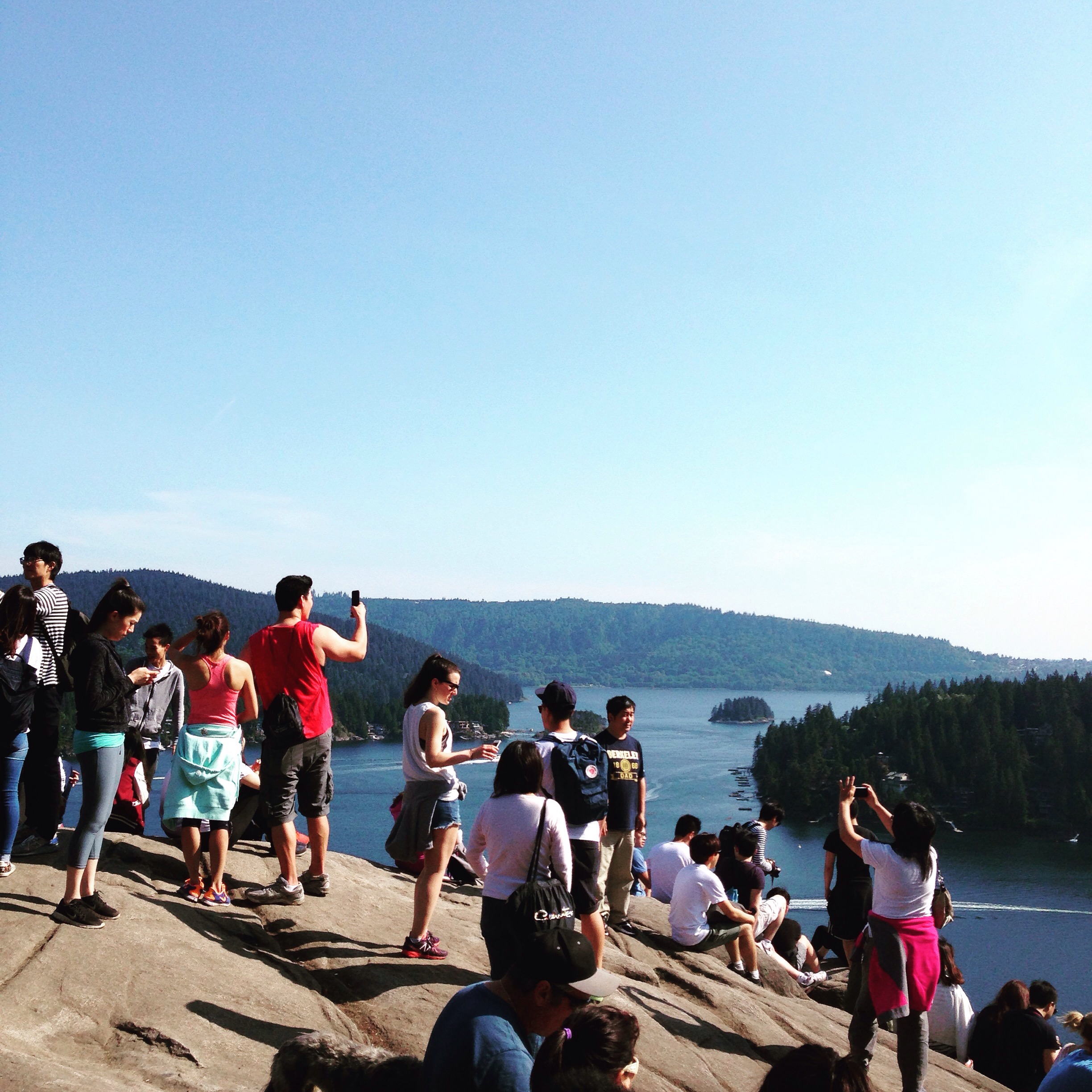
It’s a long weekend in B.C., which means the trails and beaches and waterways are jammed with people. I’m waiting for edits so I feel OK about getting out there and getting dirty.
The Province Cares: Let’s help those who need it

Over at my other job at The Province newspaper, I’ve started a new series called The Province Cares. I’m going to profile people in the local community who need a little help. First up is the family of little Owen, who’s had some hard luck in life. The family are some of the hardest-working people I’ve met, who have handled their challenge with incredible grace and strength. I felt humbled by their courage and resilience. They could use a little help caring for Owen, though, so please read the story and help if you can. Even sharing the story on your network will help them out!
Studio selfie
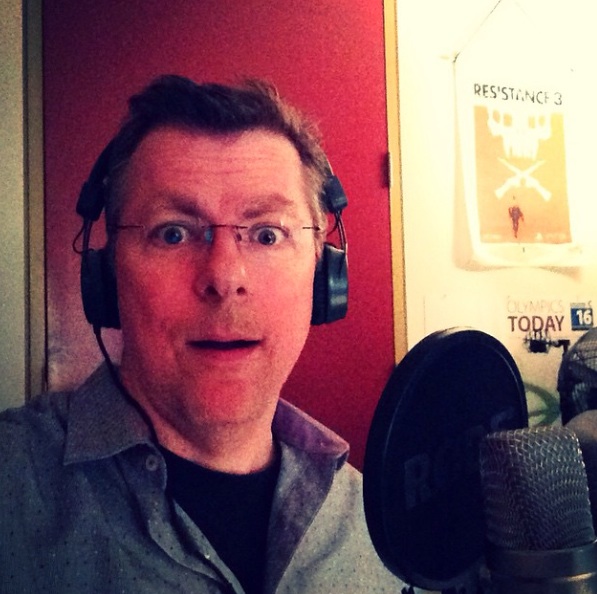
Here I am in the podcast studio at The Province, working on a top secret project. By “top secret” I mean management doesn’t know about it…. That shocked expression is me hearing my own voice for the first time. What happened to the sexy times voice I’d always imagined?
The most-read thing I’ve ever written

The other day I stumbled across a photo on reddit that showed a doctor allegedly grieving outside a hospital after losing a young patient. The photo affected me deeply, as I’ve spent a lot of time in hospitals lately with my sons, who have health problems. Health care workers have become an important part of my life, and I’ve sometimes wondered how they cope with everything they see. The reddit thread shows they clearly struggle with it, as they’re only human, too.
I wrote a personal column in response for The Province, the paper where I work. It spread like crazy, with people offering stories of their own medical experiences. It’s now the most-read thing I’ve ever written — The Province’s Facebook post about the story was seen by more than 50,000 people in a single day, and the paper’s Twitter page was a stream of retweets for a while.
I’m glad the column reached so many people, and I hope it helps readers find ways to say thanks to those health care workers who have changed their lives, just as they changed mine.
I’ll never forget the words a nurse said to me one day when things looked particularly dire: “It makes you realize how much of a miracle life is.”
Now imagine how they must feel when they see that miracle taken away in front of them on a routine basis.
Am writing
It’s a beautiful day outside, with cherry blossoms and a blue sky and yellow sun and breathable air and all that. I’m at my desk, writing. Sigh. Well, maybe I’ll take a break to play some Frisbee with the older boy. By play Frisbee I mean let him hurl the Frisbee as hard as he can into my legs. Parenting. You’re not doing it right if you’re not bleeding.
Nimoy is dead but Spock lives on

I just learned a few minutes ago that Leonard Nimoy, the actor who played Spock in the original Star Trek TV series and the early movies, has died. I feel so incredibly sad.
Some of my earliest memories are of Star Trek. In fact, I can remember the first chapter books I ever had were Star Trek books my older brother gave me for Christmas one year. I couldn’t have been older than five. Maybe I was four. I’m not sure. I didn’t know what they were, but when I read them things changed for me forever. I was taken away into Gene Roddenberry’s magical, semi-utopian future. (It would have been utopian if not for all the Klingons and Romulans and weird space entities!) Star Trek was the drug that kickstarted my imagination.
I don’t know how old I was when I discovered the TV series. I was definitely still in elementary school. I watched them all, even though they were a forbidden fruit. I grew up in a bit of a violent household, and my father didn’t approve of Star Trek. I don’t know why. He had a hard upbringing himself and was all about working all the time and working hard. He was the hardest working person I’ve ever known, in fact. I was a whiny little brat who just wanted to read books. Some things never change. I would sneak Star Trek onto the TV when he was outside, working in the garden or building something in the shed. Every now and then he’d come in and catch me watching those shows where anything was possible and the machines did all the work for you. We’d clash, and I’d lose.
I’m OK with all that now. My father mellowed out before he died a few years back, and we had a much better relationship. I don’t think we ever became close, but I developed a deeper appreciation of what he had been through in his life and how strong a man he was before a series of strokes reduced him to memories. I have respect for him now, because I’ve learned how hard it can be sometimes to be a man and a parent.
Those Star Trek shows and books were an escape for me, the vehicles that carried me away from a life I didn’t want to be in. They took me away from that home with a violent father, a bed-ridden and absent mother, a sister who died far too early and a brother who found his own ways of escaping. They led to Star Wars and Lord of the Rings and all the other classic works that fuelled my imagination and made me dream of other worlds that were, if not better than mine, at least different. Star Trek was the gateway drug. If not for Star Trek, I might not have read those other books. If I hadn’t read them, I might not have discovered Roger Zelazny and all those other writers that turned me into a writer myself.
Hearing the news of Nimoy’s death triggered a flashback through my life, returning me to that childhood day where I sat in my pyjamas under the Christmas tree, holding those Star Trek books in my hand. It’s the earliest moment I can remember right now. I think it’s the first moment of my life that leaps out at me because it’s the moment where my life truly began, where the person who I am now was born.
Looking back on my life, I see now that Spock was always there. He was there in my childhood, in those books and TV shows. He was there in my teenage years, coming back in the movies when I perhaps needed him most. He helped coax me out of my damaged shell when I joined a theatre group that did improv Star Trek comedies in my early adulthood — that was when I actually learned how to interact with people like a normal human being. He returned again when I was an adult, in the reboot movies, when I began to have children of my own. And now he is gone.
Except he’s not. Leonard Nimoy is gone, yes. But Spock is still there. Spock is there in every moment of life in some form or another. All the Star Trek characters are. Even the redshirts! (I always kind of saw myself as a redshirt, to be honest.) Spock will live on in my imagination. Spock will live on in the imaginations of millions of people around the world. And he will keep living on in the minds of others long after we are all gone to our own graves.
Thank you for reading this. Now I’m going to watch some Star Trek with my son.
Live long and prosper.
My most memorable meal

The writer Lawrence M. Schoen has a pretty fun feature on his site called Eating Authors. First you need to fatten them up a bit with a big book contract, then you sauté them in scotch….
No, not that kind of eating authors. The other kind, in which authors talk about their most memorable meals. Lawrence asked me to be a part of it and I was happy to agree. It was a difficult choice to choose my most memorable meal, as I’ve had some pretty interesting ones. The one I kept thinking about wasn’t necessarily the best meal I’ve ever had, but it was the one that stuck in my mind the most, mainly because I never saw the meal. I was eating in the dark, you see, at a restaurant called Dark Table. Head over to the Eating Authors page to read about the illuminating experience.
I understood that the restaurant was going to be dark inside, but I didn’t understand what that darkness meant. I couldn’t see a single thing, and I instantly lost any sense of where I was. I couldn’t remember the last time that I’d been in such utter darkness. Even during the frequent power blackouts where I live, I still have sources of light — the ambient light from the moon or stars, or even my iPhone flashlight in a pinch. But inside Dark Table, it wasn’t just dark — it was nothing at all.






 peter darbyshire