We tell ourselves stories to imagine a different world
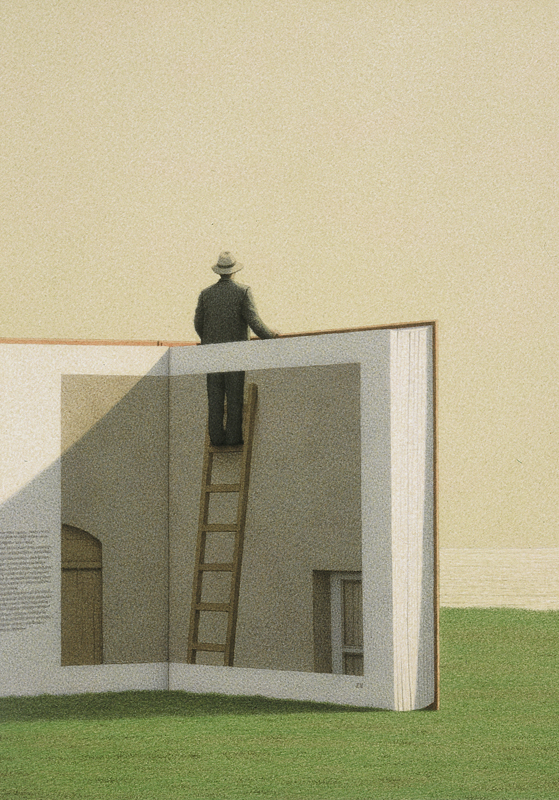
Have you been turning away from the world of late and finding sanctuary in books or other forms of art? If so, you’re hardly alone.
The publishing world has seen a boom in the fantasy genre, as readers seek escape from the present times where we find ourselves increasingly powerless before tech autocrats and self-serving politicians who want to destroy the existing order and rob us all of the meagre lives and agency it has brought us. At least in fantasy novels individuals have a chance of changing the world and good can actually win out over evil. Escapism yes, but perhaps inspirational escapism.
I’ve been particularly drawn to urban fantasy because of the way it transforms the existing world into one with magic and mystery. Urban fantasy re-injects wonder into our world — and we are seriously lacking in wonder at the present moment. We need something that can transcend this miserable existence but also change it, in the imagination if nowhere else. The magic of urban fantasy promises the re-enchantment of the mundane.
It’s why I focused on the act of creativity as magical and mysterious in my most recent book, The Wonder Lands War. Books become portals to other realms in The Wonder Lands War, with Lewis Carroll’s Wonderland tales acting as gateways into the imagination itself (among other places). Libraries are secret bastions of power while librarians are not so secret magicians. And paintings, sculptures and books offer keys to immortality and escaping death.
Of course, I’m not the only one who sees something magical in creativity.
The poet William Blake saw the imagination as the remnants of divinity in our soul, a sort of personal connection to a spiritual realm. The more contemporary poet Christian Wiman says in He Held Radical Light that “there is a persistent, insistent mystery at the center of our existence, which art both derives from and sustains.”
And musician, writer and 21st century theologian of sorts Nick Cave discusses a similar conjunction of creativity and transcendent mystery in Faith, Hope and Carnage with journalist Sean O’Hagan, where he says “You have to operate, at least some of the time, in the world of mystery, beneath that great and terrifying cloud of artistic unknowing.” To Cave, the creative impulse is a spectral or perhaps transcendent force that calls creators to follow it rather than the other way around.
These acts of the imagination manifest themselves in the real world in the form of artistic creations and provide knowledge and comfort. There is a reason so many of us seek solace in bookstores and libraries, in art galleries and museums. One of my favourite literary moments is in Roger Zelazny’s Nine Princes in Amber, where the protagonist Corwin reflects on the magical power of libraries, where he feels “comfortable and secure to have walls of words, beautiful and wise, all around me. I always feel better when I can see that there is something to hold back the shadows.”
The reference to shadows takes on extra resonance in the Amber books given they form sort of a multiverse series with different realities being shadows of the one true realm, Amber, which was carved out of the chaos through an act of creation. Corwin’s father created the Pattern, a magical shape that gives order to Amber and thus existence, but the farther you get away from this act of creation, the more threatening the shadows become — until eventually you reach the Courts of Chaos.
Similarly, the paintings of Quint Buchholz see the world of the imagination as real as our own, often using books as vehicles to move between these realms – to suggest they are both equally as real.
And are they not?
Umberto Eco argues creativity is the foundation of our very civilization, with books being the building blocks of our world.
“Literature creates a sense of identity and community,” he says in On Literature. “We might also think of what Greek civilization would have been like without Homer, German identity without Luther’s translation of the Bible, the Russian language without Pushkin, or Indian civilization without its foundation epics.”
The real world is made up of a history of acts of the imagination then. “A text is meant to be an experience of transformation for its reader,” Eco says in The Name of the Rose, but texts also transform the world itself.
Is it any wonder then that literary characters often take on a life of their own in our world? See, for instance, Timothy Findley’s Headhunter, where Kurtz is freed from Joseph Conrad’s Heart of Darkness in Toronto. Or The Unlikely Escape of Uriah Heep by HG Parry, where someone is pulling literary characters from books and into our world.
I feel so strongly that some characters have developed their own life that I gave them just such a life in my Cross books, which are set in the modern world. Alice from the Wonderland tales, Frankenstein’s creature from Mary Shelley’s tale, Ahab from Melville’s Moby-Dick, Captain Nemo from Jules Verne’s 20,000 Leagues Under the Sea and more make appearances in the world we find ourselves in — and hopefully add a little more magic and wonder to our world.
“We tell ourselves stories in order to live,” Cave says.
We also tell ourselves stories in order to live in a different world.
Image: Man on a Ladder by Quint Buchholz
Posted on March 26, 2026, in Journal, The Writing Life and tagged Journal. Bookmark the permalink. Leave a comment.




 peter darbyshire
Leave a comment
Comments 0