The Bibliofiles – May 2024
Welcome to the May 2024 edition of The Bibliofiles, which collects what I’ve been reading lately. I hope something here catches your interest.
Literary Fiction
The Winter Knight by Jes Battis
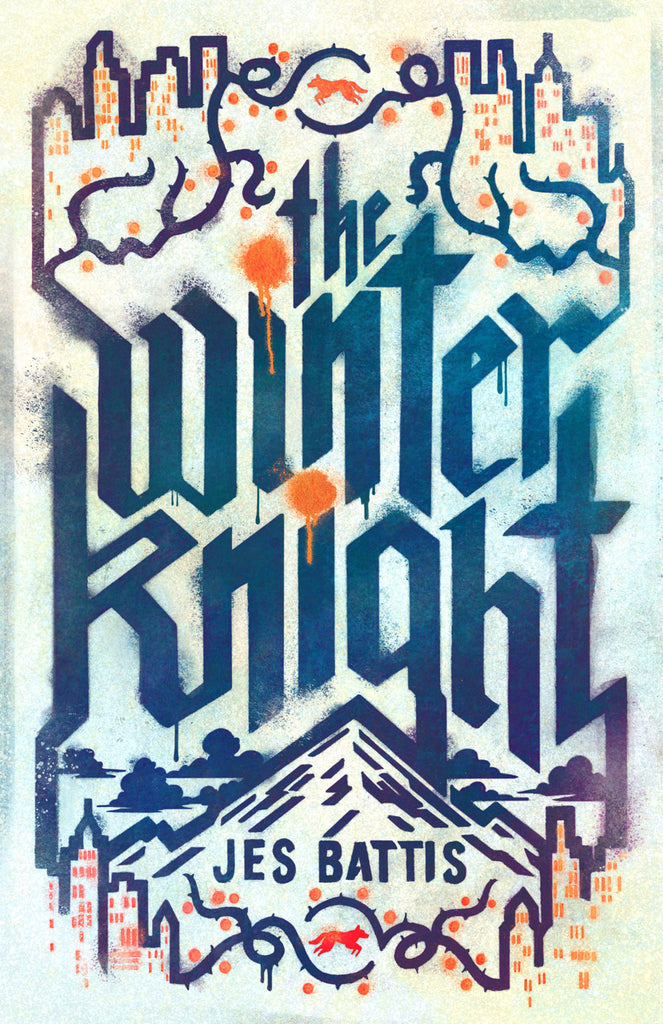
The Winter Knight by Jes Battis had me hooked at the very premise of a murder mystery in modern Vancouver populated with valkyries and the surviving Knights of the Round Table. Throw in a queer coming-of-age story, absolutely magical characters and enchanting prose, and you have the most original and inventive work of Canadian literature in years. If you like well-written weird lit, it doesn’t get any better than this.
Publisher link: https://ecwpress.com/products/the-winter-knight
Genre Fiction
The Two of Swords by K.J. Parker
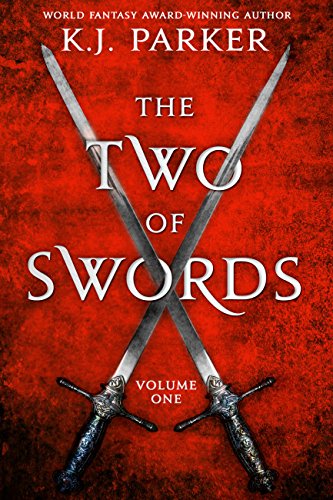
I love basically everything by K.J. Parker, also known as Tom Holt, and the Two of Swords series is no exception. The trilogy follows a cast of minor and major characters in a war that has split an empire apart into East and West. The characters always seem to be at the periphery of the action — until they’re not — so this may be a frustrating read to those who prefer more traditional high fantasy and the like. But Parker’s works are more character studies than plot-driven tales — and his characters are all fascinating. Imagine Elmore Leonard writing fantasy tales, and you’ll have an idea of the nature of these books. I could get into the nuts and bolts of the stories, but honestly, just pick up these books and start reading.
Publisher link: https://www.orbitbooks.net/orbit-excerpts/the-two-of-swords-volume-one/
Wolves and Girls and Other Dark Gems by Maria Haskins

You may already know Maria Haskins because of her “Maria’s Reading” roundup of genre fiction, which is the go-to guide for all the latest speculative fiction releases. But she’s also a darkly brilliant writer herself and Wolves and Girls should be at the top of your to-read pile.
The collection is a wild and unpredictable mix of short but intense tales — a quirky take on the “troll bridge” story, a version of the tale of the sirens that begins on Europa and travels the solar system, a bloody unicorn fable and more. The stories border on flash fiction and you can easily read one in a few minutes — but you won’t be able to stop at one.
Link: https://mariahaskins.com/shop/
The Doomsday Book of Labyrinths by L.M. Zaerr
The story “The Doomsday Book of Labyrinths” features an odd taxman who enters a labyrinth shop run by a mysterious child for an assessment — and then of course does not leave the labyrinth. It’s a weirdly beautiful little tale that makes me want to seek out more by the author, L.M. Zaerr.
Story link: https://www.unchartedmag.com/stories/the-doomsday-book-of-labyrinths/
Non-fiction
Number Go Up by Zeke Faux
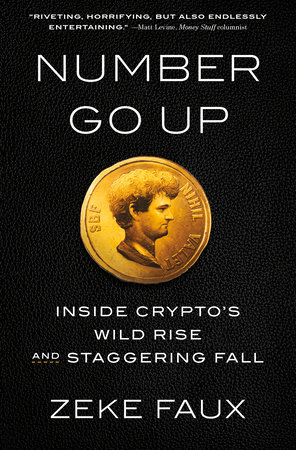
Is crypto just the latest in a long string of investment bubbles or outright scams akin to the housing bubble or even the tulip frenzy of the 17th century? Or is it actually a revolutionary new technology that the world just isn’t ready for yet?
Perhaps the answer is that it’s both.
Zeke Faux’s book about his adventures in the weird state of crypto, Number Go Up, reads more like a sci-fi novel co-written by William Gibson and Thomas Pynchon than non-fiction. Sadly, the book chronicles one of those moments in history that is stranger than fiction.
Intrigued by the constant news stories about crypto, and perhaps jealous of his friends’ financial gains when they started to invest, reporter Faux decided to embed himself in the crypto world to determine whether it was a true revolution or one of the biggest scams in human history. Of course, by now we know the popular answer, and the book does not offer many surprises in its outcome. But it does shock in the extremes — or perhaps excesses — of the crypto boom.
We follow along as Faux attends conferences and parties at mansions, mingling with celebrities, partying with owners of virtual mutated apes, and hanging out in Bahamian luxury towers with one of the richest people on the planet. His adventure introduces him to an eccentric cast of characters — a mysterious plastic surgeon turned financial titan; a wannabe rapper, influencer and hacker who almost got away with the theft of a lifetime; a child actor turned guru; and even Jimmy Kimmel for some reason. It’s as if your annual corporate retreat went to Burning Man for an investment pitch. In a truly news weird moment, it recently came out that one of the crypto CEOs doesn’t even exist.
Faux describes a very quirky and bizarre world in the book — but also a dangerous one. He nervously tries to explore a scam factory where workers are lured and imprisoned in order to have them run crypto scams on strangers through text messages and the like. Those who don’t comply are beaten or even killed. And the entire foundation of the crypto industry seems to be built on scams, as Faux highlights how the exchanges and companies behind crypto are often built on false promises if not outright fraud. The book is a list of crypto exchanges failing and funds disappearing, with investors going broke. Not that everyone gets away with it. Sam Bankman-Fried, the stupidly rich young man in the Bahamas, eventually gets taken into custody when his exchange collapses with bewildering speed, and there are no shortage of others who face similar fates. But there’s also no shortage of people who continue to be insanely rich thanks to crypto, no matter the dubious nature in which they acquired their fortune.
You’ll likely put the book down thinking that crypto is no more than an incomprehensible scam, but it is worth noting that it was born in an attempt to actually make the world a better place. The whole craze began with the publication of “Bitcoin: A Peer-to-Peer Electronic Cash System” by a mysterious figure known as Satoshi Nakamoto. It’s too difficult to sum up the ideas that have gone into this here, but basically blockchain technology like crypto is seen by many as a counter to global inequities in financial systems and an attempt to create peer-to-peer systems that don’t require intermediaries such as banks. If you want too know more, Freakonomics has an interesting three-part podcast series on blockchain — including how Walmart is using it to improve their shipping logistics and how crypto took over the art world with NFTs.
So what’s the future of crypto? Is it destined to be no more than another investment scam that is popular now and then? Or will it eventually become a legitimate technology that actually transforms the world? It’s too early to say at this point in history, but one thing is certain: there will likely be many more books like Number Go Up written over the next few years.
Publisher link: https://www.penguinrandomhouse.com/books/711959/number-go-up-by-zeke-faux/
The Daily Dad by Ryan Holiday
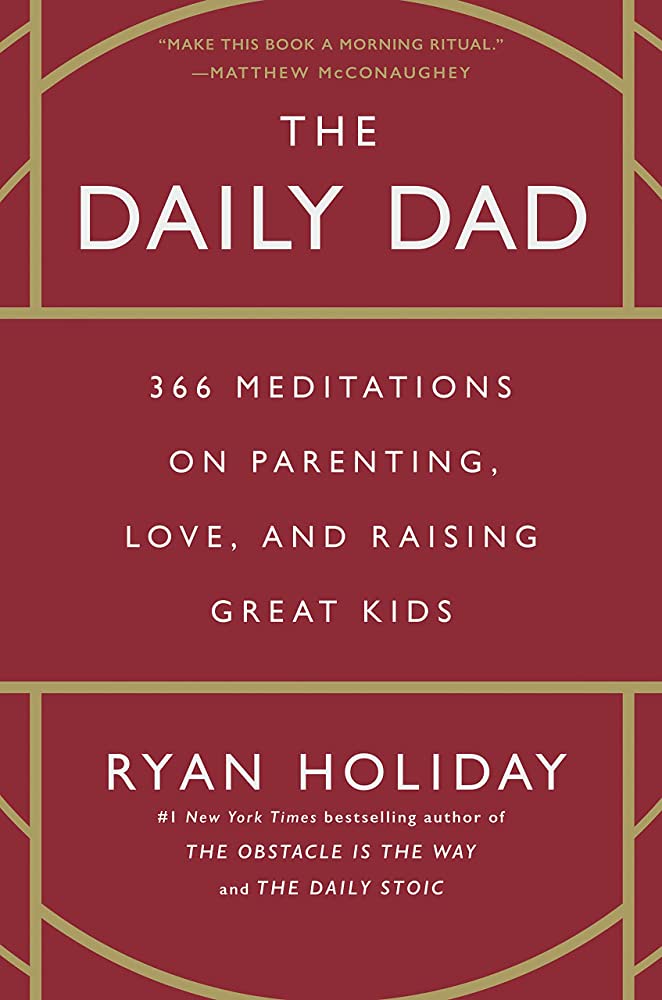
For many people, the greatest multigenerational effect they will have is how they raise their children. Yet most people don’t put much thought into it and simply repeat the behaviours and patterns their parents used to raise them. Parenting is one of those things that deeply and permanently changes you, though, so you should always be thinking about it — not just how to make your children better people, but how to make yourself a better person, too.
The Daily Dad follows the model of Ryan Holiday’s The Daily Stoic book, which offers short but meaningful meditations on how to better face the world and its challenges. Each entry of The Daily Dad is a page or two in length, often featuring historical figures such as Bruce Springsteen, Lyndon Johnson and Eleanor Roosevelt. The entries usually feature some lesson about how to behave with your children, or what kind of support to offer them, but they often have some import for the reader as well. For example:
“However we conduct ourselves in front of our children — particularly at home, in private — they will come to see as normal. If we are rude or unkind to our spouse, they will assume that is an appropriate way to treat people they love. If we are anxious and overly worried, they will come to think the world is a scary place that must be feared. If we behave unethically or cynically, they too will begin to cheat and lie.”
If you are a parent or thinking about being a parent, you will likely find something of value in this book — for yourself as well as your children.
Link: https://www.dailydadbook.com
John Carter and the Gods of Hollywood
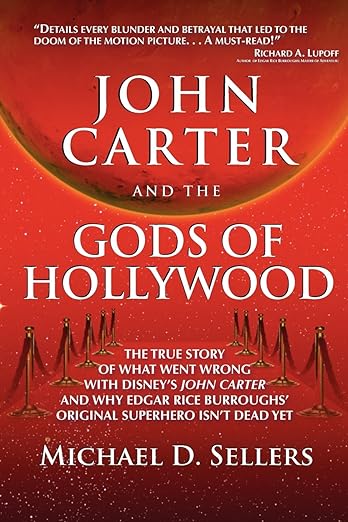
John Carter and the Gods of Hollywood by Michael D. Sellers is a curious case study of the 2012 film adaptation of the John Carter books by Edgar Rice Burroughs. Written by a fan who really wanted the movie to succeed and spawn sequels — and who runs the John Carter Files website — the book investigates not only how the movie came to be but also how it came to be such a perceived flop. It’s actually a fascinating dive into a number of intersection subjects — a literary history of Edgar Rice Burroughs, the nature of fandom, the appeal of the escapism of the John Carter tales, the internal politics of Disney, the creative processes of Pixar, the marketing of major motion pictures, and more.
The book is certainly not neutral in regards to its subject matter — Sellers yearns for the series that could have been and points blame for the film’s failings at various Disney execs (some of whom were involved in the acquisition of Marvel and the Star Wars empire and so were less preoccupied with the success of the John Carter film). But that bias aside, it’s a very compelling read about how the movie making industry works and about the troubled collision of a popular fantasy world with the world of cutthroat capitalism. A recommended read if you want to know how the magic is made — and sometimes butchered.
Amazon link: https://www.amazon.com/John-Carter-Hollywood-Michael-Sellers/dp/0615682316
Stolen Focus by Johann Hari
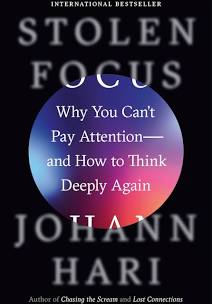
Why can we no longer focus on anything? Why are we addicted to our phones and social media? Who is to blame? What can we do to change things?
Stolen Focus by Johann Hari explores the crisis of attention that has afflicted us all, travelling across the world to speak to researchers and former attention engineers at Facebook and Google. What emerges from the interviews is a troubling record of how our brains are being re-engineered to increase profits for a handful of companies.
But it doesn’t have to be this way. Hari goes on a device-free seaside retreat and chronicles the slow and startling return of his attention and focus on the physical world around him. He talks to experts who offer alternative models of social media and other tech that would actually benefit their users rather than exploit them. And he sounds the alarm about what may happen if we continue along this infinitely scrolling path and do nothing.
Stolen Focus is probably a required read for anyone who has a social media account but be warned that it will likely make you want to delete your social media and turn off your phone. Which wouldn’t be all bad.
Link: https://stolenfocusbook.com
Is there still such a thing as Canadian culture? by Ken Whyte
Some interesting thoughts on the state of Canadian culture (specifically literary culture) via the SHuSH newsletter.
“My prediction is that Canada’s cultural output will revert to that of a minor province within a global empire as in the days before the Massey Commission because of the central contradiction at play here. Specifically the contradiction between culture and capital. Capital devours culture everywhere it goes. This is a core part of the imperialist nature of capital. It has to colonize and commodify every aspect of life in every place. It’s inherently expansionist in that way.
“Canada, the culture, is an idea that has been thoroughly colonized by capital and commodified. It’s also an incredibly business-run society. Canadian Capital in the 21st century does not care a wit about the idea of Canada. Canada is a vague abstraction that doesn’t show up on a spreadsheet or financial statement.”
Posted on May 4, 2024, in Journal and tagged Bibliofiles. Bookmark the permalink. Leave a comment.





 peter darbyshire
Leave a comment
Comments 0