Category Archives: Uncategorized
Canadian bookstores to sell fewer books
I really wonder how publishers are going to adapt to this new world, especially smaller publishers, who already have challenges getting into bookstores.
Book sales, which now make up about 75 per cent of Indigo’s business, will fall to 50 per cent in a couple of years, according to Indigo’s forecast.
The new world order
We’re now entering another stage of warfare. As usual, the change is driven by technology more than politics or ideology, although you could argue technological innovation is a product of the other two.
John Robb talks a lot about “open source warfare” on his blog Global Guerillas, and in many ways he is the von Clausewitz of our day, although the difference in their approaches and concerns speaks volumes about the differences of our ages. Conflicts are no longer primarily about nation states at war, although that is still a factor. Now battles are fought between avatars, stand-ins for ideological and technological processes — and even media processes, as the conflicting and evolving narratives about bin Laden’s death highlight. Baudrillard’s notions about war in the modern age are even more relevant now than when he first wrote them.
Our wars are now wars of spectacle, as 9/11 made clear to everyone. Victory is in the horror of the image, not the mathematics of the body count. The enemy, our enemy if you will, tries to create the spectacle in our homes, our minds. We try to make the conflict invisible by fighting in the lands of others, and by using mechanical avatars to do our fighting. Drones. We don’t care if we lose a piece of equipment. It is not the same as losing a human avatar. There is material loss, but no significant spectacle. We don’t care if Pakistani tribal fighters film themselves beheading a drone. It was probably old and out of fashion anyway. It’s simply an excuse to buy a new one, like the latest iPhone.
And so the enemy must respond to technological superiority with its own technological innovation. The skies will be filled with stealth drones and anti-drones and jamming and airborne viruses. And the more the conflict becomes abstract in terms of flesh and blood, the more the conflict will become abstract in terms of engagement and even causes. It will be the skies over the Battle of the Somme in bits.
When drones are fighting drones, when they are adapting their own code to respond to enemy threats, when they are developing their own logistics chains at the speed of light because it’s more efficient than having humans do it, when they are battling in symbolic spaces that recognize no national boundaries but only the ever-shifting boundaries of ideology and technology, then what will the conflicts of the future be like?
Will we even notice them?
We're all shelf monkeys now
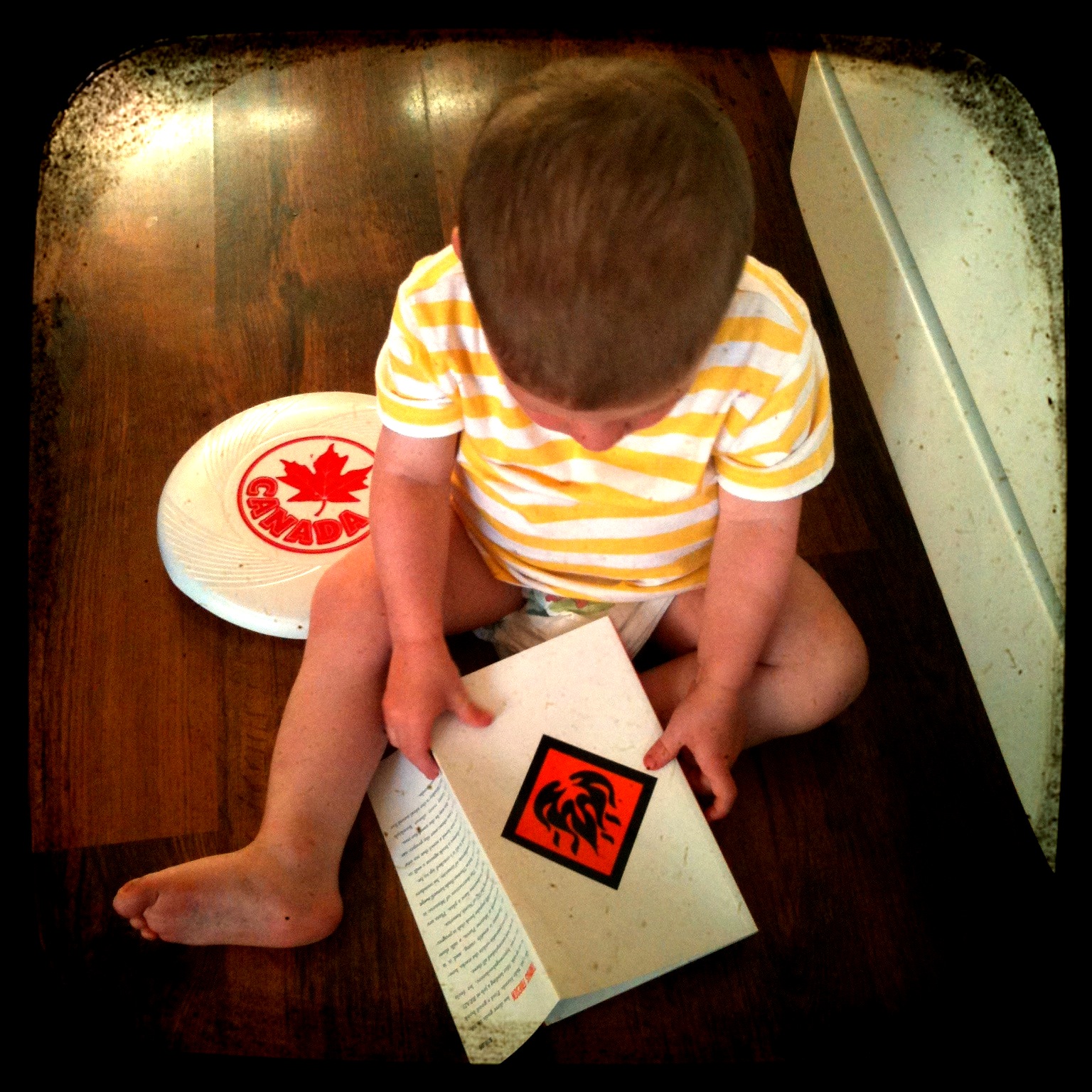
I didn’t know whether to laugh or shudder reading Corey Redekop’s Shelf Monkey. So I did both.
The novel tells the tale of failed lawyer turned bookstore widget Thomas, who finds his soulmates in an eccentric group of fellow employees at hypermegabookstore READ. The only problem is they’re more crazy than eccentric. They hold secret meetings where they burn offensive books – you know, Michael Crichton, Candace Bushnell, the Left Behind series – while assuming the monikers of beloved fictional characters. Oh, Corey, you had me at Yossarian. They have a particular hatred for a book club host called Munroe Purvis, who’s sort of a sordid cross between Oprah and Morton Downey Jr. and whose book club selections represent everything wrong with western society – imagine your grandmother’s diaries turned into bestsellers, and you’ll have an idea of what Purvis’s book club represents.
Of course, Purvis isn’t what he appears to be, and neither are many of Thomas’s bookstore friends. Some of them turn out to be hiding deep secrets about the bookstore, while others are just plain dangerous in the way only geeks can be dangerous. When Purvis goes on tour and comes to town, the secrets and craziness collide as Thomas’s friends set out to destroy Purvis, and the novel quickly moves from the Nick Hornby section of the bookstore to the Joseph Heller and Chuck Palahniuk table.
Redekop manages to keep his own voice throughout the novel, while winking, nodding and even raising a beer every now and then to literary culture. He name-drops authors more than a fourth-year English student, and he makes some literary traditions his own, such as adopting the epistolary novel and turning it into an email exchange while Thomas is on the run from the authorities. Even this is a bit of a literary joke for Redekop, though, as the recipient of his emails is Eric McCormack, a real-life Canadian author. At least I think he’s a real-life Canadian author. I’ve never met him, and after reading Shelf Monkey I am beginning to wonder if he’s a clever construct on the part of Redekop to flesh out the book.
Shelf Monkey is a literary thriller but it’s also a fun romp – unless, presumably, you’re an Oprah fan. But if so, you’re not Redekop’s imagined audience. His ideal reader knows this book is blackly, blackly funny because it’s all too true.
Full disclosure: Redekop gave one of my novels a fine review at his site, but I would have liked this book just as much anyway.
This isn't what I wanted
Today, the man beside me in the coffee shop was working on a PlayBook. I’d never seen one in the wild before, so I looked over his shoulder as he used it. Then he pulled out an iPhone to send an email.
I tried not to smile as I took my drink and went out to the street. It was only when I was blocks away that I realized the no-whip peppermint mocha I’d ordered was actually whipped. But what can you do?
How's the mileage?
Stuck in traffic today, I looked around to see a man in the minivan in the next lane screaming soundlessly at me through our closed windows. I wasn’t sure what I had done, given we weren’t moving. So I just nodded at him.
Later, a different minivan with bullet holes in the rear window passed me on the highway. I wondered what had happened. Was the driver perhaps a suburban drug dealer a la Weeds? Was the minivan the target of a random highway shooting? Or had the driver simply walked out of his house one day, looked at his minivan and his life, then gone back inside for his gun?
Not for the first time, I considered buying a Costco membership. But I have a problem with commitment.
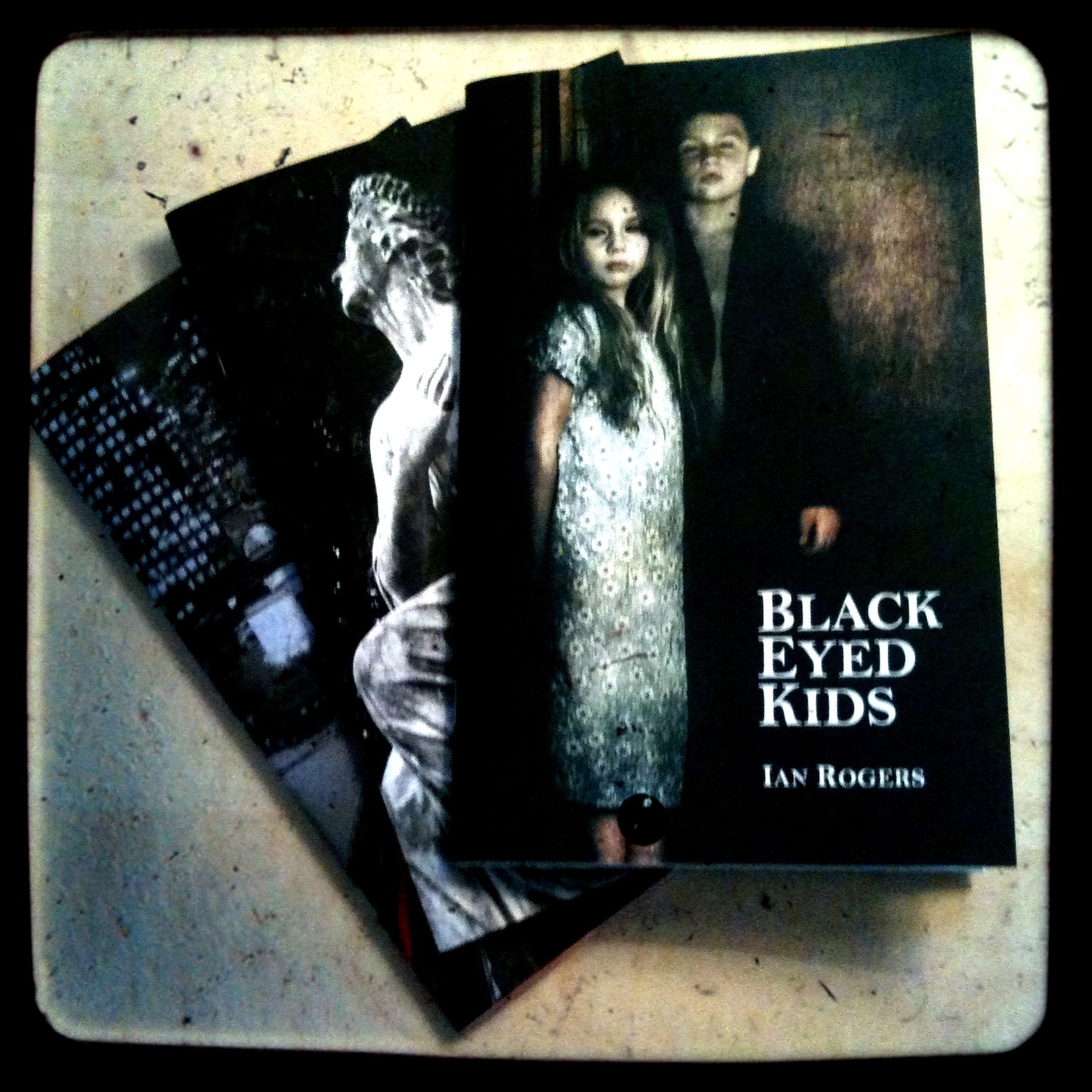
The book as zombie
My friend Jonathan Bennett on ending books.
There are many endings when writing a novel. First, there is the ending of the book that you plan for and write towards. Then the there is the ending that happens when you get there and realize it isn’t quite the right place to end it. So a new search begins for the right ending. Because, for all you know, you’ve already passed by the ending, and it’s chapter shuffling that needs to occur so the right ending is in the right place. Or else you still need to keep writing to discover where and how it’s going to end.
Double double and check the oil
As I drove home from dropping off a friend at the airport this morning, an oncoming car in the opposite lane swerved into my lane for a few seconds before pulling back in to the line of cars. Maybe it was a mistake, a distracted driver. Or maybe the driver was entertaining the fantasy we all have at one time or another, of crossing the line and steering our lives into annihilation and escape.
Later, on another stretch of road, I passed police and firefighters clustered around a head-on collision in the centre lane.
I pulled into the drive-through lane of a coffee shop, but I didn’t know what I wanted.




 peter darbyshire